 GIX
The Real Job of Algorithmic Trading Software: Removing Execution Errors, Not Predicting the Market
- Algorithmic trade execution enforces predefined rules rather than forecasting future price swings.
- Automated software eliminates hesitation after losses, boredom trades during flat sessions, and moving stop loss orders.
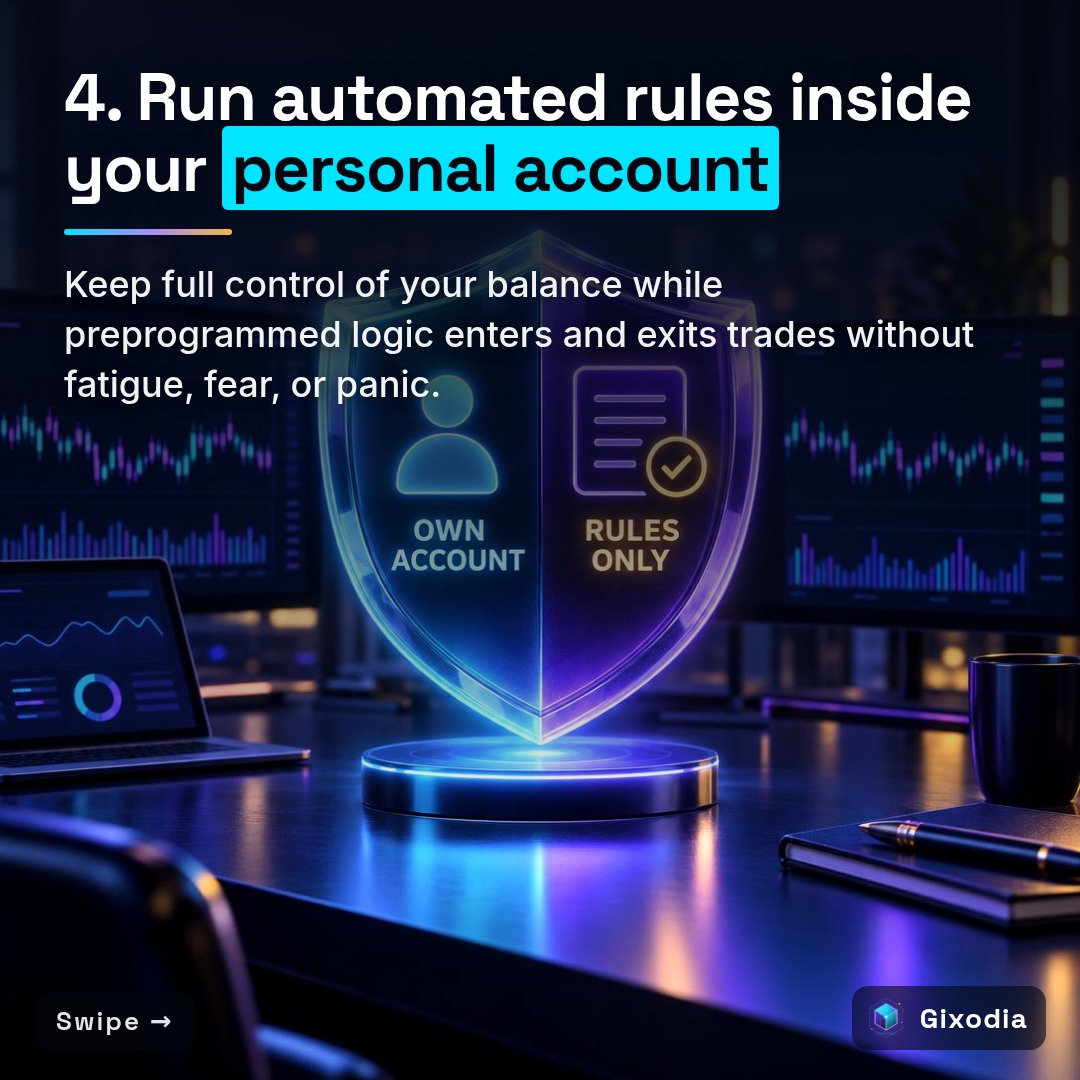
- Programs execute trades inside your personal broker account without altering established risk parameters.
- Every automated strategy experiences normal losing trades, but mechanical discipline prevents those losses from cascading into blown accounts.
- Supervisory rules from regulators like FINRA emphasize that automated trading requires clear risk controls rather than blind faith.
What is algorithmic trade execution?
Algorithmic trade execution is the process of using automated computer programs that follow a predefined, step-by-step set of instructions to place and manage orders without direct human intervention. Instead of trying to guess future prices, software monitors market data feeds, checks account risk boundaries, and submits trades systematically.
Many beginners think trading software acts like an automated oracle that forecasts exact highs and lows. In reality, no computer algorithm, institutional trading desk, or indicator knows what comes next in financial markets. Software simply translates your mechanical strategy into structured programming code.
When you run an Expert Advisor, an automated trading program that runs inside MetaTrader 5, on pairs like EUR/USD or gold, the software reads incoming ticks and processes preprogrammed if-then conditions. If the criteria line up, it routes an order straight to your broker. If market conditions do not align, it waits quietly. Learning what is algorithmic trading starts with realizing that execution quality matters far more than magical forecasts.
Why do manual traders fail at pure execution?
Manual traders fail at execution because psychological pressure, fear, and fatigue distort decision-making when real money is on the line. When charts move sideways, traders create positions out of sheer boredom, and when an entry appears right after a painful loss, emotional hesitation causes them to miss it entirely.
Picture sitting in front of your charting terminal for three consecutive hours. You see no valid setup, yet you feel compelled to take a trade simply to justify your screen time. This boredom trade immediately violates your written playbook. Later, when the market moves against your position, hope takes over and you drag your protective stop loss, the order that closes the trade when it goes against you, further away, turning a manageable loss into an account-threatening disaster.
This dynamic explains why most retail traders lose their capital. The issue is rarely an inability to draw support levels or read price patterns. The breakdown occurs in real-time execution, where greed, fatigue, and fear override cold technical rules, a problem documented in CME Group education materials on automated execution.
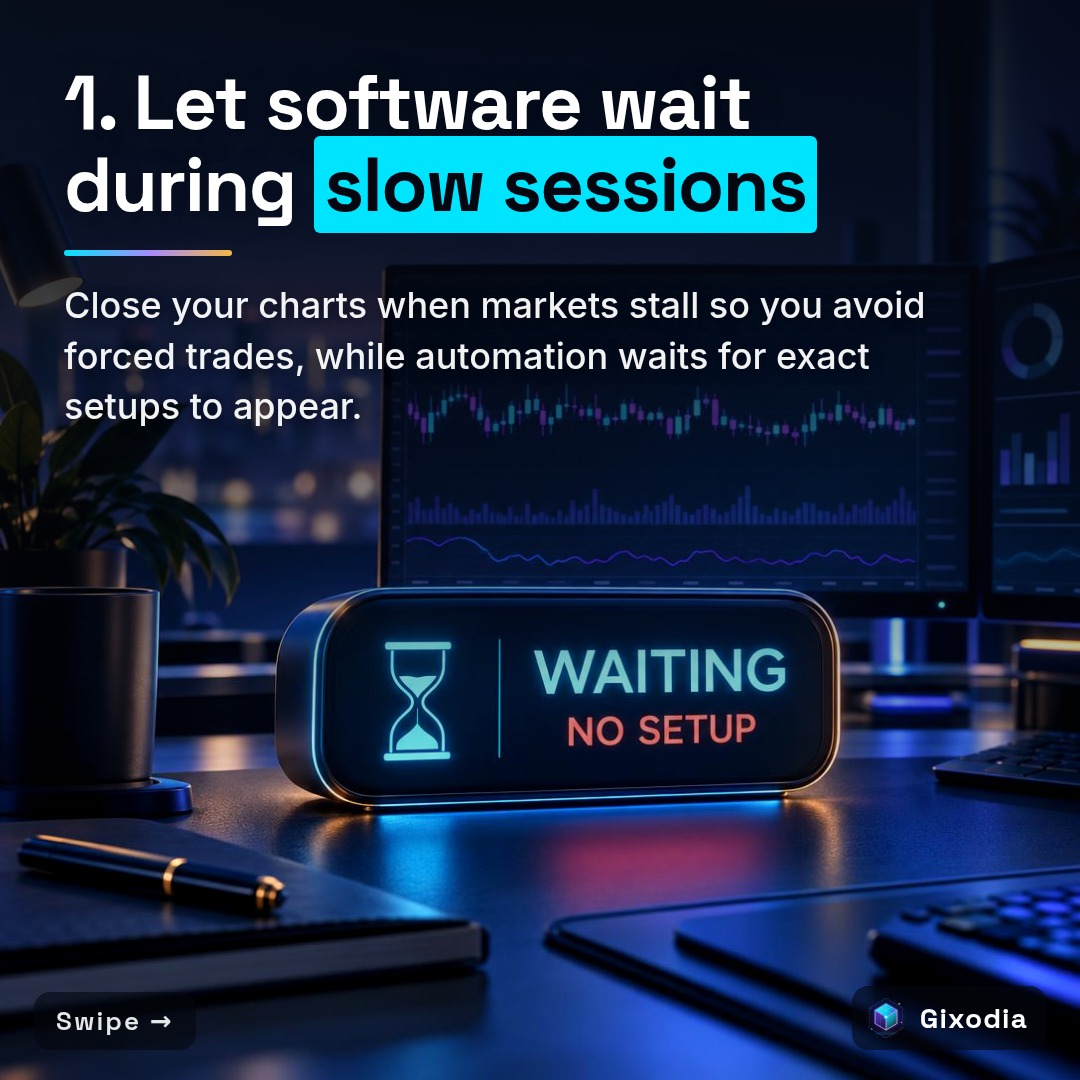
- Boredom creates random entries during flat, low-volatility market sessions.
- Fear delays valid entries immediately following a sequence of losing trades.
- Hope tempts traders to widen protective stop losses as prices drop.
How does software remove psychological trading traps?
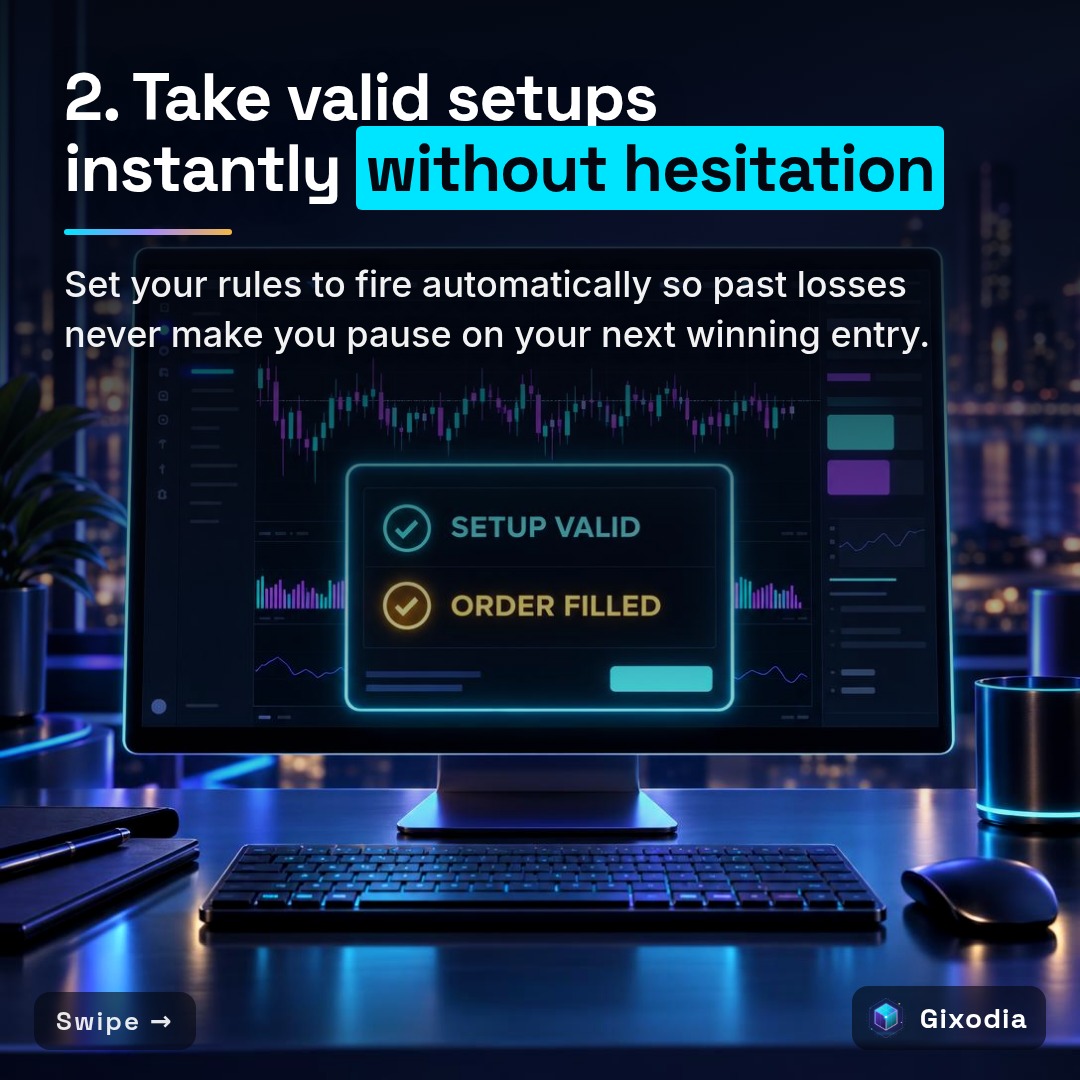
Software removes psychological trading traps by executing predetermined rules identically every single time, completely free from fear, greed, and hesitation. Because an algorithm carries zero emotional baggage from past trades, it treats every technical signal as an independent statistical event.
A trading bot does not care whether the previous trade hit take profit or stopped out at a loss. It does not feel euphoric after a win or traumatized after a loss. When the exact technical trigger appears, it executes the setup instantly without the second-guessing that plagues human traders.
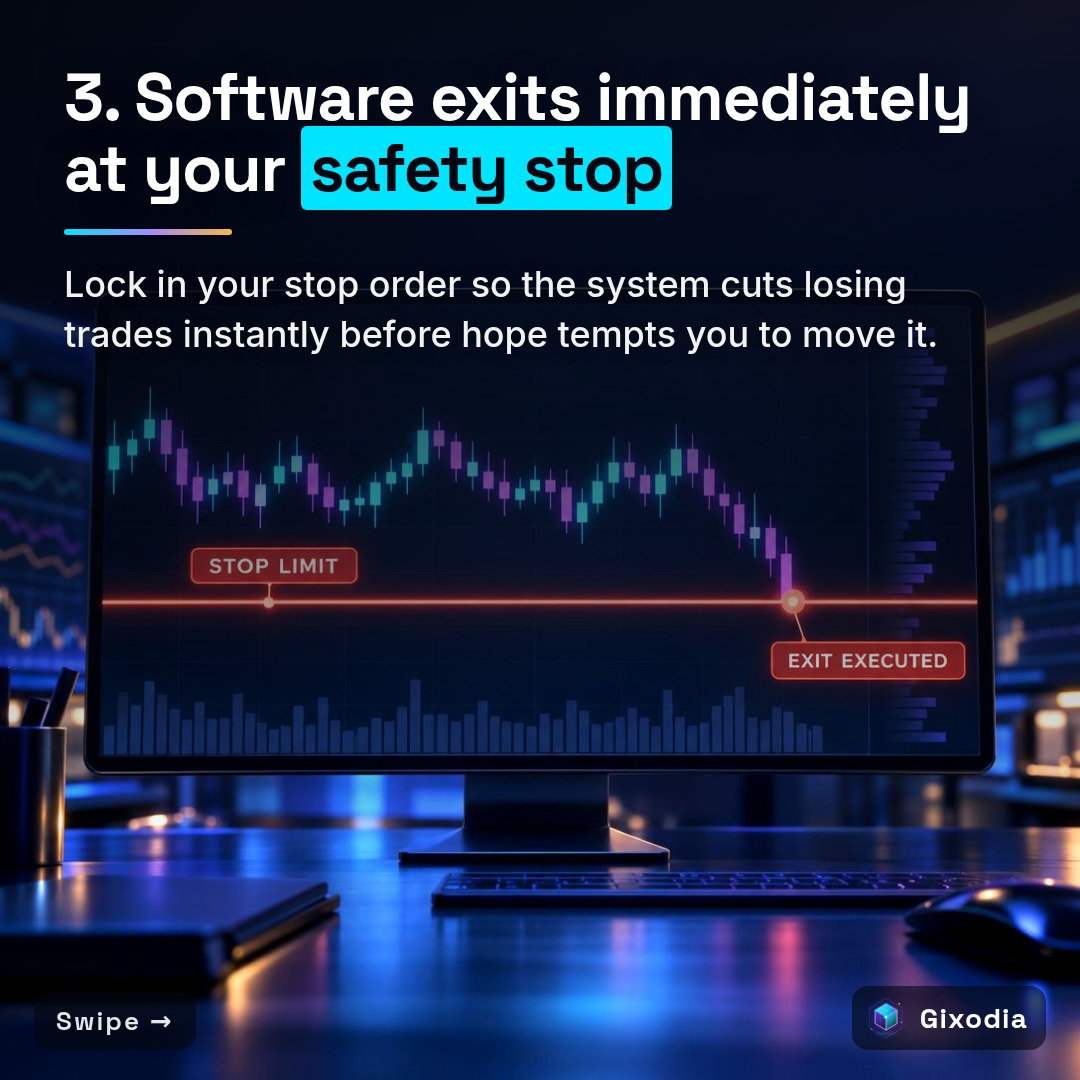
Moreover, automated systems enforce disciplined exits. When entering an order, a properly configured program attaches your protective exit at the exact moment of order placement. It will never negotiate with the market or move a boundary out of desperation. Understanding the psychology of automated trading helps traders accept that consistent execution produces stability over dozens of market cycles.
| Execution Factor | Manual Trader | Algorithmic Software |
|---|---|---|
| Entry Discipline | Often hesitates after a painful loss or enters out of boredom during flat sessions | Executes exact technical criteria instantly whenever conditions match rules |
| Stop Loss Management | Frequently moved further away due to hope that price will bounce back | Transmits protective stop orders to the broker immediately without manual drift |
| Screen Fatigue | Focus drops after hours of watching charts, leading to sloppy sizing mistakes | Monitors feeds continuously without emotional tiredness or impulsive reactions |
| Reaction Speed | Subject to manual click delay, fat-finger errors, and second-guessing | Submits structured orders via platform bridges in milliseconds |
Does algorithmic software eliminate losing trades?
No, algorithmic software does not eliminate losing trades because trading inherently involves risk and unpredictable price movement. The goal of automation is not avoiding losses, but standardizing trade execution so that losing positions remain contained within strict account risk parameters.
Every legitimate market strategy experiences drawdowns and adverse runs. Algorithmic software simply ensures that when those losing streaks occur, they do not turn into reckless revenge trading. The software exits losing positions cleanly at the designated price without hesitation.
In professional environments, risk management functions act as a strict firewall. Automated logic checks trade sizing, prevents over-leveraging, and adheres to strict safety boundaries. Applying disciplined risk management in MT5 ensures that losses remain normal operating expenses rather than catastrophic events.
How does rule-based automation fit into daily risk limits?
Rule-based automation protects capital by anchoring daily risk parameters directly into execution logic before orders reach the market. The software verifies account limits, restricts position sizing, and halts trading activity whenever predefined loss boundaries are approached.
Regulators like FINRA emphasize that automated trading systems must maintain strict pre-trade risk controls and operational supervision rather than running unmonitored. When building automated routines, smart traders program firm constraints on trade frequency and maximum exposure.
This mechanical boundary eliminates the human urge to chase market moves after an unexpected headline. For example, Gixodia's trading software is an Expert Advisor built for MetaTrader 5 that trades by predefined rules, the same way every time. As an account limit you set gets close, it scales down, and it pauses at that limit. It runs on your own broker account in your own name, letting you maintain control over your funds without relying on manual willpower during turbulent market sessions.
How to do it, step by step
- Step 1: Define objective trade triggers. Write down exact entry criteria using clear numerical indicators, candle structures, or session boundaries. Eliminate any subjective phrasing that requires personal guesswork during live hours.
- Step 2: Verify risk and lot sizing rules. Set strict position sizing parameters that calculate exact volume based on your account balance and stop loss distance before any trade fires.
- Step 3: Configure platform automation permissions. In MetaTrader 5, click the Algo Trading button on the top toolbar until it displays green. Then open Tools, select Options, navigate to Expert Advisors, and verify that Allow Algorithmic Trading is checked.
- Step 4: Backtest across multiple market regimes. Use the MetaTrader 5 Strategy Tester (Ctrl + R) to run your strategy against historical tick data, factoring in realistic spreads and execution slippage across different market environments.
- Step 5: Deploy on a low-latency environment. Run your platform on a dedicated virtual private server to prevent home internet interruptions, power cuts, or hardware freezes from interfering with automated order handling.
- Step 6: Maintain supervisory oversight. Inspect the platform Journal and Experts logs regularly to ensure orders are routing properly without broker rejects, maintaining a manual kill switch in case market conditions require intervention.
Checklist before you take the trade
- Objective entry rules are documented without subjective interpretation
- Protective stop loss values are transmitted immediately with entry orders
- Maximum spread filters are configured to block execution during volatile news
- The Algo Trading toggle is enabled both globally and inside EA settings
- Account exposure boundaries and daily drawdown limits are programmed
- Platform terminal logs are checked weekly for execution errors or connection drops
Common mistakes and how to fix them
✗ The mistake: Believing a trading bot predicts future price direction with certainty.
✓ The fix: Treat software as an execution engine that enforces rules and controls risk, accepting that losing trades are an unavoidable part of trading.
✗ The mistake: Intervening manually to drag stop losses when an automated trade turns red.
✓ The fix: Keep platform charts closed once rules take charge, allowing the system to cut positions at the planned protective exit.
✗ The mistake: Disabling platform automated execution switches by mistake.
✓ The fix: Verify that both the master Algo Trading toolbar icon and the EA property checkbox Allow Algorithmic Trading show enabled status before the session begins.
Frequently asked questions
Can algorithmic trading software predict where the market will go?
No, algorithmic trading software cannot predict market direction. Its core function is executing predetermined rules quickly, accurately, and consistently without human emotional errors like hesitation or revenge trading.
What is an Expert Advisor in MetaTrader 5?
An Expert Advisor is a dedicated software program written in MQL5 that runs directly inside the MetaTrader 5 platform. It automates technical analysis and executes orders based on strictly programmed criteria.
Does using a trading bot mean I will never have losing trades?
No, every trading strategy experiences losing trades because financial markets remain inherently unpredictable. An automated bot ensures losses occur strictly according to your planned risk limits instead of spiraling into uncontrolled account damage.
Why do traders run automated software on a VPS?
Traders use a virtual private server so their platform runs continuously without interruptions from home computer sleep modes, power cuts, or internet outages. This keeps execution stable across all active trading sessions.
Want your trading to follow fixed rules, the same way every time? Gixodia's trading software for MetaTrader 5 trades by predefined rules on your own broker account, in your own name. Try it free for 72 hours, a demo account is fine, then $499/year. Trading involves risk and you can lose money.
Sources
- Algorithmic Trading Explained: Strategies, Types, Risks & How Retail Investors Can Use It | InCred Money (incredmoney.com)
- cmegroup.com
- Algorithmic Trading (finra.org)