 GIX
How Central Bank Policy Shifts Cause Slippage and Why Rule-Based Execution Avoids Panic

- Central bank rate decisions cause liquidity providers to pull orders, creating thin books and wide spreads.
- Execution slippage occurs when an order fills at the next accessible price rather than the requested quote.
- A standard stop loss becomes a market order once triggered and can fill past your chart price during news spikes.
- Predefined rules eliminate emotional hesitation, panic trades, and manual interference when volatility jumps.
- Automated software scales down risk or closes positions by fixed criteria instead of guessing policy language.
What is central bank liquidity and how does a policy shift occur?
Central bank liquidity is the volume of cash reserves that monetary authorities inject into or drain from the banking sector. A policy shift occurs when a central bank alters interest rates, changes reserve operations, or adjusts its balance sheet, rapidly resetting market valuations.
When monetary authorities raise borrowing costs or drain reserves through quantitative tightening, commercial capital tightens across global markets [cite: 1, 2]. Market participants reprice interest rate expectations in seconds when a central bank delivers an unexpected rate hike or changes its policy statement. This sudden repricing changes how financial institutions provide quotes to retail brokers and exchanges.
If you look at central bank forex dynamics, a shift in interest rate policy alters supply and demand for currencies like EUR/USD immediately. Large participants withdraw capital from lower-yielding assets to move toward safety or higher yields. Because these macroeconomic moves involve massive capital flows, normal everyday market turnover gives way to rapid institutional repositioning [cite: 2].
How do central bank announcements cause market slippage?
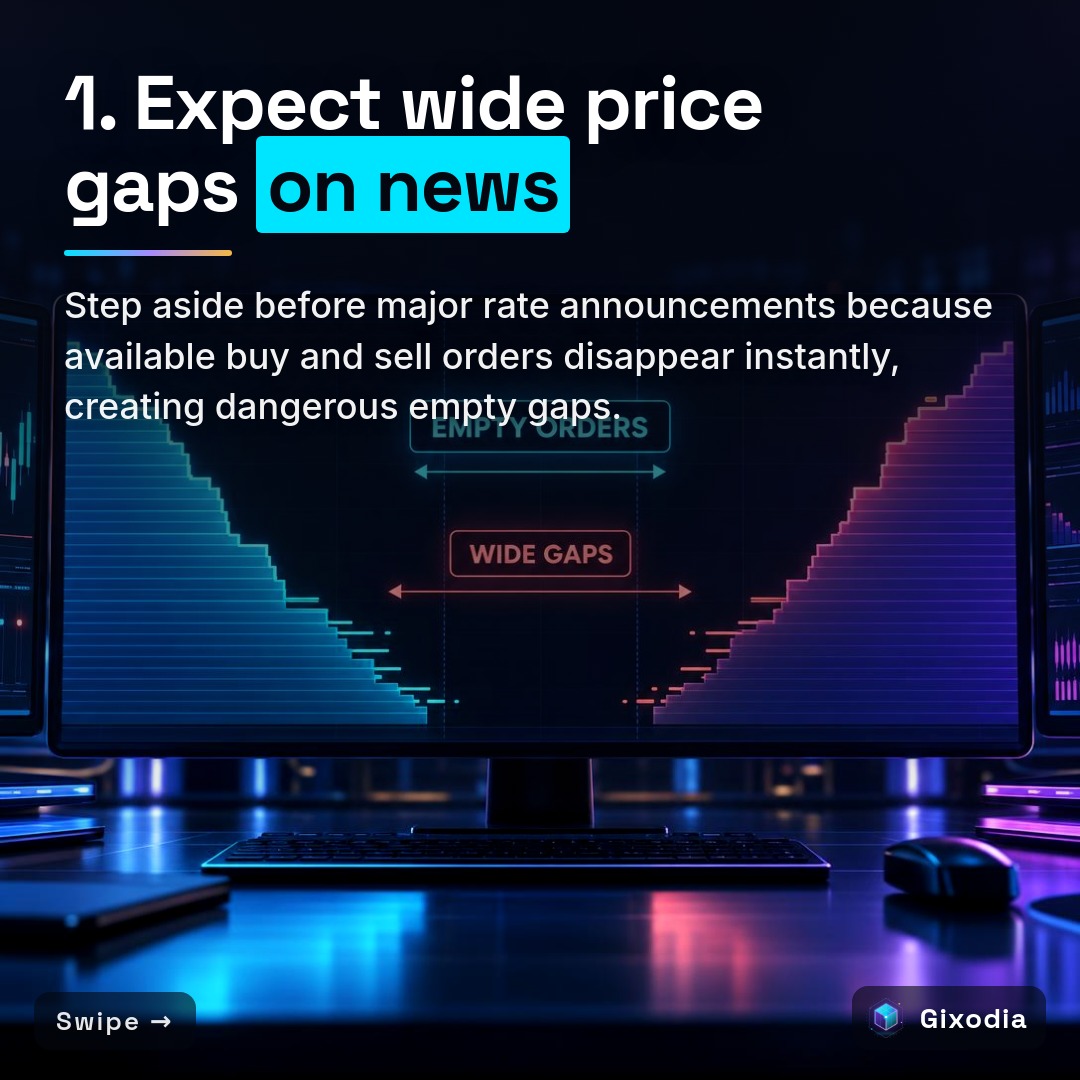
Central bank announcements cause slippage because commercial liquidity providers withdraw their resting limit orders right before the release, leaving the order book thin. When aggressive market orders arrive, they must sweep across empty price levels to get filled.
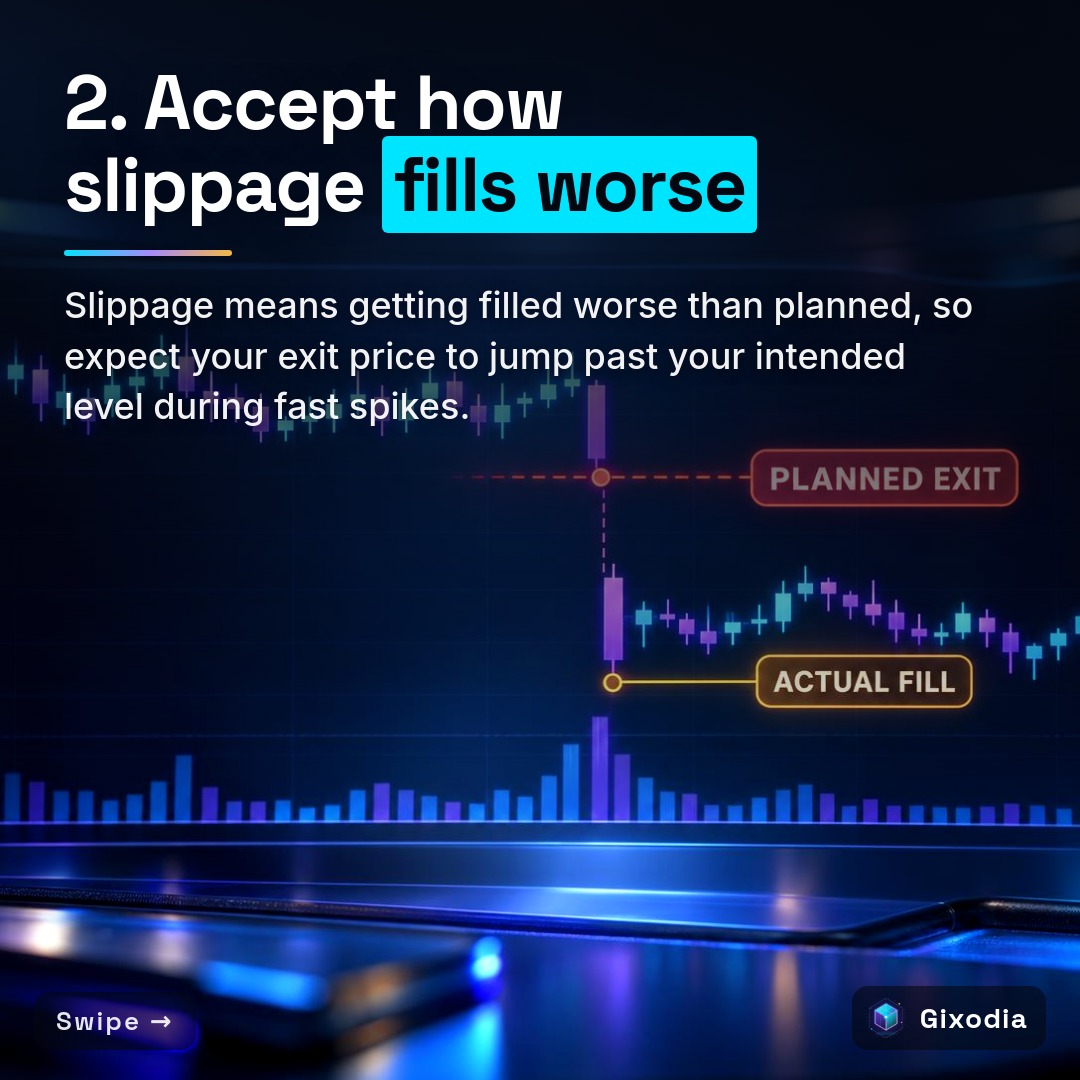
Execution slippage is the difference between the price you see on your chart and the actual price where your broker fills your order [cite: 6]. Under normal market conditions, there are plenty of buy and sell orders clustered close together. During a major rate decision, however, institutional market makers pull their quotes off the board to avoid being caught on the wrong side of a sudden price jump [cite: 6].
This creates air pockets in the order book. If you send a buy order into a thin book, the first available seller might be several pips higher than the quote on your screen. The trade walks the book, filling across worse prices until your requested volume is satisfied. For a deeper breakdown of this process, see our guide on understanding spread commission slippage.

Why does a stop loss fail to promise an exact exit price during news?
A stop loss fails to promise an exact exit price during news because it acts as a trigger to send a market order, not an absolute boundary. Once price reaches your stop price, the trade executes at the next available quote.
Many retail traders believe a stop loss locks in an exact dollar boundary. In reality, once the market touches that level, your platform converts your stop into an immediate market order. If a monetary policy headline causes a sudden gap in quotes, there may be no orders sitting at your exact stop level.
For instance, if you hold an open position on EUR/USD with a defensive stop at 1.0820, and an unexpected rate statement pushes the market instantly from 1.0822 to 1.0810, your order cannot fill at 1.0820. It executes at 1.0810, resulting in ten pips of negative slippage. Understanding that a stop loss is a trigger, not a fixed price, helps you plan position sizing realistically around major news events.
| Feature | Manual Discretionary Trading | Rule-Based Execution |
|---|---|---|
| Reaction to wide spreads | Hesitation, freeze, or panic market orders | Fixed execution logic runs without second-guessing |
| Handling of stop losses | Traders often cancel or widen stops out of fear | Predefined orders remain intact or execute automatically |
| Order entry timing | Chasing runaway candles across empty gaps | Controlled entries strictly at planned parameters or limits |
| Emotional discipline | High stress, revenge trading, and fear of missing out | Consistent execution free of emotional bias and fatigue |
Why do retail traders panic during policy volatility?
Retail traders panic during policy volatility because seeing rapid chart swings and sudden losses triggers emotional fear, causing them to abandon their trading plans. They either pull their stops further away or chase moves blindly.
When central bank announcements hit, candles can jump dozens of pips in a fraction of a second. A trader who watches this live often freezes. Seeing an unrealized loss expand quickly creates a fight-or-flight reaction. Instead of accepting the planned risk, discretionary traders often drag their stop loss further away, hoping the price will reverse before hitting the exit.
The opposite error happens when traders experience fear of missing out. Seeing a massive green candle erupt on a rate cut statement, they jump in with a manual market order right at the top. The spread, the gap between the buy price and the sell price, is at its widest point, and slippage causes an entry far worse than expected [cite: 6]. These emotional reactions explain why most retail traders lose during high-impact news days.
How does rule-based execution prevent panic and protect capital?
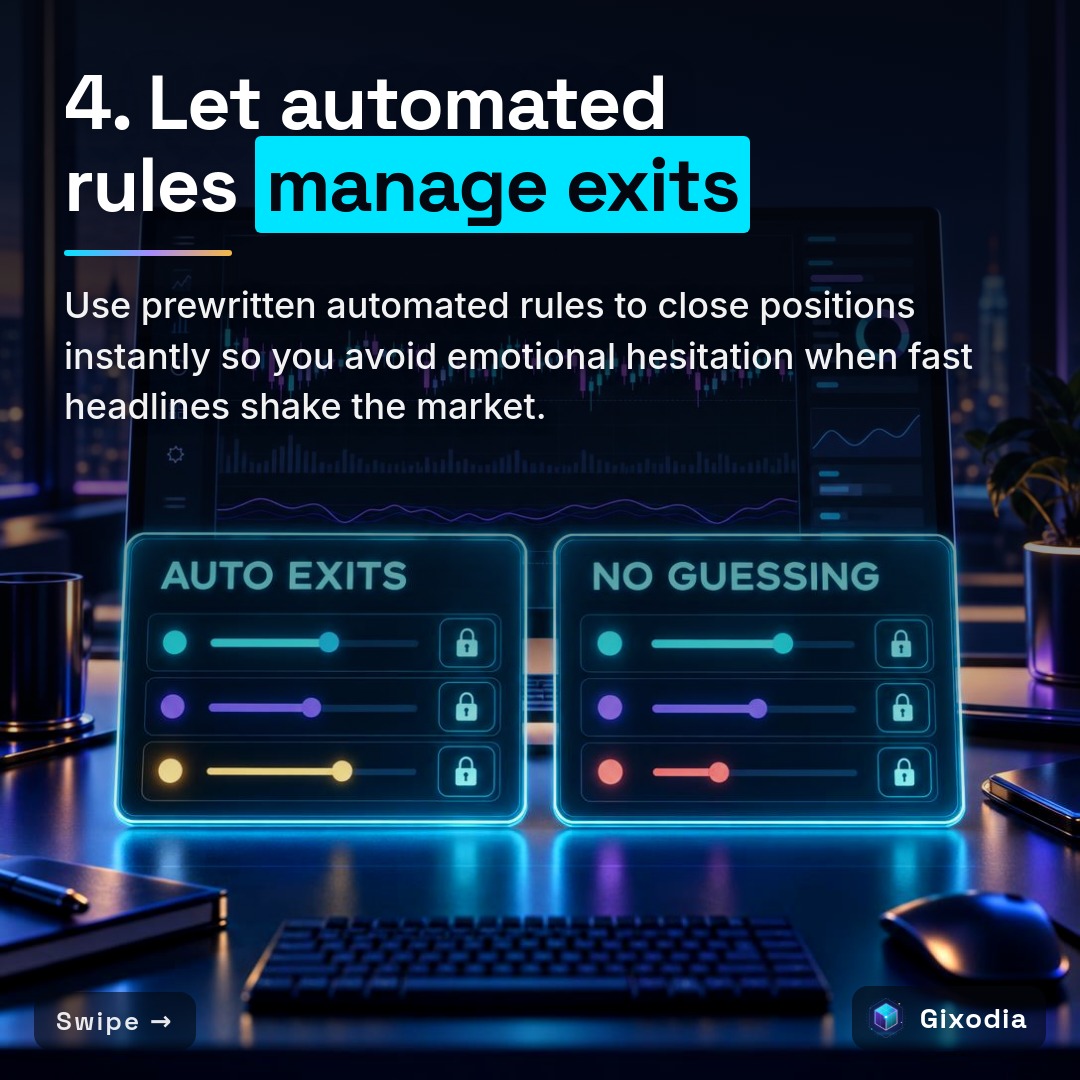
Rule-based execution prevents panic by replacing emotional discretionary choices with systematic parameters that trigger automatically. By defining trade rules beforehand, an execution engine carries out orders without hesitation, second-guessing, or emotional tampering.
A systematic ruleset does not read economic commentary or try to interpret a press conference tone. It simply tracks price levels, maximum risk allocations, and exact exit triggers. When market volatility increases, a rule-based system adheres strictly to risk parameters, ensuring that defensive actions occur without emotional delays [cite: 6].
Automated software follows predefined rules, trading the same way every time without fatigue or stress. For example, Gixodia builds algorithmic software for MetaTrader 5 that trades by predefined rules. As a limit you set gets close, it scales down, and it pauses at that limit. It does not try to predict what a central bank will do next, but executes established technical logic consistently.
How should traders handle news events using rule-based strategies?
Traders should handle news events by calculating risk against potential slippage, verifying platform execution settings, and stepping aside if market depth drops too far. Rules should dictate position sizes based on worst-case spread widening.
If you trade through major macro releases, your rules must account for adverse fill conditions. This means reducing your lot size well ahead of time so that a slippage gap does not violate your risk limits. Many experienced operators prefer stepping aside completely during central bank rate releases, waiting until the initial shock waves settle and order books repopulate [cite: 6].
To practice this without financial danger, observe how your platform behaves on a demo account during high-impact releases. Watch how wide the spreads stretch and note how market orders fill relative to your chart price. Comparing bot vs manual trading shows how systematically defined software avoids the temptation to intervene when the screen becomes erratic.
How to do it, step by step
- Track upcoming policy events. Open your economic calendar at the start of the week and note all central bank rate decisions, policy statements, and press conferences for your traded currencies.
- Adjust position sizing for widened spreads. Reduce your position size on instruments like EUR/USD or gold (XAU/USD) before the release so wider spreads and slippage do not cause an oversized account loss.
- Configure platform deviation parameters. In MetaTrader 5, set the maximum deviation setting in points on your order ticket so the platform rejects fills that slip beyond your acceptable threshold.
- Keep stop loss orders locked. Leave your planned stop loss untouched on the server rather than manually moving or canceling it while price spikes unfold.
- Let systematic rules manage exits. Allow predefined rules or automated parameters to close positions when price levels are reached instead of making discretionary exits under stress.
- Review trade journal execution records. Check your platform execution logs after the announcement to compare your intended order prices with your actual fill prices and calculate real slippage.
Checklist before you take the trade
- Economic calendar checked for central bank policy meetings this week.
- Maximum risk per trade adjusted to account for potential negative slippage.
- Order execution deviation limits verified inside MetaTrader 5.
- Predefined exit rules established before market volatility expands.
- Stop loss orders left firmly in place without manual tampering.
- Spread size monitored to confirm order book liquidity has normalized before entering new trades.
Common mistakes and how to fix them
✗ The mistake: Moving your stop loss further away when volatility spikes to avoid getting stopped out.
✓ The fix: Keep your stop loss fixed at your original invalidation point and accept that a clean cut protects your account.
✗ The mistake: Entering market orders right as a central bank rate headline breaks on the wires.
✓ The fix: Avoid placing market orders into an empty order book; wait for spreads to normalize or use limit orders.
✗ The mistake: Assuming your stop loss price is locked in place during high-impact news releases.
✓ The fix: Treat a stop loss as a market trigger and reduce position size to absorb potential execution gaps safely.
✗ The mistake: Switching off systematic rules to manually gamble on speech headlines.
✓ The fix: Let your rule-based strategy handle the market or step aside completely until normal liquidity returns.
Frequently asked questions
What is execution slippage in simple terms?
Execution slippage is the difference between the price you expected when submitting an order and the actual price at which your trade is filled. It commonly occurs during fast market moves or when order book liquidity is thin.
Why does central bank news cause the spread to widen?
Central bank news causes institutional liquidity providers to withdraw their resting quotes to protect themselves against rapid repricing. With fewer quotes available near current prices, the gap between the buy price and sell price widens immediately.
Can automated software completely prevent slippage during news releases?
No software can eliminate slippage entirely because fills depend on real liquidity in the broker order book. However, rule-based systems protect capital by enforcing strict deviation parameters and preventing emotional manual trades.
Is it better to close trades before a major interest rate announcement?
Many systematic traders prefer closing trades or reducing position sizes before major central bank announcements to avoid unpredictable order book gaps. Others use strict automated limits that scale down risk as exposure thresholds are approached.
Want your trading to follow fixed rules, the same way every time? Gixodia's trading software for MetaTrader 5 trades by predefined rules on your own broker account, in your own name. Try it free for 72 hours, a demo account is fine, then $499/year. Trading involves risk and you can lose money.
Sources
- quora.com
- substack.com
- What Is Slippage in Trading? How Market Liquidity Affects Trade Execution - FXORO Global (fxoroglobal.com)