 GIX
How to Handle Liquidity Voids and Sudden News Gaps in Algorithmic Trading

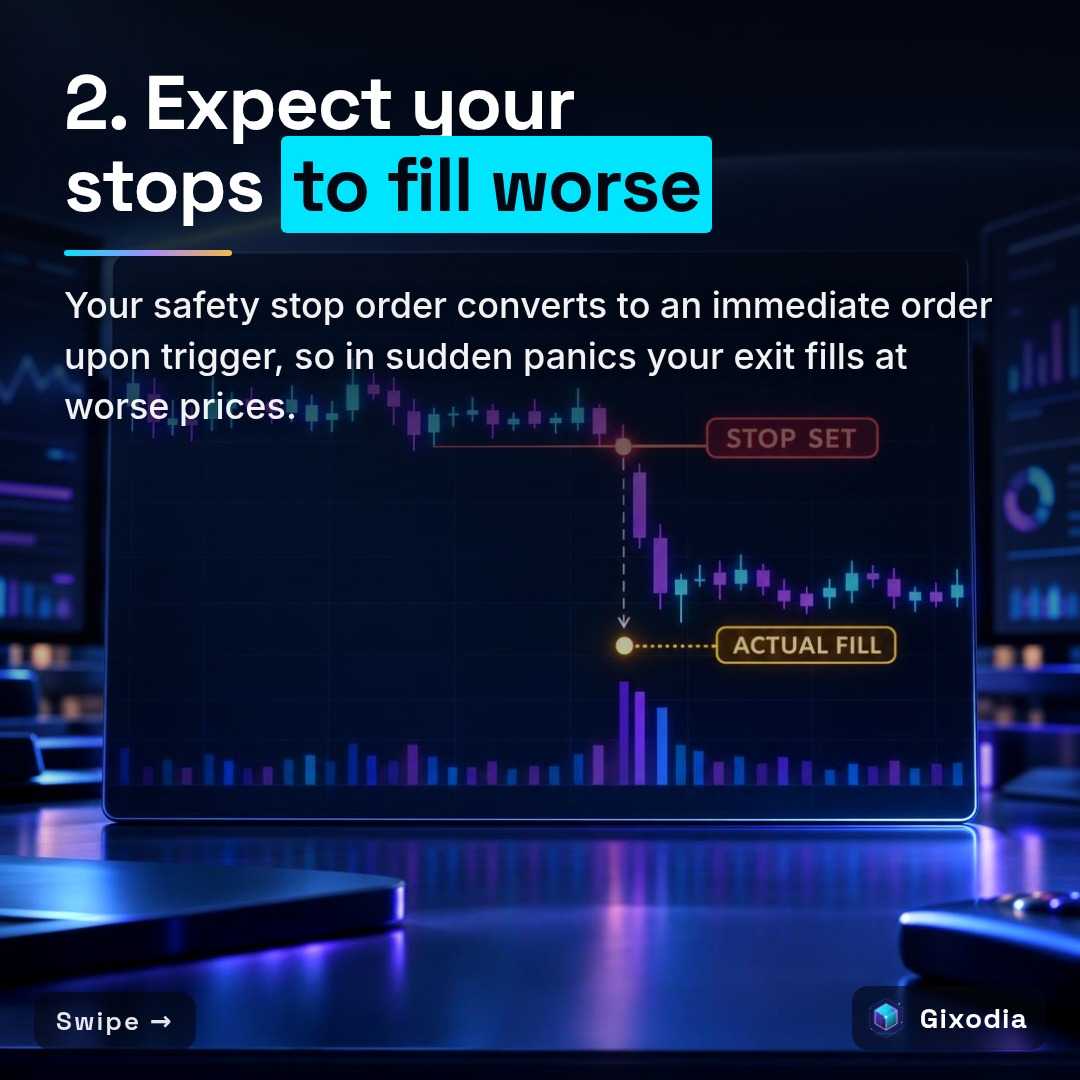
- A normal stop loss turns into an immediate market order when reached, filling at the next available quote instead of your charted price.
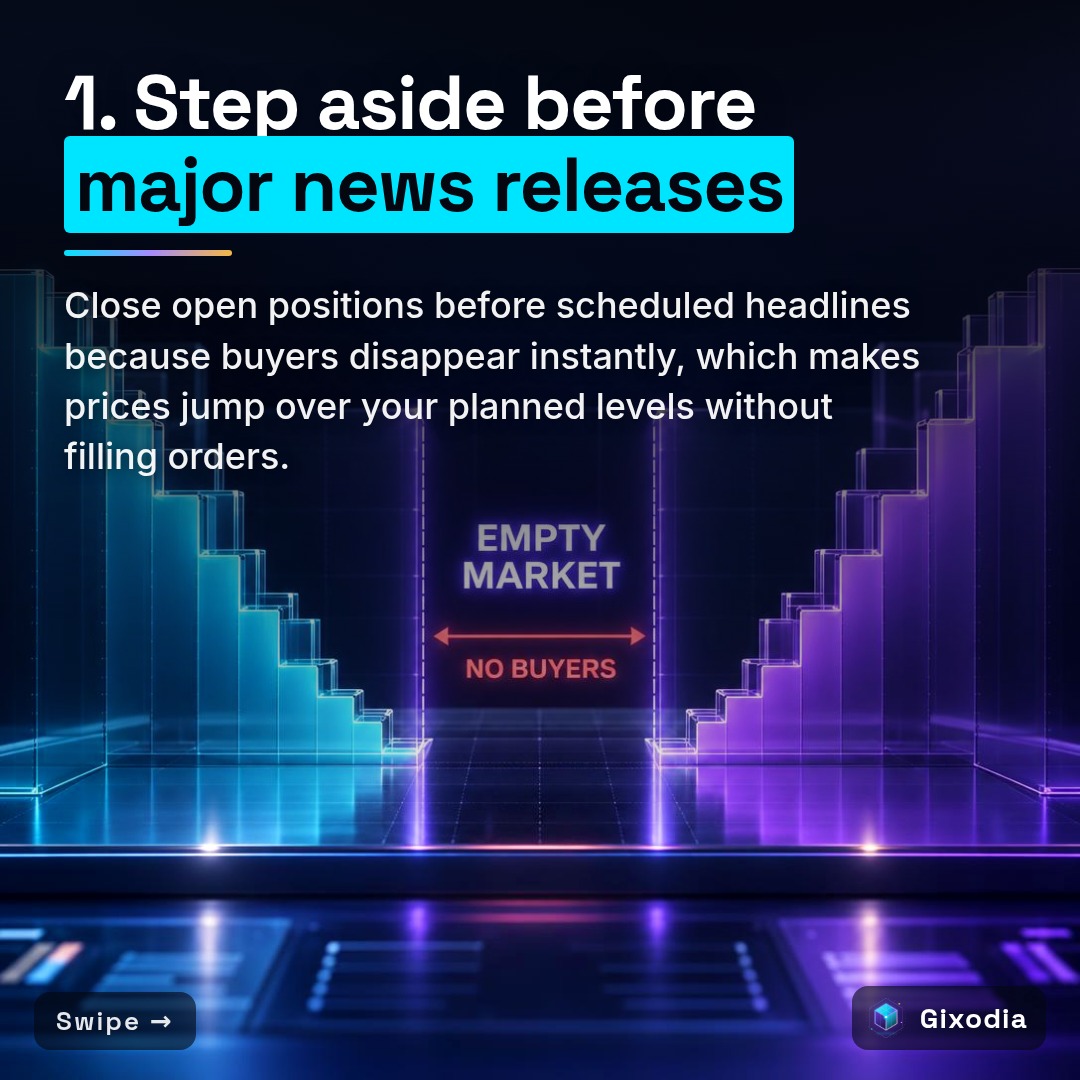
- Market makers pull resting orders instantly when major news breaks, which leaves air pockets where prices jump across large intervals.
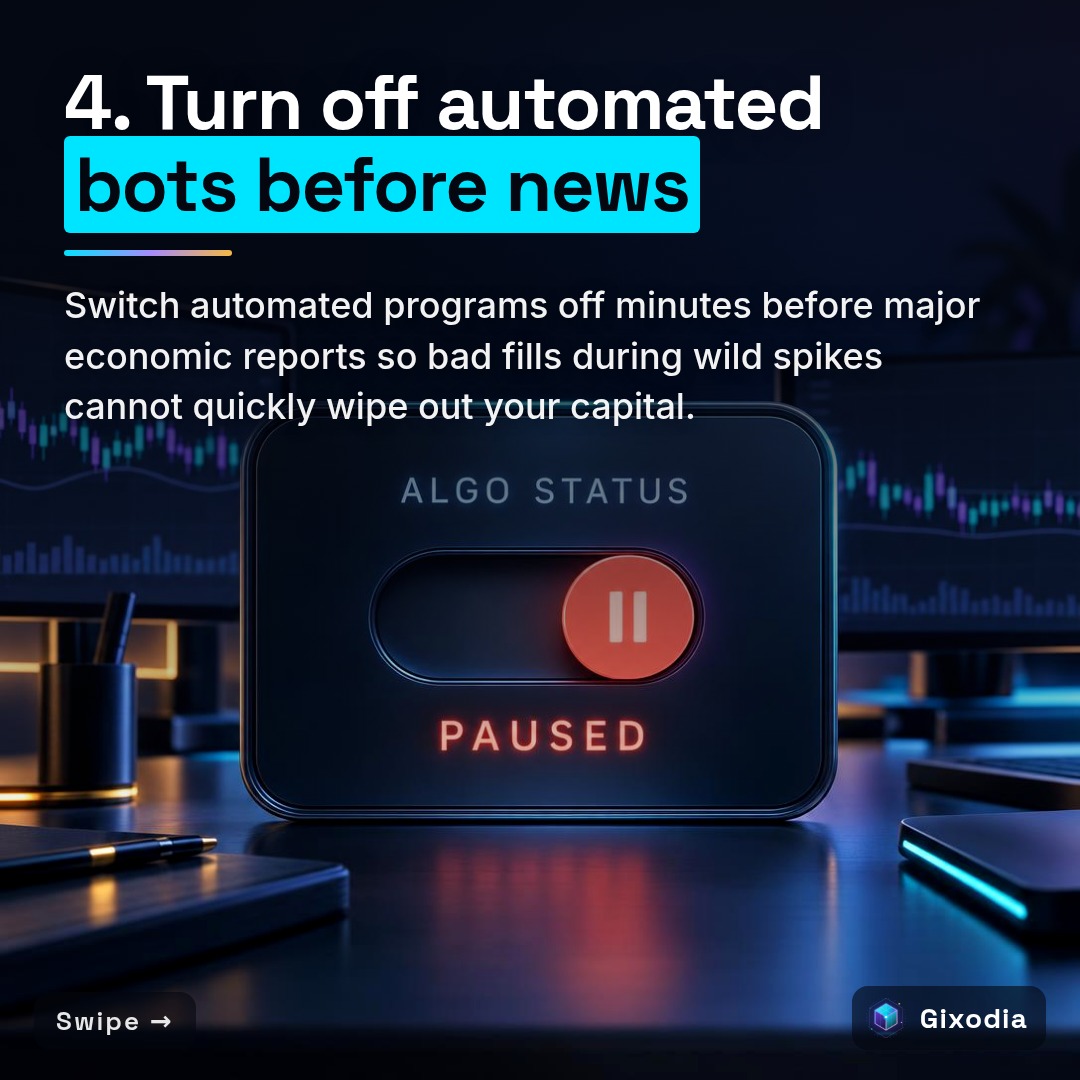
- Pausing automated trading systems minutes before scheduled macro releases protects your margin balance from severe execution gaps.
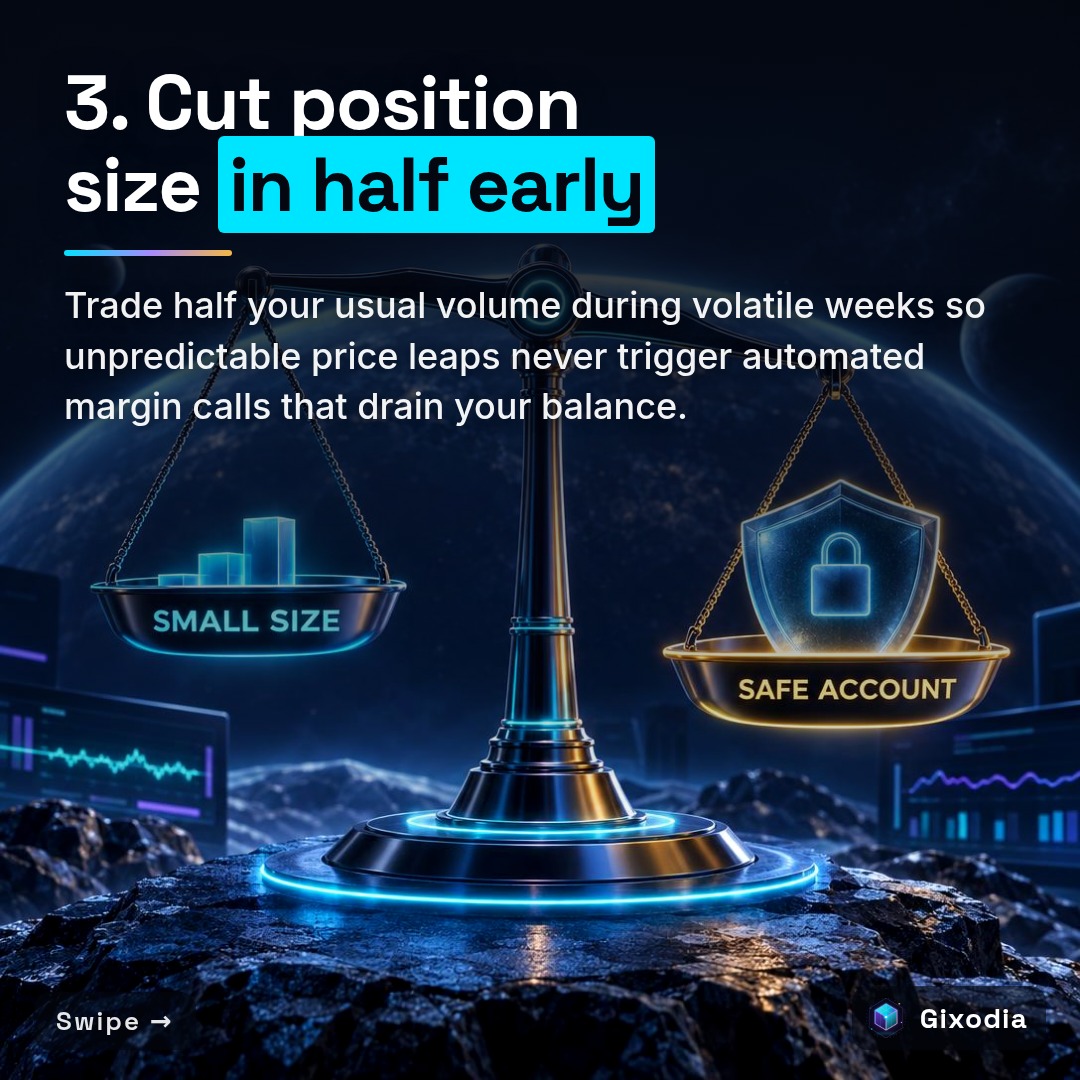
- Capping position volume ahead of high-volatility events keeps your account safe from forced liquidations if a discontinuous price move occurs.
What is a liquidity void in financial markets?
A liquidity void is an abrupt pocket of empty price space created when resting orders vanish, forcing the market to jump directly to the next available quote without executing trades at intermediate levels.
In standard trading sessions, an order book contains layers of resting buy and sell orders. When participants trade naturally, the price ticks up or down smoothly. However, when unexpected geopolitical events or scheduled macro announcements hit the wires, institutional providers pull their quotes back right away. This withdrawal creates an air pocket on the chart.
You can observe this clearly in fast-moving conditions on EUR/USD or gold (XAU/USD). If an unexpected economic event triggers a rush of orders, the quote skips multiple pips in a split second. To learn how quotes behave under normal circumstances, review our guide on how forex markets work.
- Bids and asks evaporate as institutional providers clear their books.
- The spread jumps significantly wider to account for sudden market uncertainty.
- Price prints a discontinuous visual gap on lower timeframe charts.
Why do stop losses experience slippage during news gaps?
A stop loss order converts into an unpriced market order the moment its price is triggered, which forces the broker to fill the exit at the next available price on the market rather than your exact charted stop line.
Retail traders often assume an exit level serves as a concrete wall. In reality, a stop loss sends an instruction to close a trade the moment a specific price prints. If the market reopens after an event or skips straight past your price because of a sudden gap, there are no participants willing to take the other side at your original line.
As a result, your terminal executes the order at the first available trade, which might sit substantially deeper than your planned risk. Understanding this dynamic is vital when setting automated systems. Take time to study our breakdown on understanding spread commission slippage to see how transaction costs shift during violent volatility.
- Resting orders do not exist inside a price void to match your requested exit.
- The terminal executes at the prevailing rate after the gap opens.
- Actual account drawdown can exceed the original chart distance.
How do automated trading systems protect capital from gaps?
Automated trading systems protect capital by enforcing predefined execution filters, including calendar blackout windows that halt trading before economic data releases and maximum allowable slippage parameters that reject poor fills.
Professional automated operations do not try to outguess chaotic announcements. Instead, algorithmic code relies on predefined instructions to control risk. Under standard regulatory standards such as FINRA algorithmic trading guidelines, automated setups incorporate pre-trade risk controls and price checks that halt orders if spreads stretch beyond normal thresholds [3].
Many traders choose to pause automated execution on MetaTrader 5 entirely when tier-one reports like interest rate updates or consumer price data drop. Rules-based programs, such as Gixodia's trading software, trade by predefined rules, the same way every time, eliminating panic. Pausing execution ahead of major chaos remains a standard risk management procedure. You can discover more about disciplined automated rules in our article on what is algorithmic trading.
- Blackout windows halt new order entries before scheduled economic headlines.
- Deviation controls reject market fills if the current quote slips past a set threshold.
- Trading systems systematically scale down exposure as volatility expands.
| Feature | Normal Liquid Market | Liquidity Void / News Gap |
|---|---|---|
| Order Book Depth | Thick resting bids and offers at every price tick | Market makers pull back, leaving quotes sparse or empty |
| Price Movement | Sequential trades hit every consecutive increment | Price leaps over price levels without registering trades |
| Stop Loss Fill | Fills at or very near the exact charted level | Fills at the next accessible quote, creating negative slippage |
| Execution Spread | Tight spread between buy and sell quotes | Spread widens dramatically as risk premiums jump |
What role does position sizing play during volatile news weeks?
Position sizing acts as the primary buffer against margin exhaustion during news events, because smaller trade volumes ensure that unexpected price jumps do not trigger severe account drawdowns or broker stop-outs.
When trading high-tempo instruments like spot gold or EUR/USD, unpredictable headlines can cause massive intraday candle spikes. If a trading bot runs maximum lot sizes into thin market conditions, a sudden price jump through a liquidity void strains account margin within seconds [4].
Cutting standard trade volume by half ahead of weeks dense with central bank announcements allows your account to absorb wider swings safely. Learn the structural foundation of trade sizing in our detailed guide on pip and lot size explained.
- Lower volume keeps required margin well below broker danger thresholds.
- Price jumps across wide gaps do not risk compounding account damage.
- Capital preservation allows systems to operate smoothly once standard liquidity returns.
Why should traders close open positions before the weekend?
Traders close open positions before the weekend to eliminate weekend gap risk, which happens when geopolitical or economic news breaks while retail exchanges are shut, causing markets to open at distant prices on Sunday.
Between the Friday market close and the Sunday open, traditional retail forex liquidity completely pauses. If breaking news hits during this period, banks and institutional participants price assets differently while your trading platform sits offline. When retail trading resumes, the asset price leaps directly to the new level [1].
If an automated bot holds open trades over the weekend, an opening gap can bypass your stop loss entirely, printing an immediate negative balance adjustment. Flattening positions before the weekend session concludes removes this unpredictable risk entirely.
- Global events occurring on Saturday and Sunday reprice markets without active trading.
- Sunday opening spreads widen sharply during the first hour of trading.
- Pending orders can get triggered at unfavorable off-market prices.
How to do it, step by step
- Map the daily economic calendar. Review major macro calendars every morning on TradingView or your economic feed, identifying high-impact announcements scheduled for the day.
- Configure automated blackout windows. Set your Expert Advisor on MetaTrader 5 to stop opening new trades five to fifteen minutes prior to red-folder news releases.
- Reduce position volume ahead of volatile cycles. Lower your standard lot sizes by half when trading weeks feature heavy central bank interest rate decisions or major inflation updates.
- Set execution deviation thresholds. Apply maximum slippage deviation limits inside your MT5 trade order settings so that incoming orders reject fills if the quote skips excessively.
- Flatten open trades before the Friday close. Manually close intraday positions or program your automated bot to liquidate open exposure ahead of the Friday trading market shutdown.
- Wait for spreads to normalize post-news. Keep algorithmic trading paused for several minutes after the release until market maker depth returns and bid-ask spreads compress back to baseline.
Checklist before you take the trade
- Check the daily economic calendar for high-impact releases before opening trades
- Verify that MetaTrader 5 maximum slippage deviation bounds are active
- Confirm position volume is scaled down ahead of major geopolitical announcements
- Pause automated software execution at least five minutes prior to scheduled releases
- Cancel all resting pending stop and limit orders before significant economic events
- Wait for bid-ask spreads to return to normal width before restarting automated execution
Common mistakes and how to fix them
✗ The mistake: Believing a standard stop loss provides an absolute execution price during news events.
✓ The fix: Factor realistic slippage scenarios into your risk plan by pausing systems ahead of wild events and keeping trade sizing conservative.
✗ The mistake: Leaving active pending orders sitting near market price ahead of a major release.
✓ The fix: Cancel pending buy stops and sell stops before the news hits so wide spreads and initial price spikes do not pull you into terrible fills.
✗ The mistake: Assuming every price gap will immediately reverse and fill the empty space.
✓ The fix: Treat high-volume news gaps as structural revaluations and avoid counter-trend trades until market structure forms clear boundaries.
Frequently asked questions
Can algorithmic trading software predict when a news gap will occur?
No algorithmic software can predict the exact timing or direction of sudden news gaps. Automated programs protect accounts by applying strict execution rules, such as pausing trading around scheduled events and cutting position sizes.
Why do spreads widen before an economic news release?
Spreads widen because institutional liquidity providers pull back their resting orders to protect themselves from rapid price spikes. With fewer participants quoting prices, the distance between the best buy price and the best sell price expands.
What happens if price skips past my stop loss on MetaTrader 5?
Once the market trades beyond your stop price, your order triggers as a market order. Your broker fills the trade at the next available quote in the market, which can result in negative slippage during discontinuous price jumps.
How long should an Expert Advisor wait before resuming after news?
Most systematic traders keep trading paused for five to fifteen minutes following high-impact news. This buffer gives market makers time to restore order book depth and lets spreads tighten back to typical levels.
Want your trading to follow fixed rules, the same way every time? Gixodia's trading software for MetaTrader 5 trades by predefined rules on your own broker account, in your own name. Try it free for 72 hours, a demo account is fine, then $499/year. Trading involves risk and you can lose money.
Sources
- Weekend Gaps in Forex: Causes, Risks and Trader Rules (wemastertrade.com)
- Algorithmic Trading (finra.org)
- Risk Management Strategies for Algo Trading (luxalgo.com)