 GIX
How Mechanical Trading Rules Protect Accounts When Breaking News Causes Market Chaos

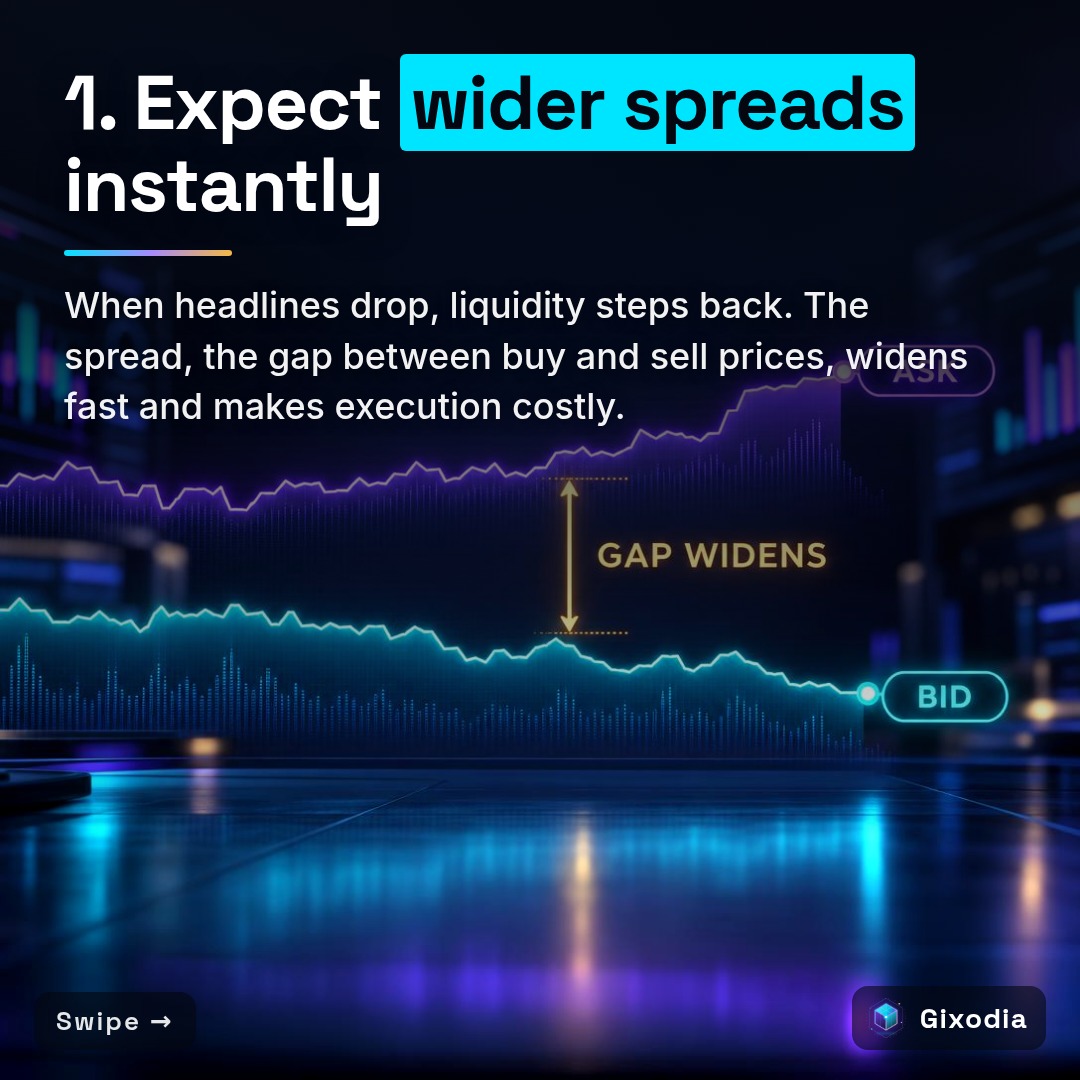
- When breaking headlines drop, liquidity providers step back, causing bid-ask spreads to widen abruptly.
- A standard stop loss converts into a market order once triggered, which means execution can slip in fast markets.
- Mechanical position sizing scales down lot sizes whenever stop distance expands, keeping cash risk steady.
- Automated spread filters prevent trading software from taking expensive entries during news spikes.
- Setting a hard daily loss limit stops emotional overtrading and preserves capital when headlines shake the market.
What happens to market structure when breaking news hits?
When unscheduled news hits, market makers withdraw their resting orders to prevent adverse fills, causing available order depth to thin out and spreads to expand dramatically within seconds.
In calm market conditions, buyers and sellers offer deep liquidity across nearby price levels. When sudden geopolitical headlines or emergency announcements strike, institutional market participants step back. The spread, which is the gap between the buy price and the sell price, jumps instantly. On major instruments like EUR/USD or gold, a normal tight spread can quickly stretch out wide as quote providers protect themselves.
Because liquidity thins out rapidly, incoming market orders must sweep through multiple price steps to find matches. This creates slippage, where your order gets filled at a worse price than the one you saw on screen. You can review understanding spread commission slippage to see how transaction costs escalate during these chaotic windows.
Understanding this market reality is essential for preserving capital. When price skips levels, entering or exiting on gut feel becomes dangerous, because the underlying quotes are shifting faster than a human can click.
- Quote providers pull resting bids and asks to avoid toxic order flow.
- Bid-ask spreads expand dramatically to offset increased counterparty risk.
- Price skips over thin price levels, causing execution slippage on market orders.
Why does manual discipline collapse during market shocks?
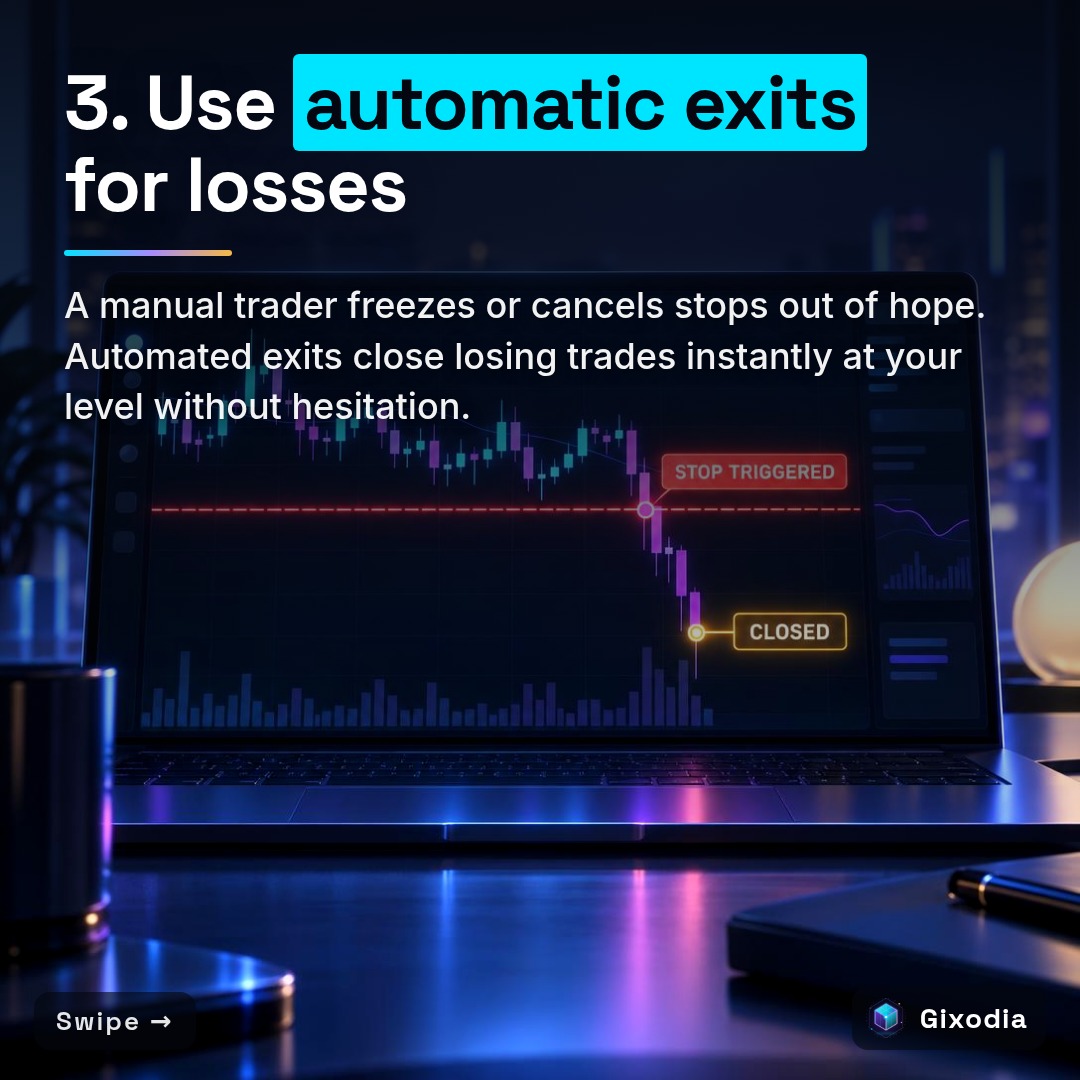
Manual discipline collapses during news shocks because sudden red candles trigger an acute survival response, driving traders to freeze, move stop losses, or open emotional revenge trades.
When an unexpected headline causes a fast price drop, a trader watching the screen experiences psychological shock. Instead of accepting the loss as an ordinary cost of business, human nature tempts the trader to cancel or drag the stop loss lower, hoping the market will reverse. This emotional reaction turns a small, calculated loss into a catastrophic hit to equity.
The opposite problem also happens frequently. A trader sees a sudden vertical green candle and rushes in with a manual market order out of fear of missing out. By the time the trade request reaches the server, the initial impulse has exhausted itself, leaving the trader stuck at the worst possible entry right before a sharp pullback. Examining why most retail traders lose shows that emotional intervention during fast moves ranks among the most common causes of blown accounts.
Mechanical rules eliminate this psychological trap by removing subjective choice. When decisions are pre-programmed into software or written down as ironclad operational mandates, panic cannot dictate order execution.
- Traders freeze or cancel stop losses out of irrational hope.
- Chasing price spikes creates entries at the top of exhausted ranges.
- Emotional stress leads to revenge trading and uncontrolled lot sizing.
How do mechanical rules manage position sizing during volatility?
Mechanical rules manage position sizing by scaling down trade lot sizes whenever the required stop distance expands, keeping your total cash risk completely stable regardless of market swings.
A major mistake traders make during news events is keeping their lot size constant. If you normally risk 20 pips on EUR/USD with a one-lot position, but breaking news increases your required stop distance to 60 pips to account for wider swings, your financial risk triples if you keep that same one lot. Mechanical frameworks treat risk as a fixed dollar or percentage amount, never as a fixed lot size.
Systematic traders use a deterministic formula to calculate trade volume: Lot Size equals Risk Amount divided by the product of Stop Distance and Pip Value. If your account equity is 10,000 dollars and you risk 1 percent, your Risk Amount is 100 dollars. With a normal 20-pip stop on EUR/USD where each pip is 10 dollars per standard lot, you trade 0.50 lots. When market turbulence pushes the necessary stop to 50 pips, the formula scales your volume down to 0.20 lots automatically. You can read pip and lot size explained to see how smaller lots protect your total account balance from sudden market moves.
This dynamic scaling ensures that even if price swings wildly and triggers your stop loss, the total loss on the trade matches your planned risk limit exactly. Your account survives because the cash at risk never expands.
- Formula: Lot Size = Cash Risk / (Stop Distance in Pips Pip Value per Lot).
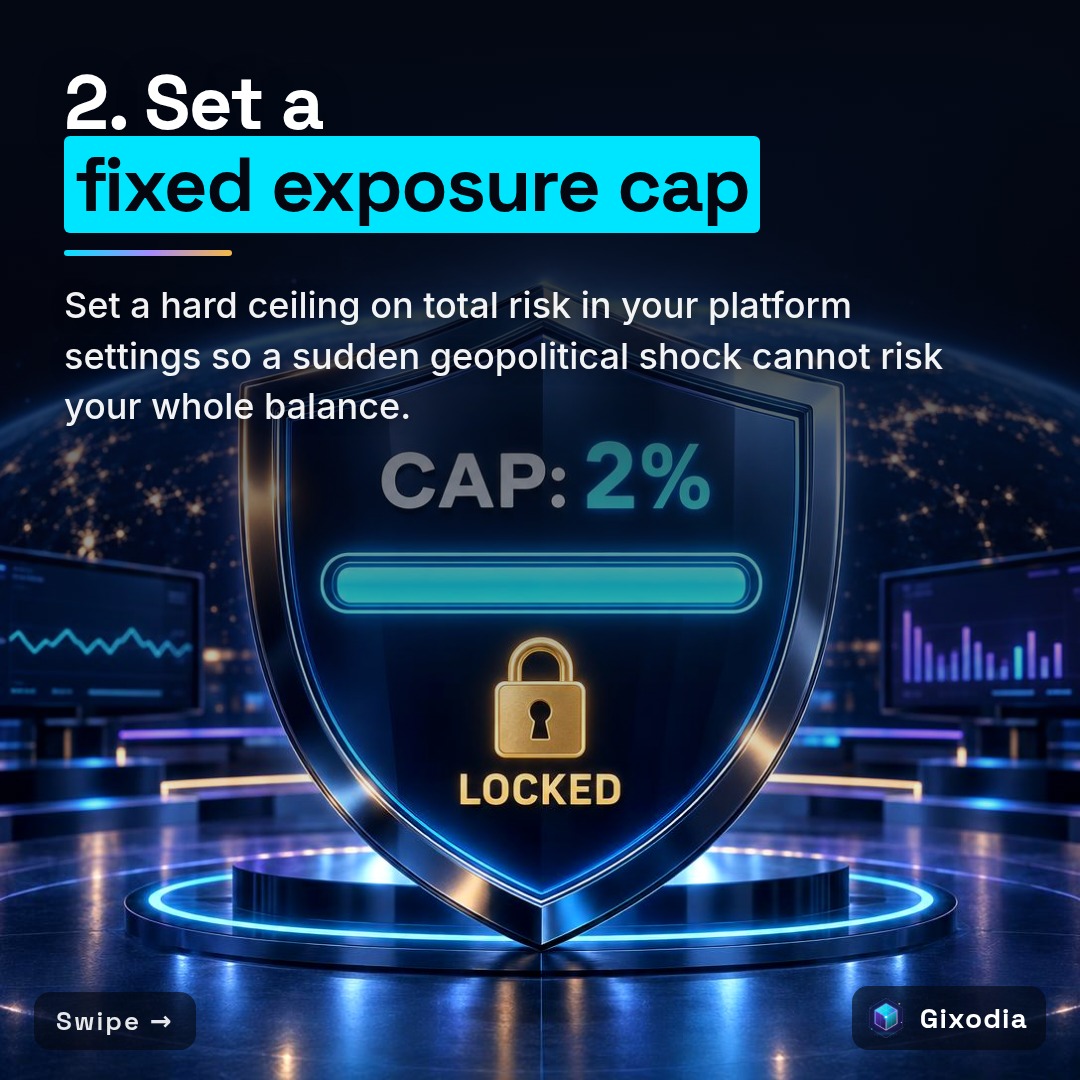
- Risk is fixed as a set percentage of equity, typically one to two percent.
- Position size contracts automatically as the required stop loss distance widens.
| Trading Element | Discretionary Manual Execution | Systematic Mechanical Execution |
|---|---|---|
| Stop Loss Handling | Traders often widen or cancel stop orders hoping the market bounces back. | Predefined stops trigger instantly at the specified level without second-guessing. |
| Spread Widening | Traders click market buy or sell buttons blindly, absorbing wide spreads. | Automated spread filters reject trade requests if the price gap exceeds the maximum allowed limit. |
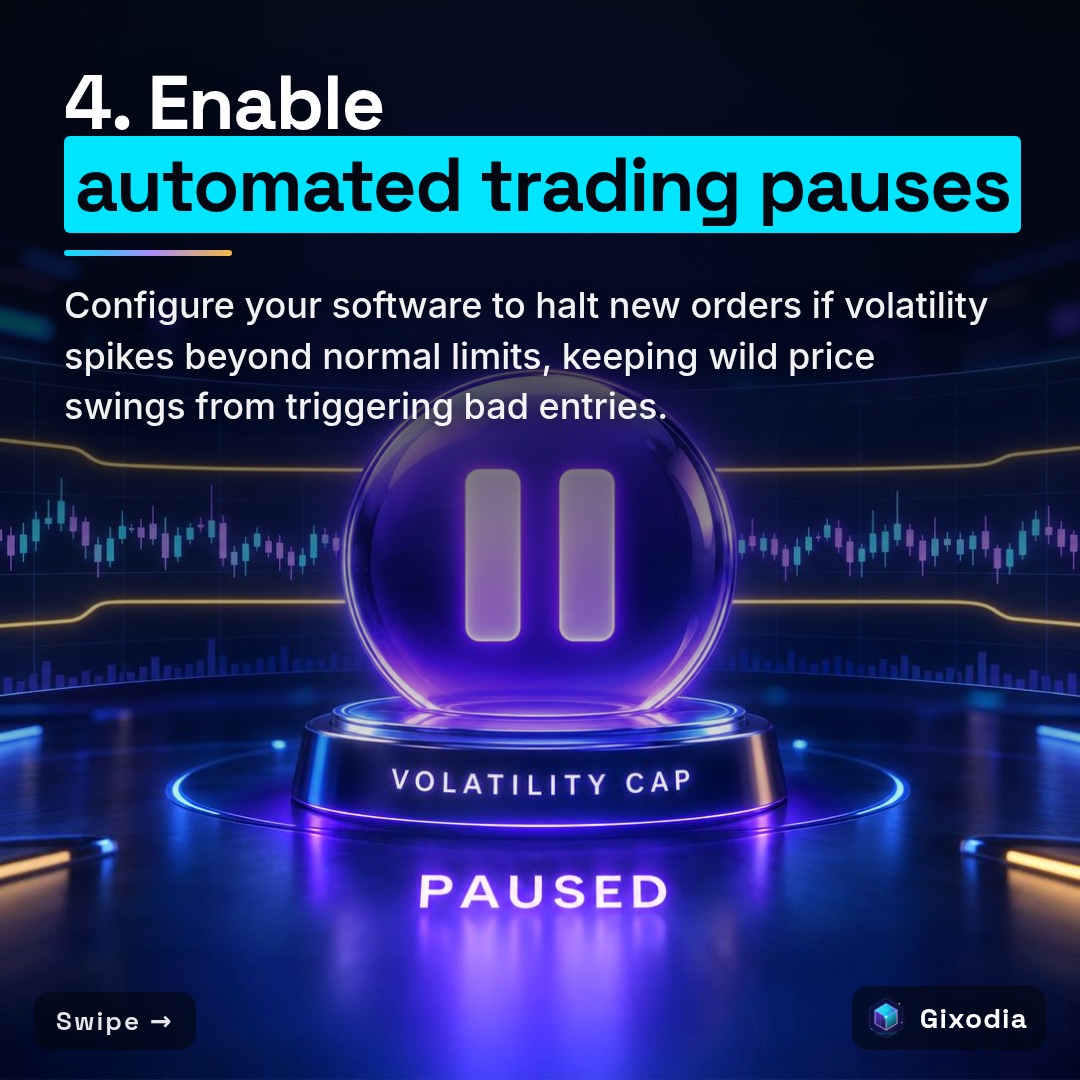
| Reaction to Fast Spikes | Fear of missing out drives panic entries directly into volatile price exhaustion zones. | Software waits for volatility to normalize or halts order placement until normal conditions return. |
| Position Sizing | Lot sizes stay static or increase recklessly during attempts to make back quick losses. | Position sizing rules shrink lot sizes whenever required stop distances expand. |
How do automated spread filters prevent expensive entries?
An automated spread filter checks the real-time gap between the buy and sell price, immediately blocking your trading software from opening any position if the spread exceeds a preset threshold.
During sudden breaking news, entering a trade when spreads are blown wide open puts you at an immediate, steep disadvantage. If you buy an instrument when the spread is twenty pips wide instead of its typical single pip, your trade starts instantly twenty pips in the red before the market even budges against you.
Automated trading software can enforce an electronic ceiling on allowed spreads. In MetaTrader 5, a trading script or Expert Advisor reads the current quote before sending an execution request. If the spread is higher than the user defined limit, the software discards the trade signal and waits. To understand how automated execution manages these boundaries, see what is algorithmic trading.
Gixodia builds algorithmic trading software for MetaTrader 5 that trades by predefined rules, the same way every time, free of hesitation, fatigue, and emotion. As a limit you set gets close, it scales down, and it pauses at that limit. It does not try to predict the market, ensuring you never enter trades under uncontrolled conditions.
- Filters actively query broker quotes before sending trade instructions.
- New orders are rejected whenever transaction costs breach normal baseline parameters.
- Execution resumes only after quote providers return and spreads compress.
Why must orders use stop limits and deviation settings?
Stop-limit orders and platform deviation settings set an absolute price boundary for execution, ensuring you never suffer catastrophic slippage when volatile markets skip across empty price levels.
Many traders believe that setting a standard stop loss means an exit at their exact price. In reality, regulatory bodies like FINRA and the SEC point out that once a stop price is triggered, it turns into an unconditional market order. In a fast-moving, illiquid news event, that market order will execute at the next available quote, which might sit dozens of pips past your intended level.
To combat this risk, mechanical rules use deviation parameters and limit orders. In MetaTrader 5, setting a maximum deviation parameter tells the broker server to reject the trade request if execution slips beyond a specific point threshold. For entries, a stop-limit order defines both a trigger price and the maximum price you are willing to pay, eliminating nasty execution surprises. Reviewing risk management mt4 ea can help you configure these order settings properly.
By defining execution limits ahead of time, you prevent the market from filling your orders at terrible prices during brief liquidity gaps.
- Standard stop orders convert to market orders that can slip badly in thin liquidity.
- Deviation parameters reject executions that slip beyond acceptable boundaries.
- Stop-limit orders ensure trades only fill within pre-approved price bands.
How does a hard daily pause save your trading capital?
A hard daily pause stops all software execution and blocks new positions once an account reaches a predefined daily loss limit, preventing emotional spirals and compounded losses during prolonged market chaos.
Severe breaking news events often create erratic chop that lasts for hours. A trader who takes a loss on the initial spike may immediately try to jump in the opposite direction, only to get whipped back and forth as secondary headlines break. This rapid cycle of revenge trading can drain an account in a single afternoon.
A mechanical trading architecture enforces an absolute equity threshold, often set at two or three percent of the starting balance for the day. If that loss threshold is breached, the execution logic halts all new trading until the next daily session resets the system.
This forced pause takes the computer and the trader out of danger. It protects you from repeated churn during unpredictable periods, ensuring your account lives to trade under clean conditions tomorrow.
- Enforces a hard ceiling on cumulative losses across a single 24-hour cycle.
- Blocks software and manual triggers from opening revenge positions.
- Preserves capital so normal trading rules can resume when conditions stabilize.
How to do it, step by step
- Lock your risk cap in MetaTrader 5. Program or configure your trading software to cap single trade exposure at a strict one percent of total account equity.
- Enable maximum spread filters. Set a hard spread threshold in your platform parameters to reject all new entry signals if the spread expands beyond normal baseline levels.
- Apply deviation parameters to trade requests. Specify an exact maximum deviation in your MetaTrader 5 order settings so orders reject instead of filling at severe slippage.
- Configure an automated daily loss limit. Establish a hard stop mechanism that disables trading scripts as soon as cumulative daily drawdown hits your chosen boundary.
- Wait out the initial headline reaction. Allow five to fifteen minutes after sudden market shocks for order book liquidity to return before evaluating any fresh setups.
Checklist before you take the trade
- Maximum single trade risk is locked at or below your defined equity percentage.
- Automated spread limits are active and will reject entries during volatility spikes.
- Hard stop loss orders accompany every open position automatically at placement.
- Deviation thresholds are configured to prevent extreme slippage on fills.
- A hard daily loss ceiling is active to halt trading if multiple losses occur.
- Broker logs are audited regularly to verify all automated rules executed cleanly.
Common mistakes and how to fix them
✗ The mistake: Using market orders right as a news spike occurs.
✓ The fix: Wait for spreads to compress back to baseline levels, or deploy limit orders that set an absolute boundary on entry prices.
✗ The mistake: Setting pending straddle orders right before a high impact release.
✓ The fix: Avoid placing dual stop orders into illiquid conditions, as wide spreads often trigger both sides for instant losses.
✗ The mistake: Moving or widening a stop loss when the market moves rapidly against you.
✓ The fix: Let your mechanical stop execute at its original level, accepting the defined loss without manual interference.
Frequently asked questions
Why do spreads widen so fast when sudden news breaks?
Liquidity providers and market makers withdraw their resting orders to protect themselves from adverse price dislocation. With fewer participants quoting prices, the gap between the best available buy and sell quotes widens immediately.
Can automated software completely avoid slippage during breaking news?
No system can completely eliminate slippage when the market gaps over price levels. However, using maximum deviation settings and stop-limit orders prevents trades from executing past prices you find acceptable.
What should I do if a headline hits while I have an open trade?
If your mechanical stop loss and position size were set correctly at entry, leave the trade alone. Intervening manually in the middle of a spike usually results in panic decisions that worsen your losses.
How does Gixodia handle sudden market spikes?
Gixodia builds algorithmic trading software for MetaTrader 5 that trades by predefined rules, the same way every time. As a limit you set gets close, it scales down, and it pauses at that limit rather than trading in a panic.
Want your trading to follow fixed rules, the same way every time? Gixodia's trading software for MetaTrader 5 trades by predefined rules on your own broker account, in your own name. Try it free for 72 hours, a demo account is fine, then $499/year. Trading involves risk and you can lose money.
Sources
- 8 Forex News Trading Mistakes That Cost Traders Money (And How to Avoid Them) (newyorkcityservers.com)
- Regulatory Notice 16-19 | FINRA.org (finra.org)
- Types of orders: market, limit, stop — TradingView (tradingview.com)