 GIX
Protecting Your Trading Balance When Central Bank News Causes Liquidity to Evaporate

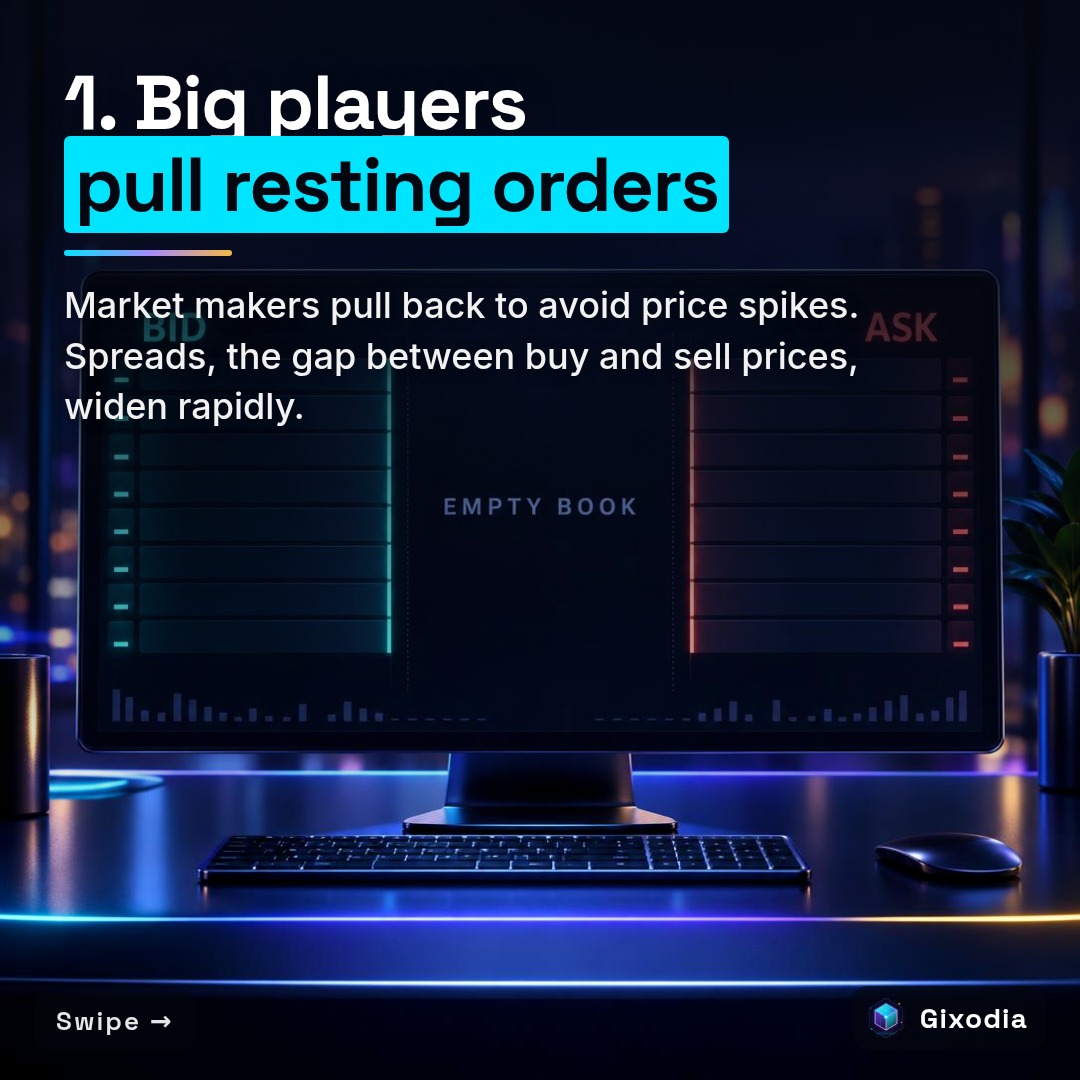
- Liquidity providers pull resting orders minutes before central bank rate releases to avoid asymmetric price risk.
- A standard stop loss converts into an ordinary market order, meaning it provides no set exit price during an empty order book.
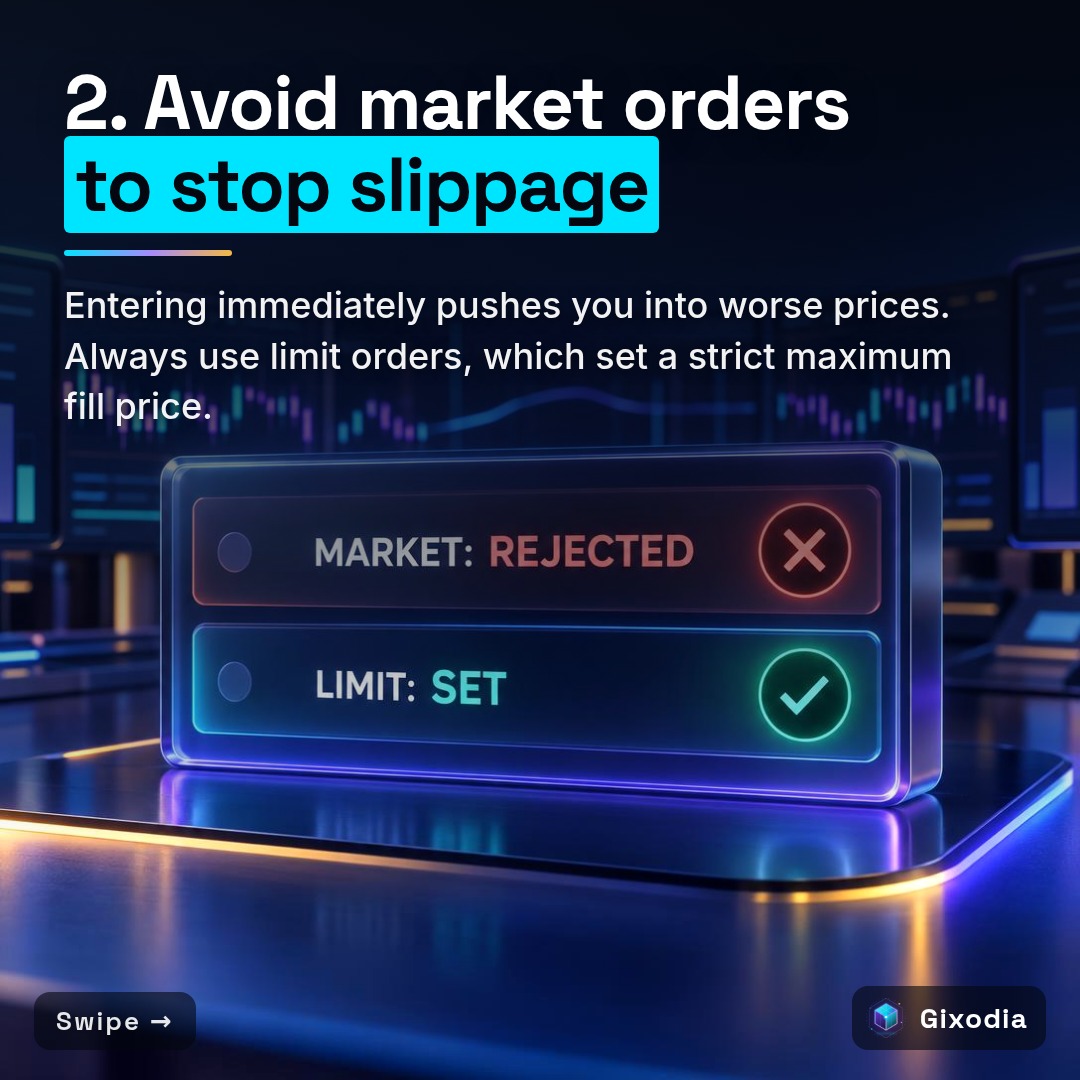
- Limit orders establish a firm price boundary, protecting your entry from negative slippage.
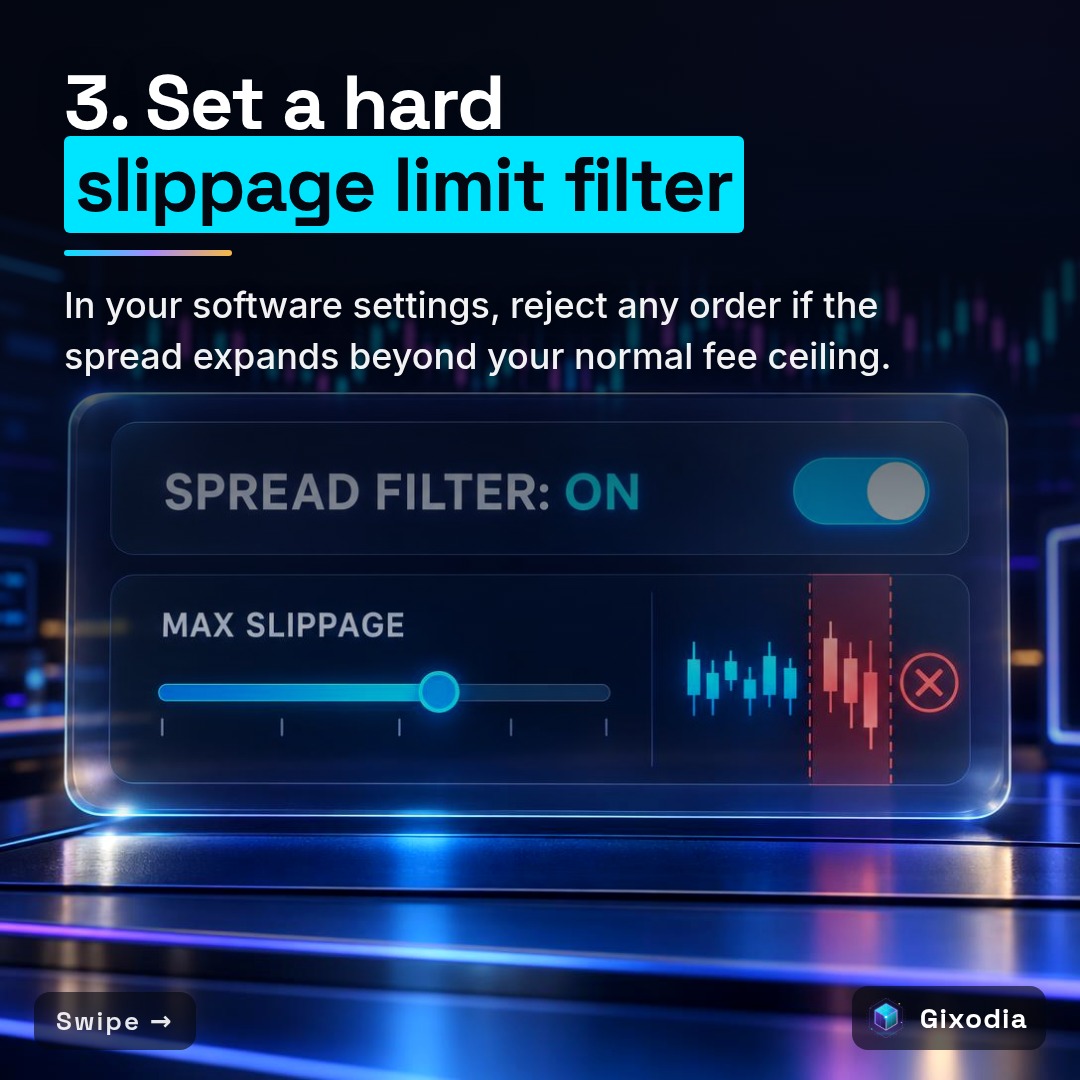
- Software spread filters prevent automated programs from entering when transaction costs blow out beyond normal boundaries.
- Waiting three to five minutes after an announcement gives spreads time to return to their baseline range before you enter.
What happens to market liquidity when central banks announce interest rates?
Liquidity risk is the danger that an asset cannot be traded quickly enough in desired volume without driving an extreme change in its market price, and it peaks when institutional liquidity providers cancel their resting limit orders right before a rate decision to avoid holding exposure during unpredictable statements.
Behind your chart screen, orders match against a book of bids and offers provided by institutional market makers. When an event like an interest rate decision approaches, these market makers step back because they face toxic order flow. If an interest rate surprise hits the wire, holding resting quotes on millions of currency units exposes them to heavy losses. By withdrawing those quotes, they leave the market depth thin.
With almost nobody left willing to buy or sell at steady prices, the spread, which is the gap between the buy price and the sell price, explodes outward. In a liquid pair like EUR/USD, an everyday spread of a fraction of a pip can suddenly stretch to several pips within seconds. In gold, the gap can jump dozens of points. Understanding how forex markets work reveals why price jumps erratically across empty price levels when this depth vanishes.
When you fire an order into this empty space, there are no tight quotes to absorb your trade. Your order travels up or down the price ladder until it finds someone willing to take the other side, creating sharp gaps on short timeframe charts.
- Institutional liquidity providers pull resting quotes to avoid holding exposure during surprise rate votes.
- The bid and ask spread widens sharply, increasing round-trip execution costs before price even moves.
- Available volume at each individual price tick shrinks to a fraction of its normal depth.
What is slippage and why does it wipe out trading accounts during news?
Slippage is the difference between the expected execution price shown on your chart and the actual price at which your broker fills the order, occurring either as positive price improvement or, far more commonly during volatile news spikes, severe negative fills.
Traders often assume that clicking buy or having an automated script trigger an entry means getting the price displayed on the monitor. During a news shock, that assumption breaks down completely. Slippage happens because price moves faster than the network can transmit your order, or because the volume available at the quoted tick has already disappeared.
A major misconception among beginner traders involves stop loss orders. A stop loss is simply an instruction that submits an ordinary market order the moment price touches your trigger level. If a central bank announcement causes gold to gap twenty points over your level, your broker fills that order at the next available transaction price. As explained in our guide on understanding spread commission slippage, an unmanaged stop loss in an empty market can close your trade far deeper into the red than you planned.
This dynamic explains why most retail traders lose their accounts during major economic releases. They place tight stop losses right next to their entries, only to watch a widening spread trigger their exit at a severe penalty, even before price moves in their anticipated direction.
How do limit orders protect your capital during central bank releases?
Limit orders protect your capital by setting an absolute boundary on execution price, instructing the broker that your order may execute only at your chosen price or a better one, which completely prevents negative slippage.
Unlike an immediate market order that takes whatever price is left in the book, a limit order establishes a firm line. If you place a Buy Limit below the current market price on EUR/USD, the platform can fill you only at that rate or lower. If liquidity vanishes and the market gaps past your price without matching depth, the order simply remains unfilled. Missing a move produces zero financial loss, whereas taking a fill twenty pips off target inflicts immediate damage on your balance.
Advanced platforms also support stop limit orders. When trading gold or major currencies, a Sell Stop Limit lets you define a stop activation level alongside a minimum acceptable exit price. If price gaps violently, your stop will not liquidate into a deep liquidity void at an uncontrolled loss. While an unfilled exit leaves market exposure open, it prevents catastrophic execution debt on volatile spikes.
Adopting limit orders on retracements instead of chasing initial breakouts is a cornerstone of professional practice. Exploring central bank forex dynamics shows that the first candle after a rate announcement is often a knee-jerk reaction. Resting your limit orders at structural levels gives the market room to absorb the news before bringing your order into play.
| Feature | Market Order | Limit Order |
|---|---|---|
| Fill Price Certainty | None. Executes at the next available price in the order book, which can slip dozens of points. | Restricted to your specified limit price or an improved price. |
| Execution Speed | Immediate execution by sweeping resting quotes across multiple levels. | Fills only when market price reaches your stated boundary. |
| Behavior in Liquidity Gaps | Absorbs heavy negative slippage if quotes vanish during the announcement. | Remains resting or goes unfilled without damaging your trading balance. |
| Best Application | Calm, high-volume sessions when you need immediate entry and spreads are tight. | Retracements after central bank releases once quote depth returns to normal. |
How should automated trading software handle sudden liquidity drying up?
Automated trading software should handle news liquidity shocks through strict spread filters, hard deviation thresholds, and scheduled operational pauses that stop automated execution before the economic event occurs.
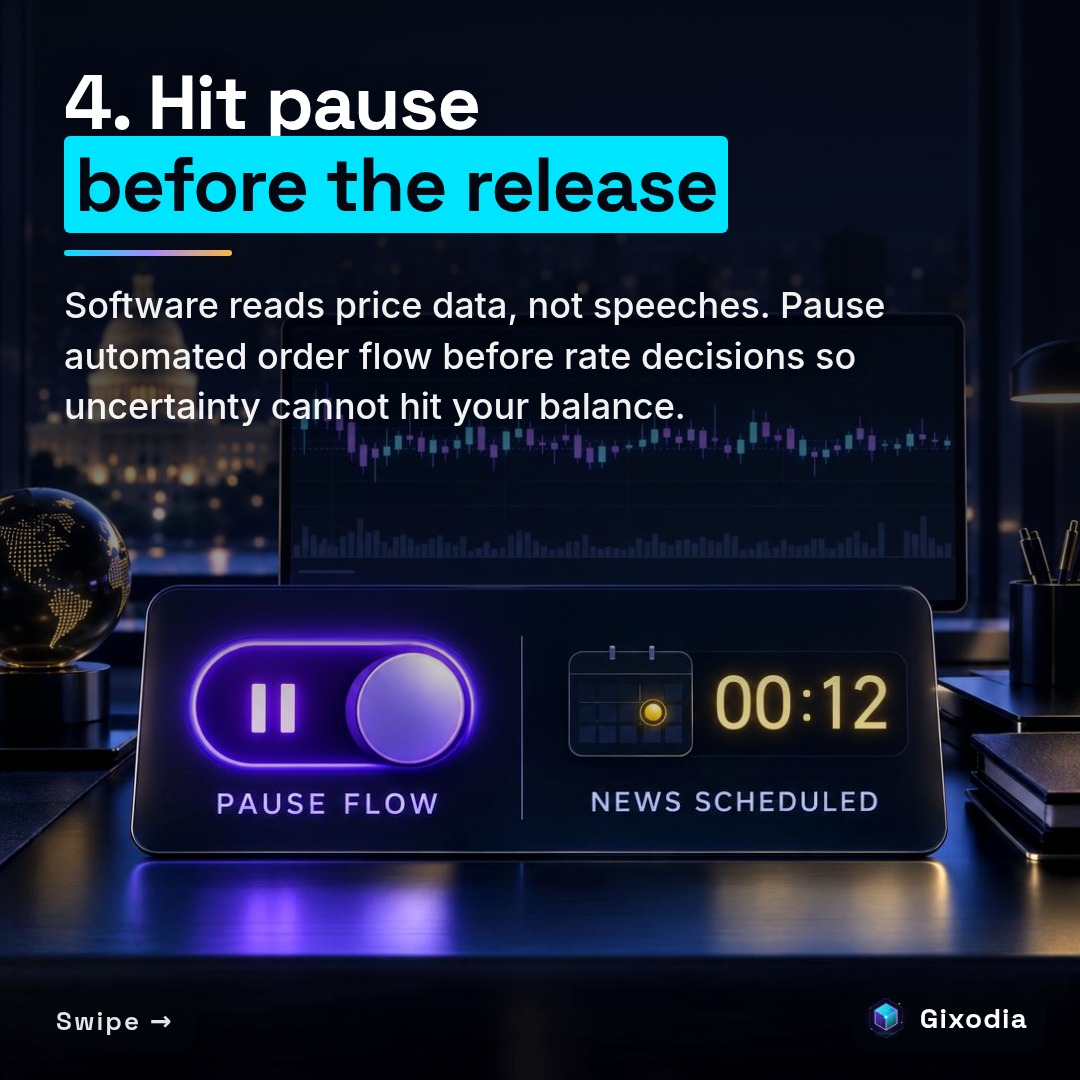
Trading software processes numerical price data without listening to speeches, reading press conference nuances, or evaluating policy statements. Because it operates purely on rules, an algorithm that is not programmed to monitor transaction costs might attempt to enter a trade precisely when the spread has blown out ten times larger than usual. Paying those widened costs destroys the statistical edge of any trading plan.
Disciplined risk control requires setting a spread ceiling inside your software. If standard EUR/USD execution fees jump beyond your set threshold, the program rejects or delays order placement until normal conditions return. In platforms like MetaTrader 5, deviation settings allow users to reject fills if the broker returns an execution price beyond a strict number of points. Gixodia builds algorithmic software for MetaTrader 5 that trades by predefined rules, the same way every time, scaling down as a set limit gets close and pausing at that boundary to keep risk consistent.
The safest rule for automated systems remains a calendar pause. Setting your automated execution to halt five to fifteen minutes before an interest rate statement stops random price spikes from triggering uncalculated orders. Once the initial storm clears, normal rule-based trading can resume on your platform.
When is it safe to resume trading after an interest rate statement?
It is safe to resume trading once the bid and ask spread has compressed back to its standard baseline and the market has established two to three consecutive candles without erratic tick jumps, which typically requires three to fifteen minutes after the announcement.
The seconds following a policy release are dominated by high-frequency market participants sweeping liquidity pools. Entering during this initial blast is essentially gambling against unpredictable infrastructure delays. By stepping back and letting the first few minutes run without you, the market reveals whether the announcement carried real institutional backing or merely caused a temporary shakeout.
Check your platform terminal to confirm that the spread has contracted to its typical fractional pip range. In EUR/USD, watch for the spread to stabilize near its everyday numbers. In gold, ensure that the bid and ask quotes are updating smoothly without skipping several ticks between refreshes. A stable quote stream confirms that institutional liquidity providers have returned their resting limits to the book.
Once the book restabilizes, you can execute your plan with standard technical parameters. Rather than chasing the candle that just printed, map key support levels or fair value zones and place resting limit orders. By entering on the first orderly pullback, you protect your capital and ensure that slippage remains minimal.
How to do it, step by step
- Audit the economic calendar each morning. Open your economic calendar at the start of your session and identify high-impact central bank announcements marked for interest rate decisions or monetary policy statements.
- Monitor pre-news market depth and spread. Check the spread display in MetaTrader 5 two to five minutes before the event. If the spread on EUR/USD or gold begins to expand beyond normal operating conditions, treat the market depth as depleted.
- Pause automated trade entry. Temporarily pause your automated software or Expert Advisor five to fifteen minutes before the scheduled release to prevent it from placing orders while order books are empty.
- Disable immediate market orders. Switch manual execution rules away from market orders to resting limit orders, ensuring that any position entered has a fixed upper price boundary.
- Enforce strict spread filters. Set a spread filter in your platform settings to reject or hold executions whenever transaction costs exceed your standard ceiling.
- Wait for spread compression post-release. Allow the initial news spike to clear for three to five minutes, resuming execution only after spreads compress back to baseline levels.
Checklist before you take the trade
- Check the economic calendar for scheduled central bank rate decisions.
- Inspect the current spread on your MetaTrader 5 terminal to confirm baseline pricing.
- Verify that your spread filter is active and configured to block wide fills.
- Pause automated order execution before the announcement window opens.
- Switch any planned entry triggers to limit orders rather than market orders.
- Confirm that post-announcement spreads have fully settled before resuming trading.
Common mistakes and how to fix them
✗ The mistake: Using market orders at the exact second of a central bank release.
✓ The fix: Never click market execution during the release. Wait several minutes for spreads to normalize, then enter with resting limit orders on a technical retracement.
✗ The mistake: Believing a standard stop loss provides a precise exit price in a fast market.
✓ The fix: Remember that stops convert into ordinary market orders upon trigger. Use stop-limit orders or reduce your position sizing to absorb adverse price gaps safely.
✗ The mistake: Leaving automated software running without a spread filter during high-impact news.
✓ The fix: Program an execution ceiling into your platform settings that rejects trades if the current spread exceeds your accepted operational limit.
Frequently asked questions
Why do spreads widen before central bank announcements?
Institutional liquidity providers pull their resting buy and sell orders from the market book to avoid holding exposure during unpredictable rate surprises. When these orders vanish, the distance between the remaining bids and asks expands rapidly, causing the spread to widen.
Can a stop loss protect me completely during an interest rate shock?
A stop loss converts into an immediate market order once its trigger price is touched. If the market gaps past your price due to missing liquidity, your broker executes the trade at the next available market price, which can result in significant negative slippage.
How long should I wait after a rate statement before trading again?
Most traders wait three to fifteen minutes after an announcement. This allows initial algorithmic spikes to clear and lets market makers return resting quotes to the order book, bringing spreads back down to normal levels.
Does automated trading software automatically know when news happens?
Automated software reads incoming tick quotes and price numbers rather than news headlines or spoken press conferences. Unless configured with an economic calendar filter or paused manually, an algorithm will attempt to trade incoming signals even if spreads have exploded.
Want your trading to follow fixed rules, the same way every time? Gixodia's trading software for MetaTrader 5 trades by predefined rules on your own broker account, in your own name. Try it free for 72 hours, a demo account is fine, then $499/year. Trading involves risk and you can lose money.
Sources
- Slippage in Trading: What It Is, Why It Happens, and When to Expect It (b2broker.com)
- Slippage in Trading: Requotes, Deviation and Measurement (pineconnector.com)
- Why Liquidity Risk Matters for Your Trades - Especially in Volatile Markets (abovethegreenline.com)