 GIX
How to Protect Your Trading Setup When Market Liquidity Disappears

- Liquidity risk is the inability to buy or sell quickly at the displayed market price without causing significant adverse price movement.
- A stop loss acts as a trigger rather than a fixed exit price and converts into a regular market order once hit.
- The daily five o'clock eastern forex rollover window suffers from thin depth that widens spreads across retail accounts.
- Resting stops clustered around obvious swing extremes often serve as counterparty volume before a true directional reversal.
- Configuring slippage deviation limits inside MetaTrader 5 prevents trades from filling across distant, empty price tiers.
What happens when market liquidity suddenly disappears?
Market liquidity risk is the danger that a trader cannot buy or sell a position quickly at the prevailing quoted price because resting counterparties have vanished from the order book.
In normal trading conditions, deep queues of buy and sell limit orders sit on both sides of the electronic order book. When major economic data approaches or unexpected news breaks, institutional market makers pull their resting orders to avoid holding unwanted inventory. Suddenly there is almost nobody to buy from or sell to, leaving the order book nearly empty.
When incoming market orders hit a thin book, they consume whatever small resting quotes remain. Instead of executing at the price you saw on screen, your order jumps several levels down or up, producing painful execution slippage. This sudden drain explains why understanding spread commission slippage is essential before leaving live capital exposed to sudden volatility shifts.
- Market participants pull resting limit quotes to eliminate overnight or headline exposure.
- The gap between the buy price and the sell price jumps several times above its regular average.
- Incoming market orders consume multiple price steps, producing immediate negative slippage.
Why do resting stop loss orders slip in thin conditions?
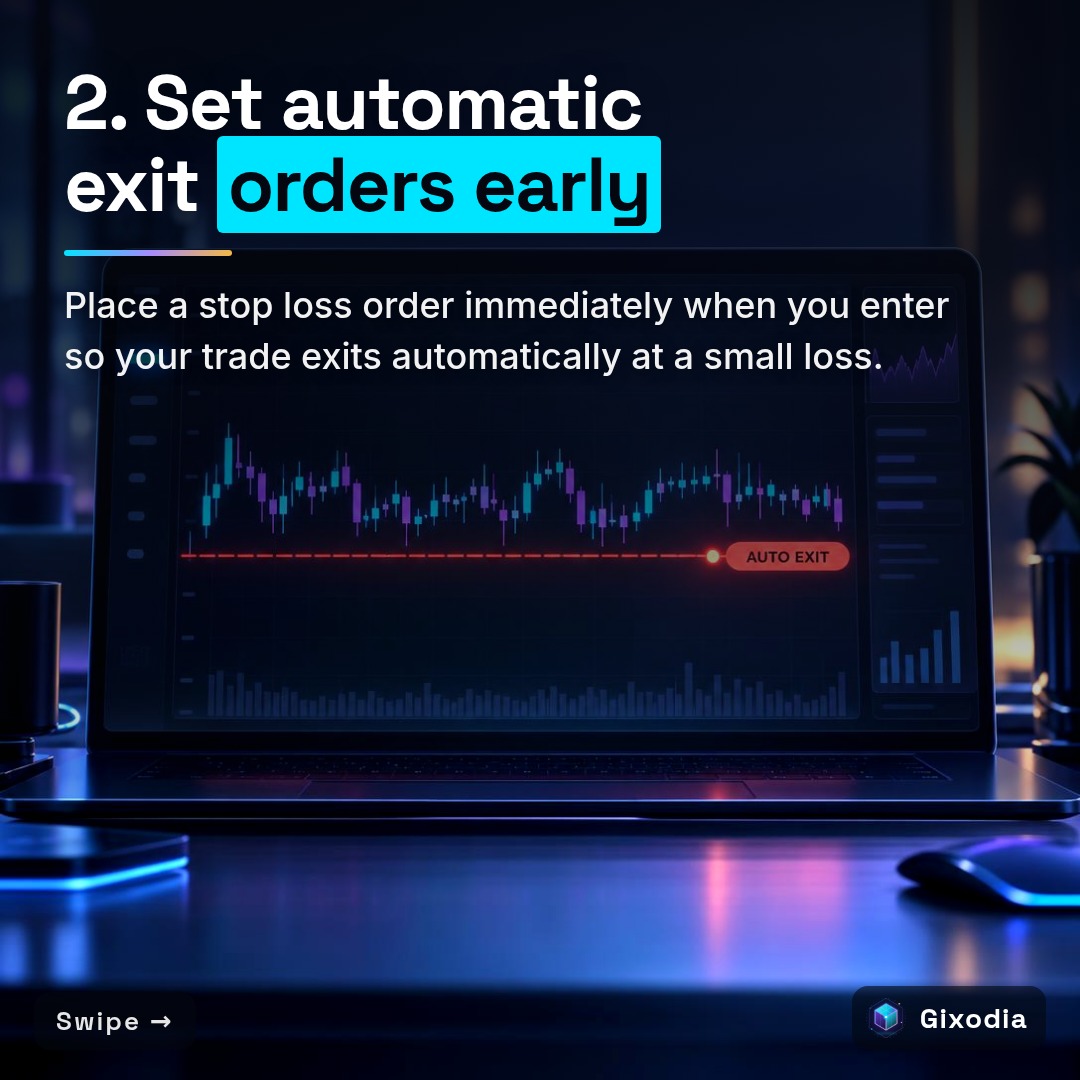
A stop loss is an instruction to trigger an exit once price touches a specific level, which converts immediately into a standard market order that fills at the next available market quote.
Many traders believe a stop loss locks in an exact dollar exit price. In reality, modern trading platforms treat a stop as an activation threshold. Once that price trades, your broker sends an order to close the trade at the best available quote. If the market has emptied out, the nearest matching counterparty might sit far past your technical level.
This dynamic explains why slippage and gaps occur during volatile price shocks. When dozens of retail stops cluster around the exact same swing level, they dump selling volume into a market that has no willing buyers. The cascade forces prices through several price tiers before finding enough resting buy orders to complete your trade.



How do liquidity sweeps target obvious retail chart levels?
A liquidity sweep happens when market momentum pushes past visible swing highs or lows to trigger clustered stop orders, providing the necessary volume for larger institutions to take the other side.
Large institutions handle trading volume that cannot enter the market in a single click without drastically driving prices against themselves. To build their positions, they require a deep pool of opposing orders. Because retail trading tutorials teach everyone to place stops right above double tops or right below equal lows, those price extremes become dense pools of resting exit orders.
When price briefly probes through support, it trips those sell stops. What retail traders consider a breakout is often institutional volume absorption. Once those stops are eaten, price snaps back inside the previous range and heads the other direction. Learning how resting volume clusters on EUR/USD helps traders spot these traps instead of becoming exit liquidity for someone else.
| Trading Condition | Deep Market Liquidity | Thin Market Liquidity |
|---|---|---|
| Bid-Ask Spread | Extremely tight with low execution cost | Widens substantially as participants pull quotes |
| Market Order Fills | Executes cleanly at or within a fraction of a pip | Sweeps through multiple price tiers, causing negative slippage |
| Stop Loss Behavior | Fills close to your predefined trigger price | Turns into a market order and fills at the next available quote |
| Volume Profile Response | Moves slowly through high-volume nodes with natural friction | Slices rapidly through low-volume nodes without support |
What times of day carry the highest risk of dried up depth?
Liquidity dries up most severely during high-impact macroeconomic data releases and the daily five o'clock eastern forex rollover window when institutional desks temporarily settle accounts.
Trading volume is not uniform across twenty-four hours. Peak depth occurs when the London and New York financial centers operate simultaneously, offering the tightest spreads and deepest books on EUR/USD. Conversely, when the New York floor closes at 5:00 PM EST, daily interest swaps are calculated, interbank desks hand over books, and available depth drops to a trickle.
Entering new trades or running tight stops during this rollover window exposes your balance to artificial spread spikes. Even if price does not move on an underlying basis, an inflated ask price can clip a short position's stop loss. Choosing the best hours to run bot configurations or manual strategies keeps your execution aligned with peak market depth.
How do automated rules help protect your setup from panic?
Automated rules protect accounts during liquidity shocks by executing pre-planned risk parameters consistently without the emotional hesitation, freezing, or revenge trading common in manual execution.
When price moves violently across an empty order book, a manual trader often freezes on screen, hoping the market will bounce back so they can exit even. Watching red numbers mount creates psychological panic, leading traders to pull their stops wider right when they should be stepping aside. This emotional breakdown is why most retail traders lose their capital during rapid market turns.
Algorithmic execution removes this hesitation completely. Gixodia builds algorithmic trading software for MetaTrader 5 that executes by predefined rules, the same way every time, free of fatigue and emotion. As an account approaches preset loss thresholds, the software scales down position sizing and pauses trading at the designated limit. It never attempts to guess or outsmart thin conditions; it simply enforces your risk parameters objectively.
How to do it, step by step
- Audit your platform deviation settings. Open your order ticket in MetaTrader 5 and configure the Deviation field. This caps maximum allowable slippage in points, instructing the server to reject the fill if the market moves beyond your acceptable slippage limit.
- Buffer stop losses beyond obvious swing points. Instead of placing your stop loss directly on a swing low or equal support level, place it several points beyond the low-volume node. This prevents normal stop-hunting sweeps from liquidating your trade before the directional move develops.
- Reduce position size ahead of scheduled news releases. Check the economic calendar for high-impact interest rate or inflation announcements. Cut your position size significantly so that if the spread widens fivefold, the dollar fluctuation remains within your daily risk limit.
- Replace market entries with pending limit orders. Submit limit orders instead of clicking instant market execution when trading near key boundaries. A limit order specifies your desired price or better, preventing the unexpected slippage that market orders often suffer in thin conditions.
- Test emergency pause controls. Make sure you know how to pause all active trading rules instantly. Knowing how to engage a fast pause prevents automated software or open setups from entering secondary positions while order books remain thin.
Checklist before you take the trade
- Confirm your stop loss is active on the broker server immediately upon order fill.
- Check that your lot size represents a small fraction of your overall account balance.
- Verify the economic calendar contains no major interest rate or inflation releases in the next hour.
- Ensure your MetaTrader 5 platform permissions are set to trade execution only with no withdrawal rights.
- Check the live spread on your chart to confirm it has not expanded beyond normal levels.
- Verify that your planned stop level is placed safely outside obvious swing clusters.
Common mistakes and how to fix them
✗ The mistake: Placing stops precisely at equal highs or lows where retail stop orders cluster.
✓ The fix: Wait for price to sweep beyond the obvious level, confirm that momentum fails to hold outside the range, and enter on the structural shift back inside.
✗ The mistake: Using instant market execution orders during economic news releases.
✓ The fix: Use pending limit orders with a strict maximum deviation parameter set, or simply avoid trading while the order book is thin.
✗ The mistake: Leaving high leverage active through the daily rollover period.
✓ The fix: Reduce open position sizing before 5:00 PM EST to prevent routine spread widening from hitting stops or triggering margin alerts.
Frequently asked questions
What is the difference between market risk and liquidity risk?
Market risk is the possibility that the price of an asset moves against your position due to broader macroeconomic changes. Liquidity risk is the danger that you cannot enter or exit a trade quickly at the quoted market price without suffering severe slippage or wide spreads.
Can a stop loss fail to execute at my exact price?
Yes, because a stop loss is a market order trigger rather than a fixed price promise. Once the market touches your trigger price, the platform sends a market order that fills at the next available quote in the broker's order book.
Why do spreads widen every day at 5:00 PM EST?
At 5:00 PM EST, institutional banks settle daily financing swaps and hand over order books between trading sessions. Available market depth drops significantly during this thirty-minute window, causing quoted bid-ask spreads to widen.
How does using limit orders reduce liquidity risk?
A limit order instructs your broker to fill your order only at your specified price or a better one. Unlike a market order, it will never fill at an adverse price if the order book suddenly empties out.
Want your trading to follow fixed rules, the same way every time? Gixodia's trading software for MetaTrader 5 trades by predefined rules on your own broker account, in your own name. Try it free for 72 hours, a demo account is fine, then $499/year. Trading involves risk and you can lose money.
Sources
- Why Liquidity Risk Matters for Your Trades - Especially in Volatile Markets (abovethegreenline.com)
- Liquidity (or Marketability) | Investor.gov (investor.gov)
- Liquidity Risk: What It Is, Examples, and vs Market Risk | Augment (augment.market)
- What is liquidity — TradingView (tradingview.com)