 GIX
The Sleep Test: How to Size Trades and Set Limits You Can Live With

- The sleep test measures whether your nervous system can handle the exact cash amount sitting at your stop loss.
- Position size must stem from the price distance to your invalidation level, never from how much profit you hope to make.
- Checking your phone at night is physical proof that your lot size exceeds your genuine risk tolerance.
- Trimming an uncomfortable position by half immediately restores clarity and halts panic-driven decisions.
What is the sleep test in trading?
The sleep test is a risk management discipline where you cap trade size and leverage so that hitting your maximum stop loss causes no personal anxiety or sleeplessness. It anchors your trade volume directly to the dollar amount you can lose comfortably overnight without disturbing your peace of mind.
The concept traces back to a classic Wall Street exchange recorded by author Burton Malkiel, where a troubled investor asked how to handle sleepless nights caused by volatile holdings [3, 5]. The advice was simple: sell down until you reach your sleeping point [5]. In modern execution, this means translating chart levels into exact cash figures before leaving your desk.
When you understand why most retail traders lose, you notice that emotional panic usually starts with lot sizes that are simply too heavy. A trader might accept a theoretical small loss on paper, but when that setup represents several hundred dollars of hard-earned cash, their heart rate spikes. If an open position makes you stare at your screen during dinner or wake up to check quotes, your position has failed the sleep test [2].
How do you calculate your true dollar risk?
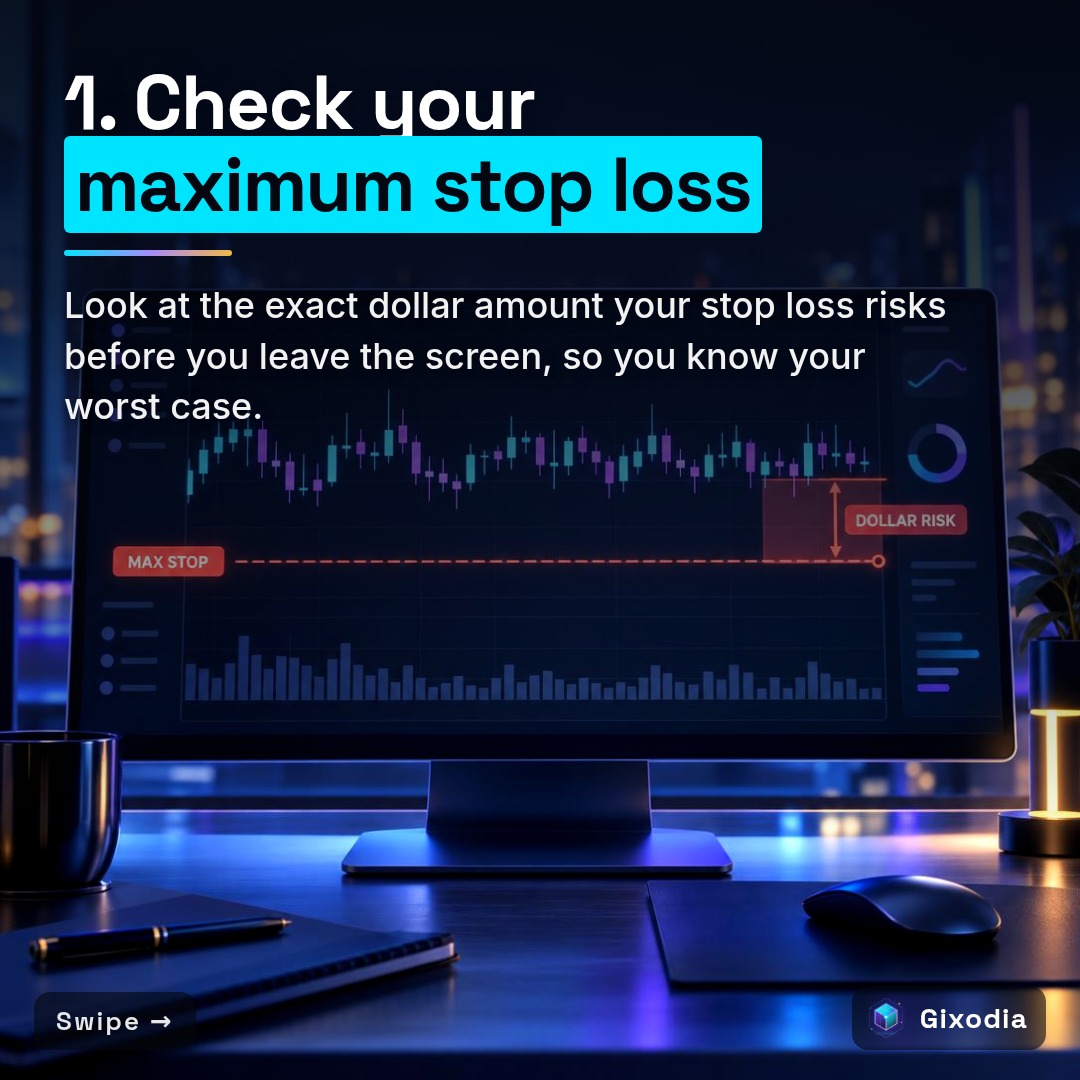
You calculate your true dollar risk by multiplying the distance between your entry price and your technical stop loss by your order volume. This reveals the exact cash amount that disappears from your broker balance if the market moves against your setup and triggers your exit order.
Many traders make the mistake of sizing positions by picking a round lot number out of habit. Proper risk management requires working backward from your exit point. First, identify where your technical idea fails on the chart, such as below a key support swing on EUR/USD. Then, measure the distance in points or pips to establish how much room the market needs.
Once you know the stop distance, you adjust your volume so the total monetary loss remains within your chosen boundary. Understanding pip and lot size explained lets you calculate the exact monetary outcome before you click buy or sell. If an unexpected move hits your stop, you already know the exact financial impact, which strips away the shock factor.

Why does trade sizing trigger physical anxiety?
Trade sizing triggers physical anxiety because your brain registers financial loss as an immediate threat to your personal security. When a position risks more money than your savings can comfortably absorb, your sympathetic nervous system activates, causing physical tension, an elevated heart rate, and chronic insomnia.
Anxiety is not a character flaw you can eliminate with willpower. It is biological feedback warning you that your capital is in danger [2]. When you overleverage a trade on gold, every small price fluctuation feels like a direct crisis. You enter a state of hypervigilance, refreshing quotes every few minutes because you cannot afford the worst case outcome.
This biological stress destroys disciplined execution. An anxious trader will often commit fatal mistakes, such as moving a stop loss further away to postpone a loss or revenge trading after an exit. Exploring the psychology of automated trading shows that removing excessive personal risk from the equation is the only way to keep decision-making calm, rational, and sustainable over hundreds of trades.
| Trading Behavior | Oversized Emotional Trading | Sleep Tested Position Sizing |
|---|---|---|
| Sizing method | Fixed arbitrary lots based on desired profits | Calculated volume based on stop loss distance |
| Overnight behavior | Checking charts at 3:00 AM from bed | Terminal closed with zero urge to check screens |
| Reaction to adverse moves | Widening stops or adding to losing trades | Accepting the predefined loss without manual interference |
| Portfolio risk exposure | Uncontrolled aggregate risk across correlated orders | Strict total exposure capped to a planned cash boundary |
What should you do when an open trade keeps you awake?
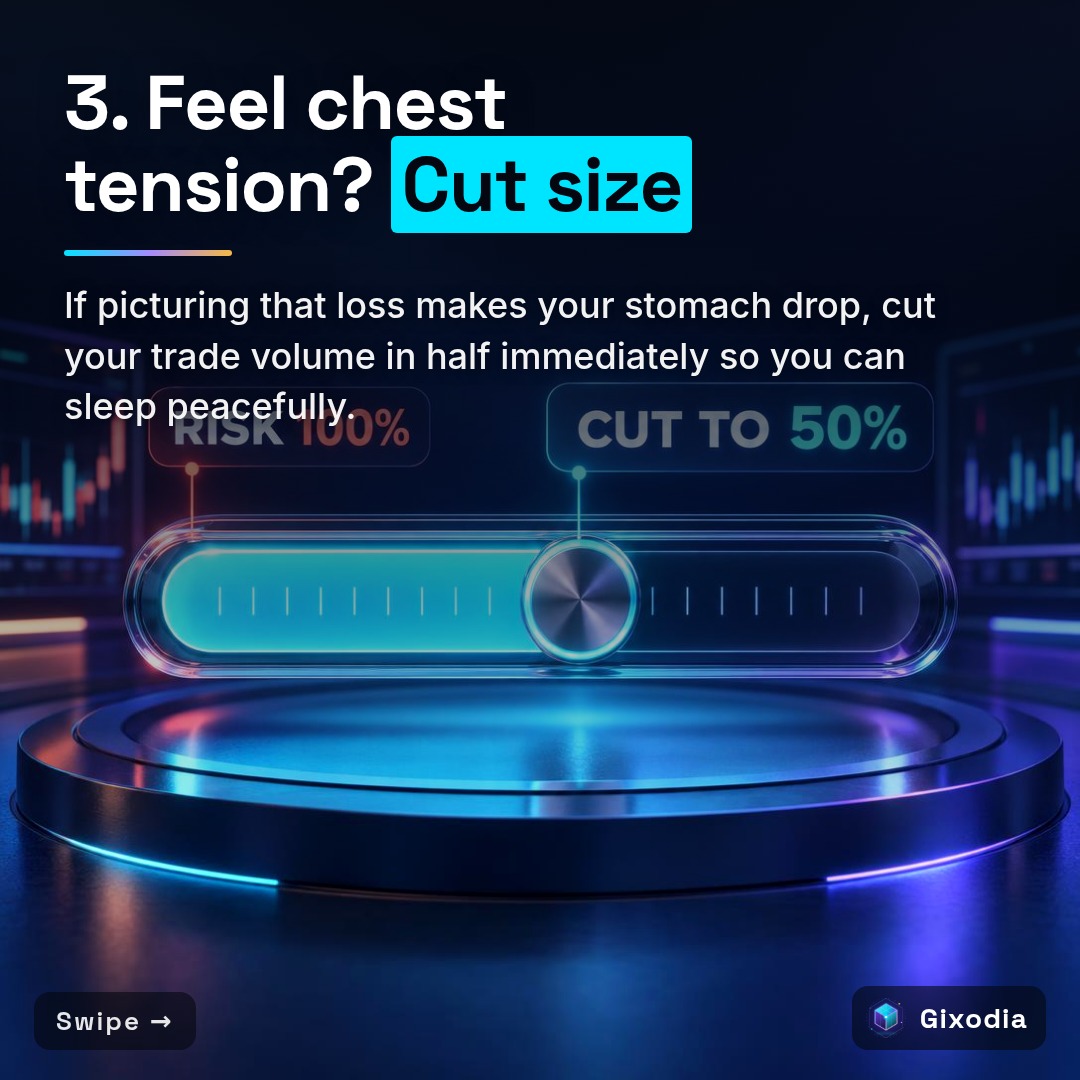
When an open trade keeps you awake, you should immediately cut your position size in half or close the trade entirely. Reducing your volume instantly lowers your monetary exposure, relieving the nervous tension that keeps you glued to the market.
Never attempt to rationalize an oversized trade by hoping the market will turn around by morning. Hope is not an operational strategy. If you catch yourself checking charts from your bed, treat that physical habit as hard proof that your position size is mathematically wrong for your risk tolerance [2].
Close half the lots right at market price. The moment you trim the order, you will feel an immediate sense of relief. That drop in physical tension marks your return to your true risk tolerance. Leaving the remaining half running with an untouched stop loss lets the trade play out naturally without draining your energy.
How do fixed rules and automation protect your sleeping point?
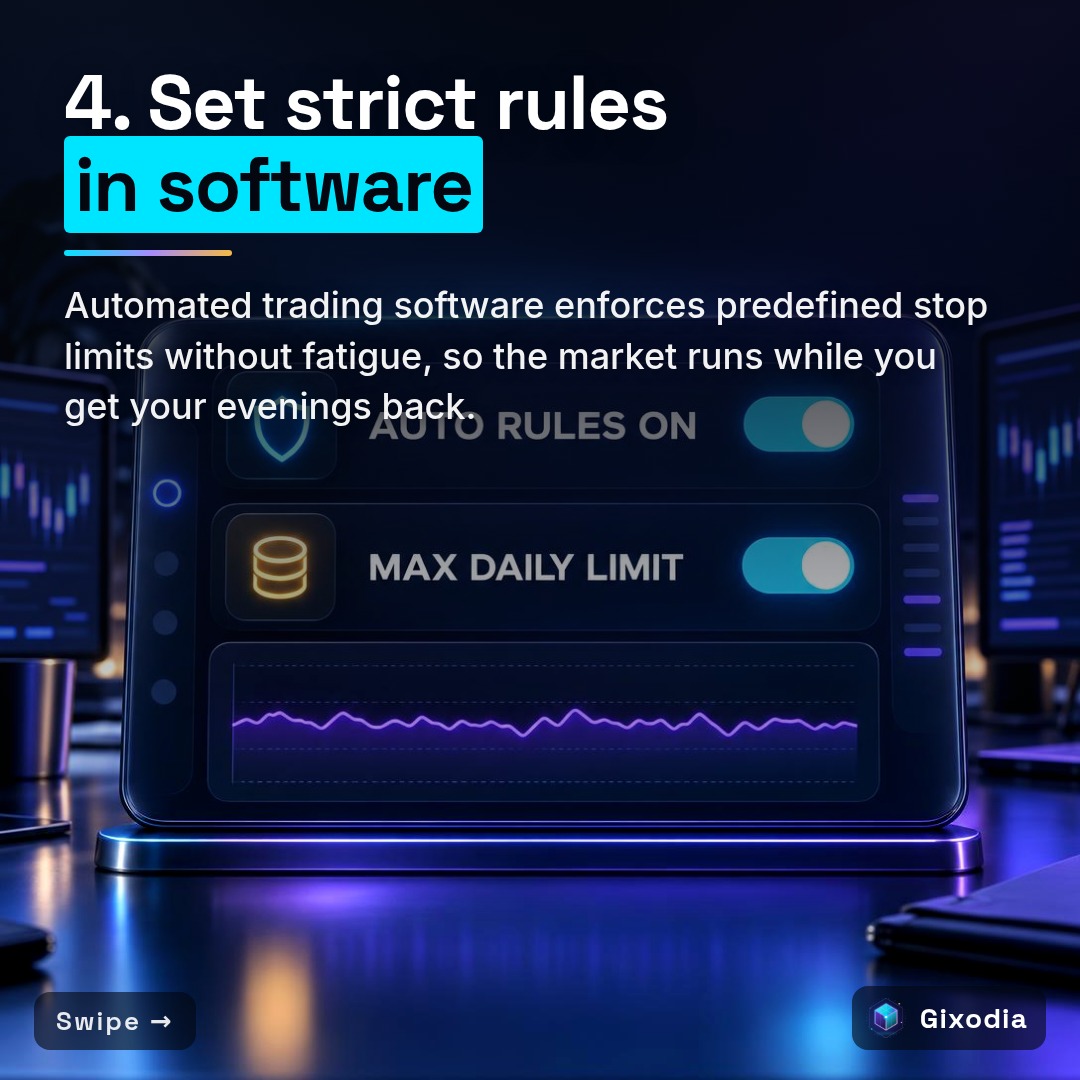
Fixed rules protect your sleeping point by removing discretionary sizing decisions and locking your risk parameters into software. An automated system applies identical risk limits to every trade, preventing emotional sizing spikes and executing exits without hesitation or fatigue.
Human traders grow tired after hours at the screen. Late in the day, fatigue makes it easy to take careless trades or abandon planned stop losses. In contrast, algorithmic systems run on strict logic. For instance, Gixodia builds algorithmic software for MetaTrader 5 that trades by predefined rules, the same way every time, free of hesitation, fatigue, and emotion.
When managing risk within strict environments, such as following a daily loss limit vs maximum drawdown structure, automated execution prevents you from accidentally overleveraging your balance. As a limit you set gets close, our trading bot scales down, and it pauses at that limit. It does not try to predict the market, giving you complete clarity over your maximum possible loss before you ever step away.
How to do it, step by step
- Establish your maximum cash risk limit. Decide the maximum cash loss you can take on a single idea without feeling regret or panic. Fix that number as your hard boundary for the setup.
- Locate technical invalidation on the chart. Find the structural price level where your market thesis is clearly proven wrong before entering the order. Note the exact price gap between your planned entry and this invalidation point.
- Compute lot volume to match your cash limit. Calculate your position volume so that your stop distance equals your chosen cash limit. In MetaTrader 5, use order calculation tools or an on-chart position sizing utility to ensure your lot size never exceeds this threshold.
- Conduct the overnight mental check. Picture waking up tomorrow morning to find your stop loss triggered and that cash subtracted from your broker balance. If the thought creates tightness in your chest or makes you want to monitor your phone, immediately cut the lot size in half.
- Attach immutable stop loss orders. Place hard stop loss orders directly on your broker server through MetaTrader 5. Once placed, leave the stop untouched to ensure your risk limit executes automatically without manual hesitation.
Checklist before you take the trade
- I know the exact cash amount risked if every open trade hits its stop loss.
- My total risk on this setup stays within my predefined personal cash limit.
- The stop loss is anchored to a structural chart invalidation level, not an arbitrary figure.
- Picturing this exact loss subtracted from my balance causes zero physical stress.
- I have placed hard stop loss orders directly on the broker server.
- My combined exposure across all concurrent positions remains safely contained.
- I can close my trading platform right now and leave it untouched until morning.
Common mistakes and how to fix them
✗ The mistake: Trading fixed lot sizes across different market conditions.
✓ The fix: Recalculate your volume dynamically for every trade so your dollar risk remains constant regardless of stop distance.
✗ The mistake: Widening stop loss orders overnight to give the trade breathing room.
✓ The fix: Treat stop orders as unchangeable invalidation boundaries; if you fear getting stopped out, reduce your trade size instead of widening the stop.
✗ The mistake: Adding to a losing position to lower your average entry price.
✓ The fix: Never average down on a losing trade; accept the original risk boundary and let your stop loss protect your remaining balance.
✗ The mistake: Stacking multiple correlated trades in the same direction.
✓ The fix: Treat all positions in correlated pairs as a single unified trade and cap their shared risk under your standard limit.
Frequently asked questions
What is the sleeping point in trading?
The sleeping point is the position size small enough that you feel no emotional urge to monitor the market overnight. It ensures your maximum monetary loss is comfortable enough that you can rest peacefully without checking prices.
Why do I wake up at night to check my open trades?
You wake up because your open trade risks more money than your nervous system can handle. That physical urge to check your phone is clear proof that your position size exceeds your genuine risk tolerance.
How can I quickly fix an oversized trade before going to bed?
Close half of your open volume immediately at the current market price. Trimming the position cuts your dollar exposure in half and instantly relieves the psychological tension keeping you awake.
Does reducing trade size ruin compounding?
No, reducing trade size preserves your capital and prevents catastrophic drawdowns. Avoiding deep account losses keeps your balance intact so consistent trading can build capital steadily over time.
Want your trading to follow fixed rules, the same way every time? Gixodia's trading software for MetaTrader 5 trades by predefined rules on your own broker account, in your own name. Try it free for 72 hours, a demo account is fine, then $499/year. Trading involves risk and you can lose money.
Sources
- You're Not Nervous About Your Stocks—You're Nervous About Position Sizing - Steady Compounding (steadycompounding.com)
- Burton G. Malkiel Quotes (Author of A Random Walk Down Wall Street) (goodreads.com)
- Burton Malkiel: Risk Tolerance – What’s Your Sleeping Point? (acquirersmultiple.com)