 GIX
How to Protect Your Orders from Slippage and Wide Spreads During News Events

- Slippage is the price gap between the moment an order is sent and the actual price where the broker fills it.
- A standard stop loss converts into an unconstrained market order once touched, which can lead to large execution gaps during volatile news prints.
- Limit orders define an exact boundary, executing only at the selected price or a better one to prevent negative slippage.
- MetaTrader 5 allows traders to cap slippage through the deviation setting so the server rejects fills that drift past a chosen buffer.
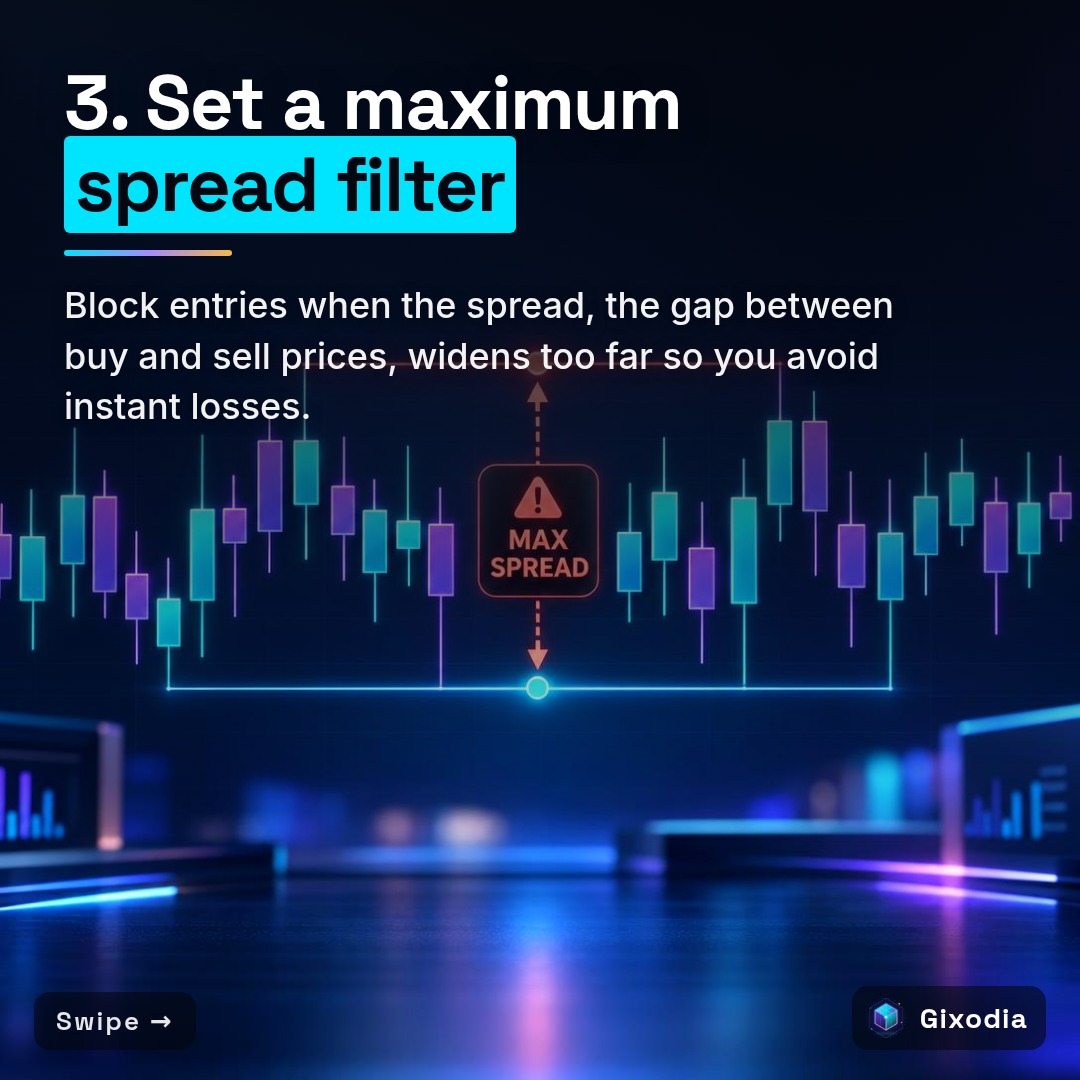
- The spread represents the gap between the buy price and the sell price, and during breaking events it can widen many times beyond normal baselines.
What is slippage and why does it happen?
Slippage is the difference between the price a trader expects when submitting an order and the actual price where the trade fills. It happens when market prices change between the moment an order leaves the terminal and the moment the broker matches it against an available counterparty.
When an order is submitted, it travels to a matching engine. On quiet afternoons in EUR/USD, counterparty volume is deep, meaning buyers and sellers sit closely packed at every fraction of a pip. An order matches the price on screen almost instantly. Traders can review these mechanics in our guide on understanding spread commission slippage.
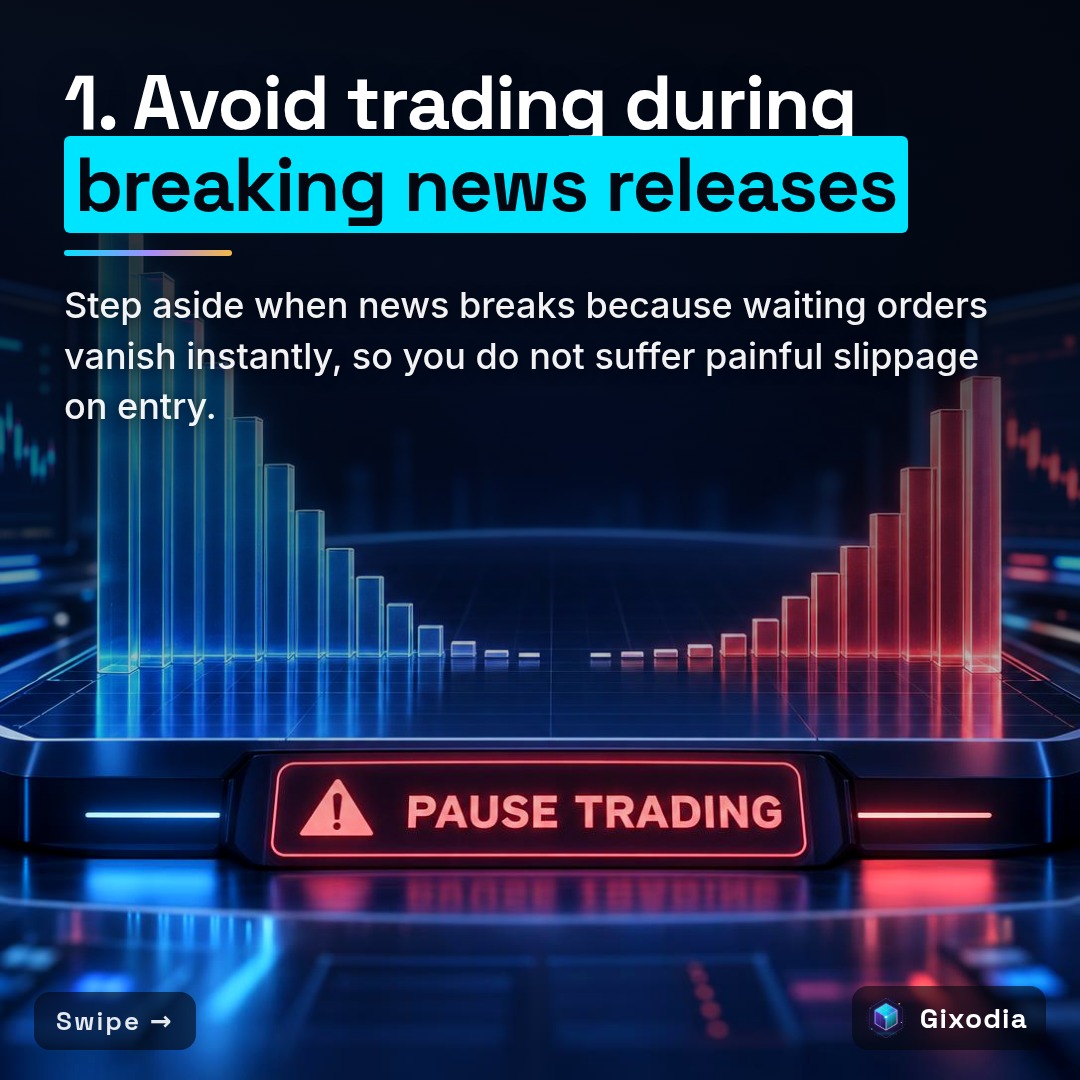
During major macroeconomic announcements like US inflation numbers or central bank policy decisions, that orderly market changes fast. Financial institutions and liquidity providers pull their resting quotes off the order book because they want to avoid taking the wrong side of an unpredictable release. As resting offers vanish, incoming market orders are forced to walk up or down the price tiers to find the next willing counterparty.
If a market order to buy EUR/USD is sent at 1.0850 right as a surprise number drops, the nearest seller might be sitting at 1.0862. The platform does not wait for a better rate; it fills the trade at 1.0862. That difference of twelve pips is negative slippage, an unexpected cost deducted from the account balance the moment the trade opens.
- Negative slippage occurs when an order fills at a worse price than requested.
- Positive slippage occurs when an order fills at a better price due to favorable order flow.
- Standard market orders accept whatever price rests on the other side of the book, no matter how distant.
Why do broker spreads widen so fast during news?
Spreads widen during news because liquidity providers pull their resting limit orders to manage inventory risk, leaving fewer market participants on both sides. The gap between the highest price a buyer offers and the lowest price a seller accepts stretches wide until normal trading volume returns.
The spread is the difference between the Bid, the sell price, and the Ask, the buy price. Under normal conditions on high-volume assets like EUR/USD, this difference is tiny, often less than one pip. On gold (XAU/USD), baseline spreads stay relatively tight during normal trading hours. However, when major news hits the wires, market makers step back to protect themselves from rapid shifts.
When these participants pull back, the order book becomes thin. Suddenly, the best available buyer might sit several pips below the last trade, while the closest seller is several pips above it. The displayed spread expands from its normal baseline to a broad canyon. Entering a position while this gap is open means starting at an immediate disadvantage, absorbing a steep pricing barrier just to enter.
Even if the market direction is anticipated correctly, a widened spread can hit a protective stop before the real move begins. For example, in a short trade, the stop loss triggers on the Ask price. If the Ask spikes upward purely because the spread expanded, the position is closed at a loss even while the chart candle body remains well below the technical level.
How do standard stop loss orders behave during news cascades?
A standard stop loss does not protect an account from price jumps because it turns into an unconstrained market order the moment its price trigger is touched. If the market gaps past the stop level during a news spike, the trade closes at the next available price, which can be significantly worse than planned.
Many traders believe a stop loss acts as an unbreakable price wall. In over-the-counter accounts and exchange venues alike, a stop loss is simply a trigger instruction. It signals the broker platform that once price touches a specific line, the trade is liquidated using an ordinary market order.
Consider a buy trade on gold at 2650.00 with a stop loss set at 2642.00. High-impact news crosses the wires, creating an immediate cascade of selling. Instead of moving smoothly from 2643 down through 2642, the price prints 2643.00 and the very next available quote leaps directly to 2635.00. Because the 2642 trigger was breached, the stop fires instantly as a market order and fills at 2635.00.
Instead of the eight-dollar move planned, the account takes a thirteen-dollar loss. This gap risk is especially common during unexpected rate decisions and macroeconomic surprises. Understanding this behavior is central to protecting an account, as explained in our risk management mt4 ea guide.
| Execution Feature | Market Order | Standard Stop Loss | Limit Order |
|---|---|---|---|
| Fill Price Certainty | None; fills at whatever price is available | None; turns into a market order once touched | Executes only at selected price or better |
| Slippage Risk | Very high during volatile news prints | High; gaps clean through trigger levels | No negative slippage; positive slippage possible |
| Execution Probability | Fills immediately regardless of market cost | Fills once price breaches the trigger mark | Only fills if a matching counterparty exists |
| Spread Sensitivity | Full exposure to widened broker markups | Triggers off Bid or Ask depending on direction | Protected by an exact execution boundary |
How do limit orders protect against slippage?
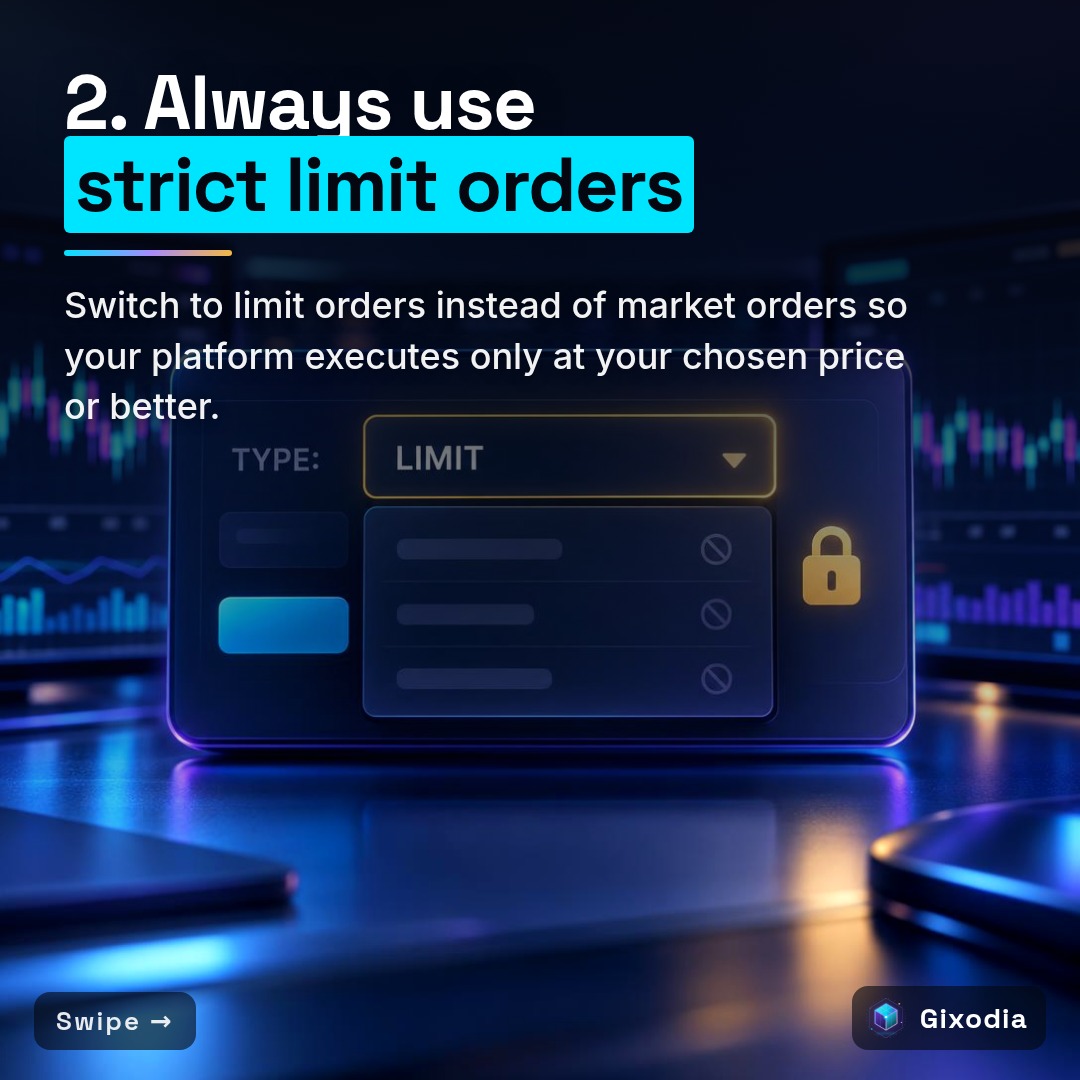
Limit orders protect against slippage by establishing a hard price ceiling for buys or a price floor for sells. A broker can only fill a limit order at the specified price or a better one, preventing negative slippage regardless of market volatility.
Unlike market orders that demand an immediate fill at any price, a buy limit order instructs the platform to execute only if the price is at or below the target. A sell limit order instructs the platform to execute only if the price is at or above the target. If the market leaps past the level without offering counterparties at that exact mark, the order simply remains resting and unfilled.
This balance is clear: price quality is prioritized over fill certainty. During aggressive news cascades, missing an entry is far safer than absorbing twenty pips of negative slippage on an open position. If the market moves too fast to honor the boundary, the account stays safely in cash without taking damage.
Traders can also use stop-limit orders on platforms that support them. A stop-limit order sets two figures: a stop price that activates the order and a limit price that defines the worst acceptable fill. If the market gaps beyond that limit boundary, the platform refuses to execute at an extreme quote, keeping account capital shielded until an orderly market returns.
How do you set maximum deviation filters in MetaTrader 5?
Traders set maximum deviation in MetaTrader 5 by entering a point value in the order ticket or configuring default trade options. This setting tells the server to cancel a market order if the available fill price drifts further from the requested price than the chosen limit.
MetaTrader 5 includes built-in slippage controls that protect traders from runaway pricing. In the platform, opening Tools, selecting Options, and navigating to the Trade tab reveals default settings. Here, the default deviation parameter can be configured in points. For instance, setting this value to 20 points allows a maximum price drift of 2 pips on currency pairs like EUR/USD.
When opening an order ticket manually by pressing F9, the Deviation field is visible. Entering a value there means that if the broker's liquidity pool shifts beyond that point band while the order travels across the network, the server rejects the order instead of filling it at a compromised rate. In fast-moving markets, receiving a rejection notice is much better than holding a losing fill.
Traders running automated tools can hardcode these same constraints into their software routines. A well-built script checks the current market spread before sending an order, refusing to open new trades if the spread exceeds a normal threshold. For traders exploring rules-based setups, our guide on what is algorithmic trading explains how fixed parameters keep risk under control.
How do rules-based systems handle news cascades?
Rules-based systems handle news cascades by executing predefined routines that enforce strict spread filters, manage deviation thresholds, and pause active trading when market conditions become unstable.
Manual traders frequently make costly mistakes during fast news moves, clicking out of panic or chasing extended candles. Automated systems, like Expert Advisors built for MetaTrader 5, execute strictly according to predefined rules without emotional interference. They do not get caught up in the excitement of a sudden breakout candle.
Disciplined software can query the current spread before sending an order. If the spread on EUR/USD jumps from 0.6 pips to 6 pips during an announcement, an automated spread filter blocks any new execution until conditions settle. Gixodia's trading software operates on fixed rules of this nature, executing the same way every time without hesitation or panic. As a risk limit gets close, it scales down, and it pauses at that limit.
Rules-based execution eliminates impulsive decisions during news releases. By letting predefined software parameters dictate when conditions are too dangerous to enter, traders avoid the worst traps of widened spreads and volatile slippage.
How to do it, step by step
- Audit historical spread spikes. Open the Market Watch window in MetaTrader 5, right click the column headers, and check Spread to observe how wide the gap stretches during high impact releases.
- Configure platform deviation limits. Navigate to Tools, select Options, open the Trade tab in MetaTrader 5, and set your default deviation to a fixed point value such as 15 to 20 points.
- Replace market entries with limit orders. Use buy limit and sell limit order types when planning entries around volatile zones so your platform only fills at your selected price or a better one.
- Set automated spread filters. Ensure your Expert Advisor or execution script checks symbol spread properties and aborts order dispatch whenever spreads exceed your allowed maximum.
- Verify news calendar timing. Track scheduled macroeconomic data on an economic calendar and step aside from placing fresh orders in the minutes immediately surrounding the release.
Checklist before you take the trade
- Check the economic calendar for scheduled tier-one releases before the trading session starts.
- Verify that the Spread column is visible in your platform Market Watch window.
- Ensure your default trade deviation is configured in MetaTrader 5 trade settings.
- Confirm pending orders are placed as limits rather than unconstrained market orders.
- Check that automated spread filters are active in your platform scripts.
- Allow post-release volatility to settle before executing new technical setups.
Common mistakes and how to fix them
✗ The mistake: Submitting market orders directly into high impact economic announcements.
✓ The fix: Switch to strict limit orders or wait several minutes after the data release until the order book refills.
✗ The mistake: Relying on a standard stop loss to prevent large losses during news gaps.
✓ The fix: Recognize that stops turn into market orders when triggered, and reduce position sizing before scheduled news events to absorb potential gap distance.
✗ The mistake: Ignoring spread expansion when setting close stop loss levels.
✓ The fix: Factor the wider Bid Ask gap into stop placement so widened spreads do not prematurely trigger an exit.
Frequently asked questions
Can slippage be positive in trading?
Yes, slippage can be positive. If the market moves in your favor between order transmission and execution, your broker matches your trade at a better price than requested. Regulatory directives require brokers to pass positive slippage to client accounts symmetrically.
Why does my stop loss fill at a worse price during news?
A stop loss is an instruction that turns into a standard market order once its trigger price is reached. During news spikes, prices often gap past individual price increments, meaning the market fills the order at the next available quote on the book.
What is the deviation setting in MetaTrader 5?
The deviation setting in MetaTrader 5 specifies the maximum difference in points that you permit between the requested order price and the broker execution price. If the available price drifts beyond that number, the server cancels the fill.
Which currency pairs experience the lowest news slippage?
EUR/USD generally experiences the lowest slippage because it possesses the deepest underlying liquidity in the global currency market. Even so, during major releases like Non Farm Payrolls, spreads on EUR/USD can still expand noticeably.
Want your trading to follow fixed rules, the same way every time? Gixodia's trading software for MetaTrader 5 trades by predefined rules on your own broker account, in your own name. Try it free for 72 hours, a demo account is fine, then $499/year. Trading involves risk and you can lose money.
Sources
- Trading During News: Spread, Slippage, and Liquidity Risks (rann.forex)
- acix.io
- What Is Slippage in Trading? Causes & Fixes (fxprimus.com)