 GIX
Why Stop Losses Slip During Sharp Market Drops and How Order Cascades Cause It

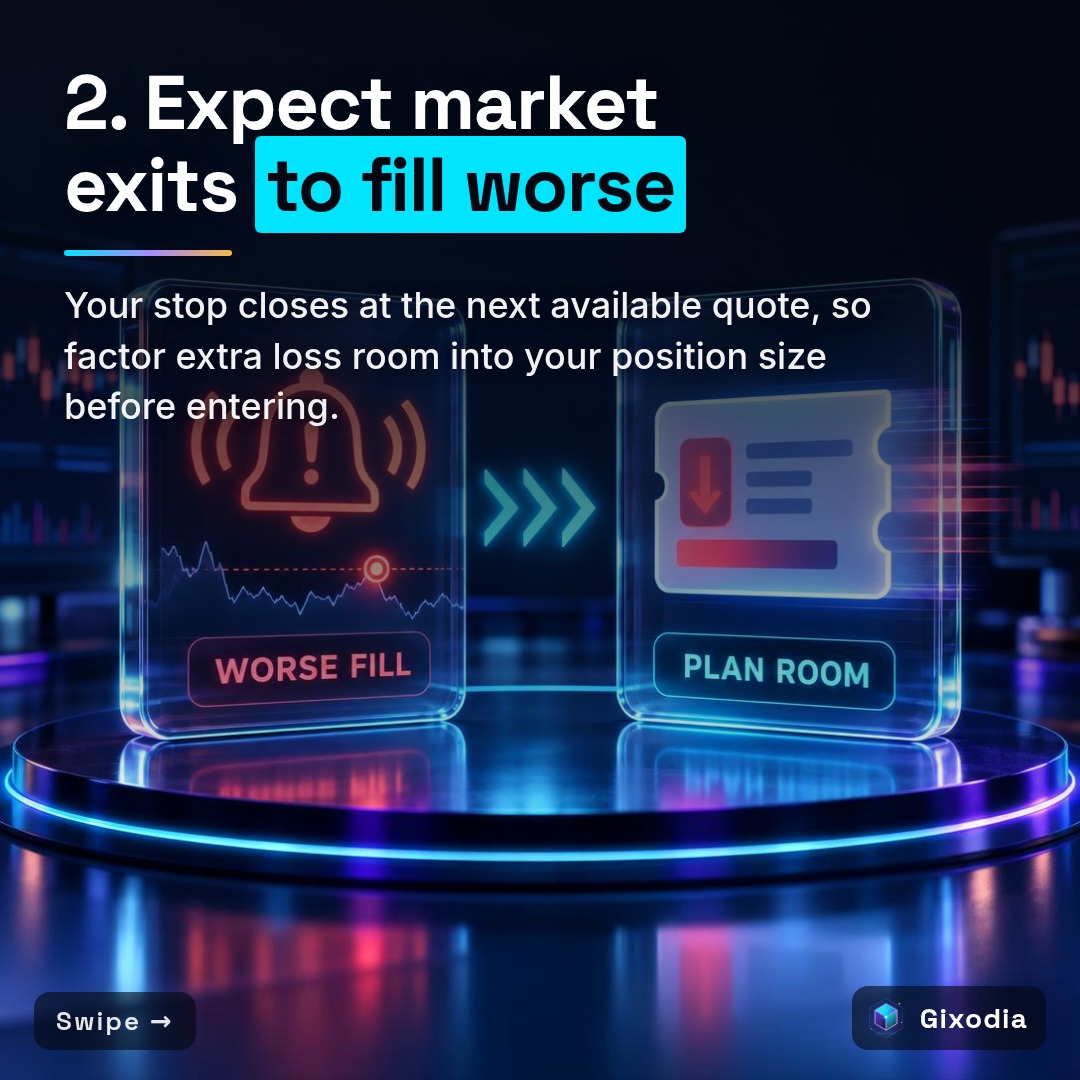
- A standard stop loss converts into a market order that fills at the next available quote rather than a fixed chart price.
- Order cascades occur when clustered stops and automated margin liquidations feed on each other in thin markets.
- The gap between buy and sell quotes widens fast during sudden drops because market makers pull their passive bids.
- Sizing positions down before high-impact economic releases prevents adverse execution gaps from hurting your balance.
- Predefined mechanical boundaries remove the emotional delay that turns small slippage into severe drawdowns.
What is stop loss slippage?
Stop loss slippage is the difference between the planned exit price you set on your chart and the actual price where your broker closes the trade. It happens because a conventional stop loss tells your platform to exit immediately at the prevailing market price rather than holding out for a specific number.
When you buy EUR/USD or gold, you might set a defensive stop loss twenty points below your entry to limit your risk. If price drops steadily, your broker fills that order cleanly. But when the market drops in a violent burst, the price often skips past your exact number. Regulatory agencies such as the CFTC and FCA remind traders that standard stops do not secure an execution price under volatile or illiquid market conditions [1].
Understanding this distinction is central to understanding spread commission slippage. The moment your trigger price gets touched, your platform changes the conditional safety order into a standard market order [3, 4]. That unpriced order goes looking for someone willing to buy what you are dumping. If the nearest willing buyer is five points lower on EUR/USD, that lower number is where your trade closes.
How do order cascades trigger execution slippage?
An order cascade is a chain reaction where triggered stop losses and automated margin liquidations hit the market simultaneously, wiping out resting buy orders. As each layer of forced market sell orders consumes available bids, the market plunges further, tripping the next set of stops below it.
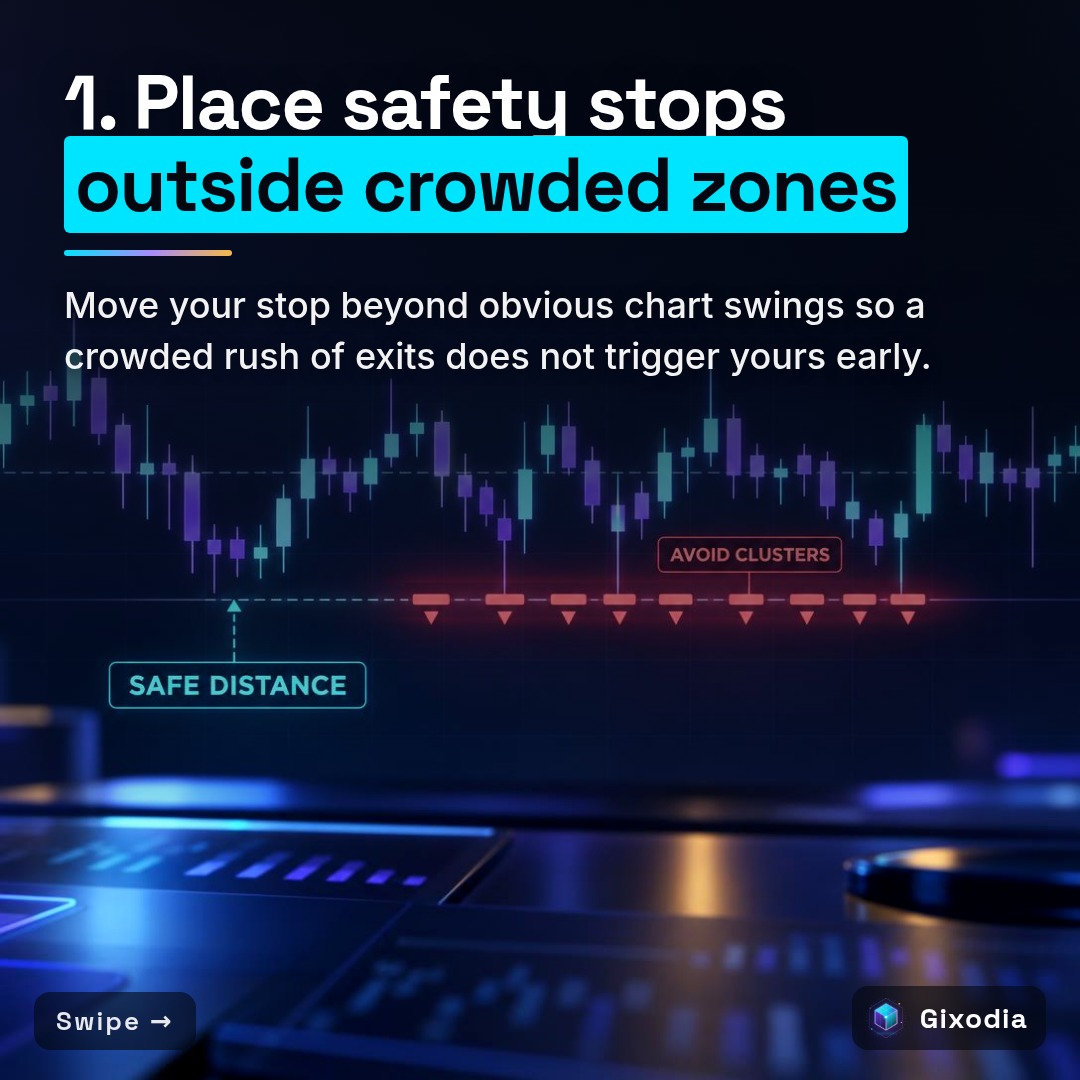
Retail traders naturally cluster their protective exits around visible price structures. Many traders put their stops right below a prominent daily swing low or a clean support shelf. When price touches that crowded level, hundreds of stop orders fire into the matching engine at the exact same fraction of a second [2].
Because all these orders demand immediate execution, they chew through every resting buy order sitting in the depth of market. The market makers who usually provide liquidity step back or widen their quotes to protect themselves from getting run over. Suddenly there is almost nobody to sell to at the current level. The price leaps down into the next tier of resting orders, which often trips automated margin calls on higher-leveraged accounts. The process repeats in a rapid domino effect until large passive institutional buyers finally absorb the selling pressure.
- Crowded stops cluster at obvious swing lows and round psychological numbers.
- Triggered stops become aggressive market sell orders that consume thin resting bids.
- Market makers pull their passive bids, leaving empty pockets on the price ladder.
- The vacuum drops the price directly into deeper margin liquidation thresholds.

Why does market liquidity evaporate during sharp drops?
Liquidity evaporates during sudden market drops because commercial liquidity providers and algorithmic market makers pull their resting limit bids off the book to avoid selling into toxic order flow. With passive buyers absent, even small sell volumes force the market to drop rapidly.
Under normal conditions in markets like eur usd deepest liquidity, there are deep queues of buyers and sellers at every fractional pip. But market makers make their living on the spread, the tiny gap between the buy price and the sell price. When breaking news hits or a sudden cascade starts, buying into that downward momentum poses enormous risk to their balance sheets.
To protect their capital, liquidity providers automatically cancel their limit orders or widen their spreads drastically. What looked like a thick wall of bids on the chart disappears in milliseconds. If your trade is forced to close during that pause, your order walks down the book until it finds an open bid, creating substantial negative slippage [1].
| Feature | Stop-Market Order | Stop-Limit Order |
|---|---|---|
| Trigger mechanism | Converts to a market order immediately when the price touches the stop | Converts to a limit order at a specified boundary price once triggered |
| Execution certainty | Fills the order fully, but the final filled price is completely variable | Caps the fill price at your limit, but order execution can fail completely |
| Behavior during price gaps | Sweeps down through empty depth to fill at whatever worse bid remains | Remains unfilled if price skips straight past the limit boundary |
| Primary risk to trader | Large negative slippage that exceeds your initial risk budget | Holding a fully open losing trade through an extended waterfall drop |
How can you buffer your position size against execution gaps?
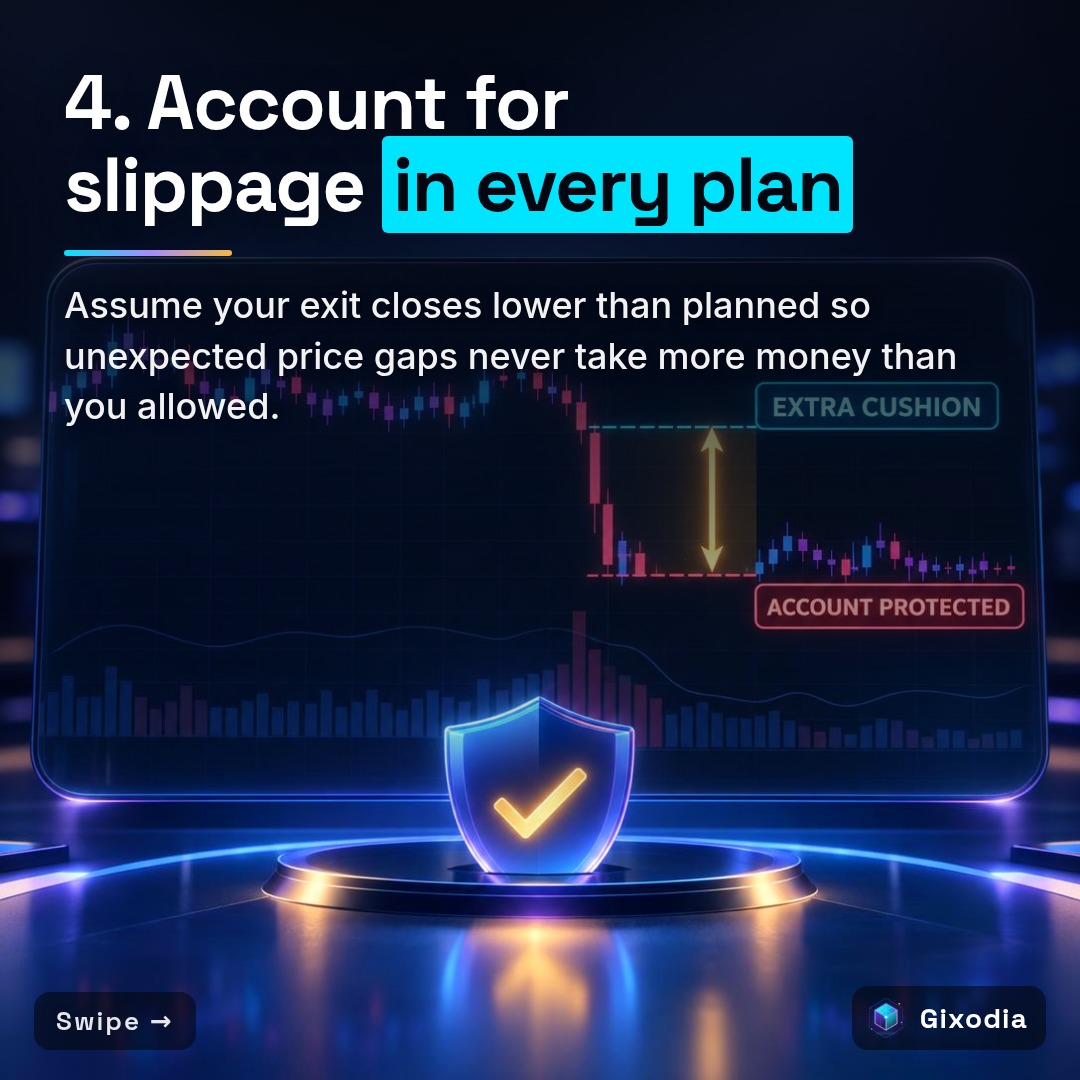
You buffer your position size against execution gaps by calculating your allowed financial risk assuming a worse exit price than your chart stop. Sizing down gives your account the safety margin needed to absorb unexpected price jumps without blowing your daily loss boundaries.
Most retail traders calculate their trade volume down to the exact pip of their visual stop loss. If their plan allows a maximum loss of two hundred dollars, they size the trade so that hitting their stop line loses exactly two hundred dollars. When a cascade causes a five-pip slip, they lose two hundred and fifty dollars instead, violating their own trading discipline.
Professional execution accounts for market frictions in advance. Before opening a trade, especially around volatile sessions, evaluate your lot size using a buffer. In markets known for rapid price shifts, such as gold, studying risk management mt4 ea pro shows why building execution buffers is standard practice. If you cut trade volume slightly, a sudden execution gap will keep your total loss well inside your comfort zone.
How do automated trading rules handle fast market cascades?
Automated trading rules handle market cascades by executing predetermined instructions without emotional hesitation, tracking spread thresholds, and pausing new entries when volatility exceeds safe limits. Software operates strictly by its code, cutting exposure or freezing trading when predefined limits are reached.
Manual traders often freeze when a sudden candle plunges through their planned exit. They hope for a bounce, cancel their stop, or hesitate just long enough for slippage to multiply. By contrasting bot vs manual trading, it becomes clear that human emotional hesitation is often more damaging than the slippage itself.
Gixodia builds algorithmic trading software for MetaTrader 5 that executes by predefined rules, the same way every time. It does not try to predict the market or panic during fast moves. When using a program like our trading bot, you set your maximum boundaries in advance. As a limit you set gets close, it scales down, and it pauses at that limit. This mechanical consistency prevents human panic from compounding the structural slippage that market cascades bring.
How to do it, step by step
- Map crowded liquidity pools. Open your MetaTrader 5 chart and locate obvious equal lows or visible swing points. Recognize that these areas hold dense clusters of protective stop orders that can trigger cascading slips if breached.
- Calculate an execution buffer. Determine your maximum monetary loss for the setup. Instead of measuring strictly to your stop price, add an extra margin of safety to your stop distance before calculating your lot size.
- Configure maximum slippage deviation. In MetaTrader 5, adjust your order deviation settings or Expert Advisor parameters to reject market order executions if the available quote slips beyond your acceptable threshold.
- Step aside during high-impact news. Check the macroeconomic calendar each morning. Avoid placing fresh market orders right before major announcements, when spreads jump and depth of market thins out.
- Test execution behavior on a demo account. Run your execution setup on a demo account during high-volatility events to witness how your broker handles order fills when liquidity temporarily drops.
Checklist before you take the trade
- Calculated position size using a wider price buffer than the chart stop line
- Verified that resting stops are placed away from crowded retail price levels
- Checked the economic calendar for upcoming high-impact economic releases
- Confirmed maximum deviation settings inside MetaTrader 5 are active
- Ensured current spreads on EUR/USD or gold are within normal operating ranges
- Set hard mechanical limits so software pauses if drawdown thresholds are approached
Common mistakes and how to fix them
✗ The mistake: Believing a standard stop loss provides an exact, unvarying exit price.
✓ The fix: Treat your stop loss as a trigger that requests an immediate market exit at whatever price the market currently offers.
✗ The mistake: Placing defensive stops right at obvious, widely watched swing lows where orders cluster.
✓ The fix: Position exits outside common liquidity zones or factor in the probability of a fast sweep below those levels.
✗ The mistake: Trying to manually close a position during an active cascade while frozen in panic.
✓ The fix: Use predefined software limits that cut exposure automatically when set boundaries are approached.
Frequently asked questions
Why did my trade close lower than my stop loss price?
Your trade closed lower because a stop loss is a conditional order that turns into a market order the instant your trigger price is reached. In a fast drop, available bids at your exact stop level are already gone, so your broker fills the order at the next best price available further down the order book.
Can slippage occur on both buy and sell orders?
Yes. Slippage happens in both directions whenever market liquidity thins out or price moves faster than matching orders can clear. Sell stops slip downward during market drops, while buy stops slip upward during sudden price surges.
Does MetaTrader 5 allow you to limit stop slippage?
MetaTrader 5 allows you to set maximum deviation limits on market orders and to use stop-limit orders instead of conventional stop-market orders. However, a stop-limit order might leave your trade open if the market skips completely past your limit price.
Why do spreads widen right before major market drops?
Spreads widen because liquidity providers withdraw their resting orders or step their bids back to protect themselves from adverse price swings. With fewer participants quoting prices, the distance between the highest buy price and lowest sell price expands quickly.
Want your trading to follow fixed rules, the same way every time? Gixodia's trading software for MetaTrader 5 trades by predefined rules on your own broker account, in your own name. Try it free for 72 hours, a demo account is fine, then $499/year. Trading involves risk and you can lose money.
Sources
- Slippage in Trading: Causes and How to Avoid It (en.arincen.com)
- investopedia.com
- Mastering stop-market orders — TradingView (tradingview.com)