 GIX
The Two Hardest Discipline Battles in Trading: Cutting Losses and Waiting

- Cutting losses immediately prevents manageable mistakes from compounding into severe, account-threatening drawdowns.
- Cash is an active position that preserves both capital and mental clarity during low-liquidity market phases.
- The recovery math after deep losses is exponential, meaning deep drawdowns require much larger gains just to break even.
- Pre-committing stop loss orders on your trading terminal removes the dangerous temptation to negotiate with an active trade.
- Automating trade rules enforces fixed limits consistently without hesitation, fatigue, or emotional impulse.
Why is cutting a loss instantly so hard for traders?
Cutting a loss instantly is difficult because closing a trade forces a trader to accept an emotional defeat and crystallize a permanent financial loss. Human nature pushes traders to delay the pain, hoping that the market will reverse and return their balance to break even.
Trading discipline requires you to override natural human instincts. When a trade starts drifting into negative territory, hope takes over. You tell yourself that the market is just experiencing brief volatility or that institutional orders will push the price back in your favor. This emotional hesitation creates a trap where a small, planned expense turns into an open-ended catastrophe.
In reality, a stop loss, the order that closes the trade when it goes against you, is simply an operational cost. It marks the exact price where your trading idea is no longer true. When you trade EUR/USD and price breaks a critical support level, the original thesis is dead. Trying to bargain with the market by removing or pushing back your stop loss only amplifies your exposure to sudden trending runs.
Understanding why most retail traders lose often comes down to this single error. Professional operators treat every trade as an isolated event within an overall plan, keeping individual losses small so they never threaten total account health.
- Loss aversion makes taking a realized loss feel far more painful than securing an equivalent gain feels good.
- Holding losers ties up buying power and prevents you from catching valid setups.
- Every pip you yield past your invalidation point increases your overall risk unpredictably.
How does mathematical drawdown make cutting losses urgent?
Cutting losses promptly is urgent because portfolio recovery math is asymmetric and works against you exponentially as losses mount. While capital decreases in a straight line, the gain required to get back to your original balance climbs steeply with every additional pip lost.
When you absorb an account loss, the recovery needed on your remaining funds is always larger than the drop itself. If an account loses half its balance, it requires a full doubling of the remaining equity just to return to the starting point. Deeper losses push the required recovery multiple into territory that few traders ever escape.
This mathematical reality explains why trading discipline is not an abstract virtue, but a survival requirement. When traders widen stops, they gamble with capital that becomes increasingly difficult to replace. A single runaway move during an erratic market session can wipe out weeks or months of patient execution.
Adhering to strict risk parameters and keeping fixed position limits protects your equity curve from deep valleys. Proper sizing rules and firm stops ensure that even a sequence of losing trades leaves your balance healthy enough to rebuild steadily.
- Drawdown recovery is exponential because every loss reduces the remaining base of capital.
- Large losses force traders to take reckless risks just to get back to even.
- Predefined stop losses keep cumulative drawdowns inside shallow, easily manageable territory.

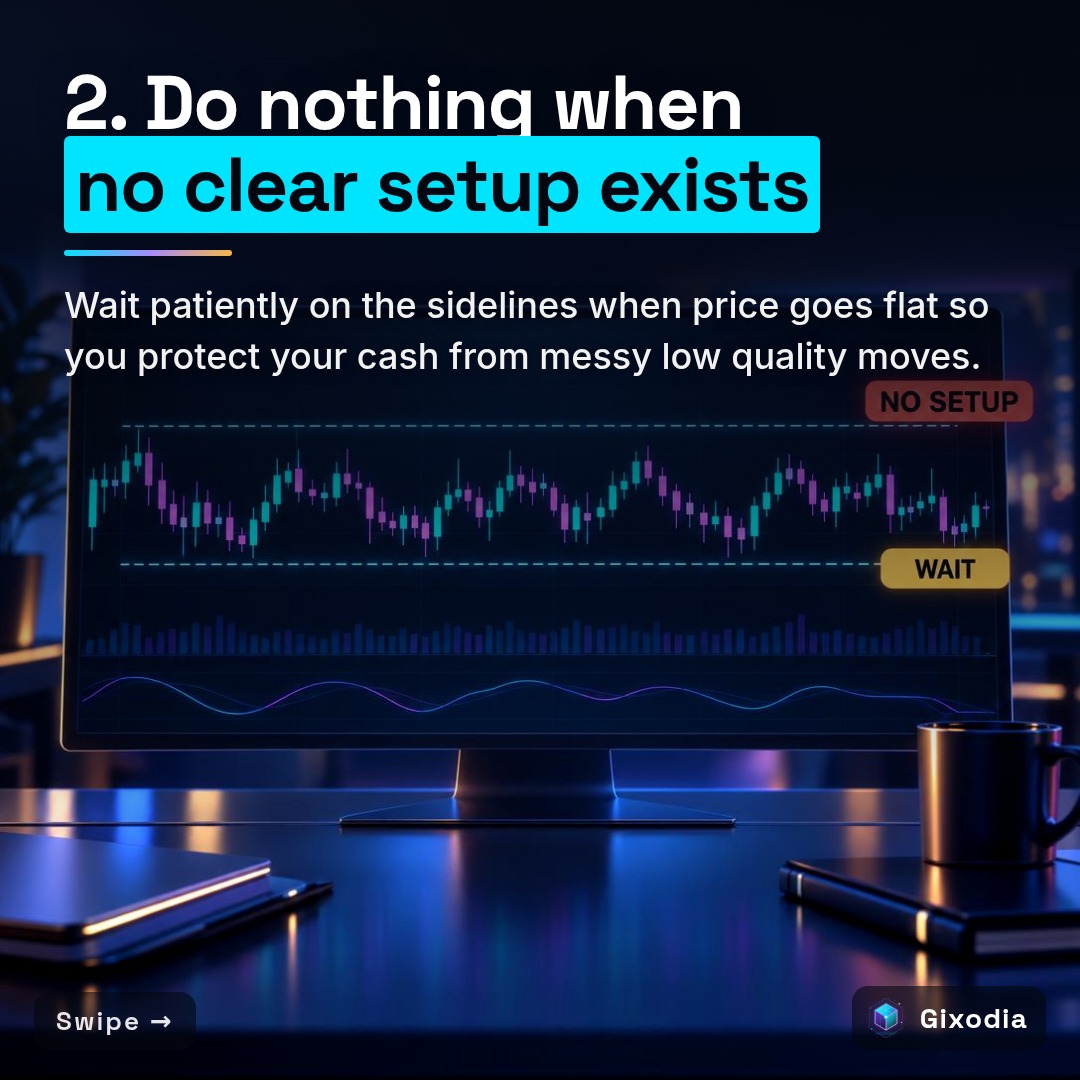

Why is sitting on your hands during quiet markets so difficult?
Sitting on your hands is difficult because active traders confuse screen time and order activity with productive work. When price action turns quiet and moves sideways without direction, boredom and impatience push traders into taking low-quality setups that carry poor odds.
Quiet markets often feature flat candlestick patterns, shrinking ranges, and erratic order flow. In pairs like EUR/USD, trading during quiet overnight hours or ahead of major economic announcements usually offers very little clean momentum. Yet, sitting and watching a screen without clicking a button feels uncomfortable to most people.
This urge to stay active creates boredom trading. You look at a five minute chart, magnify minor fluctuations, and convince yourself that a tiny wiggle is an actionable breakout trade. In these narrow ranges, you quickly get chopped up, paying the spread, the gap between the buy and the sell price, multiple times over while taking losses on false breaks.
Learning how to step back is a core skill explored in the psychology of automated trading. Treating cash as an active position protects your balance, ensuring your funds are intact when real volume and volatility return to the market.
- Boredom trading creates unnecessary costs from spreads and execution slippage.
- Sideways markets generate false breakout signals that trap impatient traders.
- Cash is a strategic position that preserves mental clarity and capital for clear setups.
| Discipline Dimension | Cutting a Loss Instantly | Sitting on Your Hands |
|---|---|---|
| Primary emotional driver | Loss aversion, fear of being wrong, and false hope | Boredom, impatience, and fear of missing out |
| Market environment | Fast trending moves or sudden adverse spikes | Quiet, sideways, and low-volume consolidation ranges |
| Account consequence of failure | Catastrophic drawdowns requiring steep recovery gains | Slow balance bleed from repeated spread and slippage costs |
| Practical execution fix | Hard server-side stop loss entered on the order ticket | Checklist criteria, price alerts, and closing the charts |
How do bracket orders remove emotional hesitation?
Bracket orders remove emotional hesitation by binding your entry order directly to an automatic stop loss and take profit at the broker server level. Because the exit orders are placed simultaneously with the entry, you do not have to make panicked decisions while managing open risk.
When you trade using MetaTrader 5, setting up your trade parameters inside the order ticket puts your exit levels directly on the server. If the market spikes against your position, the platform executes your stop automatically without requiring your live confirmation. This structure prevents you from freezing when a trade moves against you fast.
The mechanical approach eliminates the habit of moving a stop loss further away. Once your order is active, the invalidation level remains fixed. If you want to trail your stop behind a favorable run, you can use fixed, rules-based logic rather than manual guesswork on every candle close.
Traders comparing bot vs manual trading discover that software excels precisely here. Gixodia builds algorithmic trading software for MetaTrader 5 that executes rules consistently, ensuring that protective limits are honored the exact same way every time.
- Server-side bracket orders trigger instantly when price touches your invalidation price.
- Pre-set orders eliminate the temptation to widen your stop loss while watching candles move.
- Fixed trade parameters free you from staring at every micro fluctuation on the screen.
How does automation enforce patience and execution discipline?
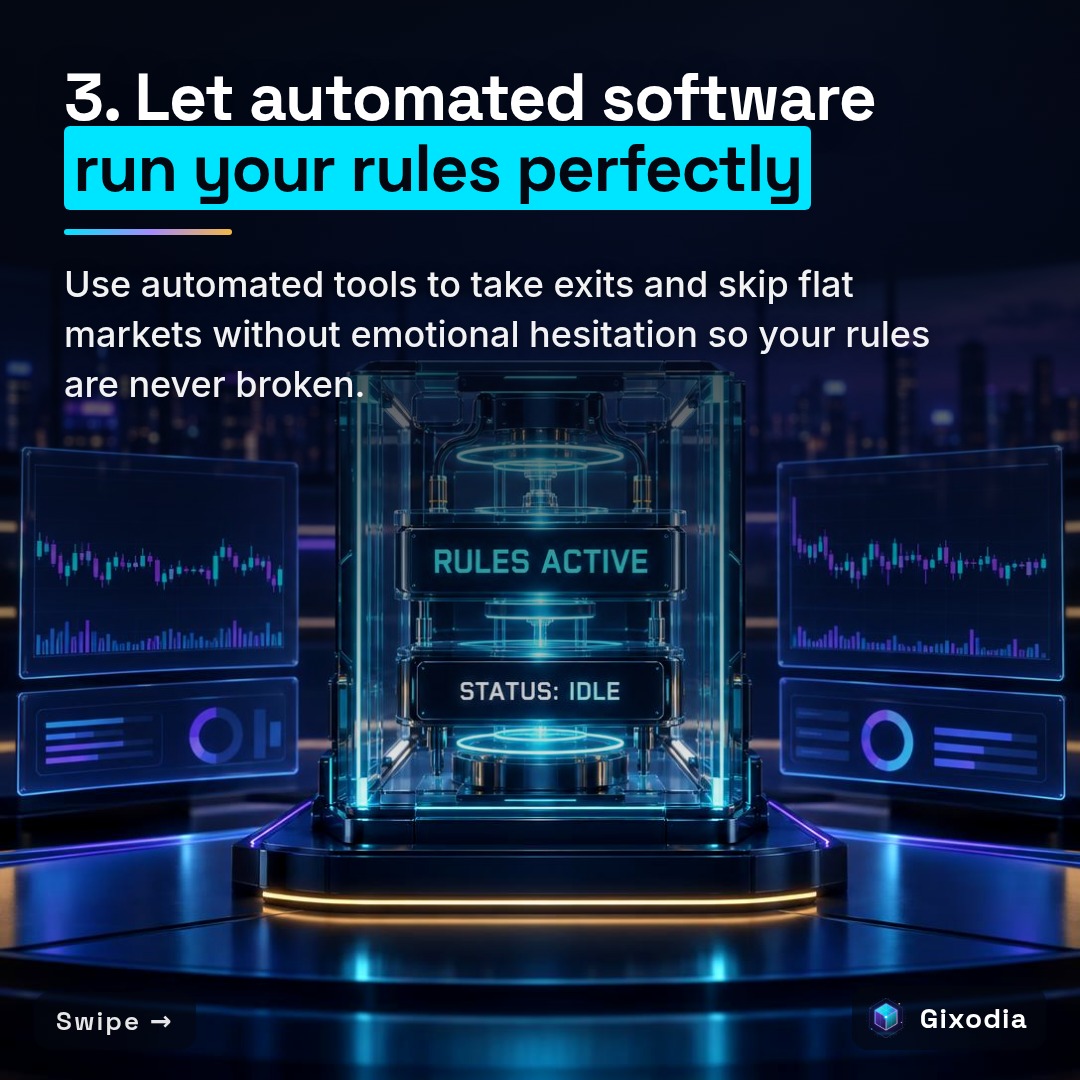
Automation enforces patience and execution discipline by executing orders only when strict, predefined mathematical criteria are satisfied. A trading bot experiences neither boredom during flat sideways ranges nor panic when taking a necessary stop loss.
Human traders struggle when charts go quiet because waiting feels like wasted time. An automated system, by contrast, evaluates incoming tick data against fixed conditions. If your setup requires a specific volatility expansion or structural breakout, the program stays dormant until that exact state appears on the chart.
Furthermore, automated software removes the fear associated with closing losing trades. When a stop level is hit, the algorithm takes the exit without hesitation, second guessing, or wounded pride. It executes the trade plan objectively across hundreds of iterations, letting your rules play out over time.
Gixodia's trading software is an Expert Advisor designed for MetaTrader 5 that trades by predefined rules, the same way every time, free of hesitation, fatigue, and emotion. As a limit you set gets close, it scales down, and it pauses at that limit. It does not try to predict the market, providing the mechanical consistency needed to navigate quiet days and volatile swings alike.
- Algorithms wait through hours or days of chop without forcing random trades.
- Stops are executed objectively the moment price crosses the predetermined boundary.
- Consistent execution allows your rules to perform without human intervention errors.
How to do it, step by step
- Map structural invalidation first. Before you calculate entry points, identify the exact price level on the chart where your trade premise becomes completely invalid, such as beyond a key swing high or swing low.
- Size your position to fixed risk. Calculate your lot size so that the physical distance between your entry price and your stop loss equals a fixed, comfortable dollar risk that you can afford to lose.
- Enter with server-side brackets. Submit your order in MetaTrader 5 using the New Order ticket with both Stop Loss and Take Profit fields populated, ensuring the server manages your exit automatically.
- Set chart alerts and step away. Place price alerts at key technical levels and close your trading terminal so you are not tempted to micro-manage open positions or take low-quality trades out of boredom.
- Audit trade compliance weekly. Review your execution history in an analytical journal, flagging any trade where you moved a stop loss or entered outside your strict checklist criteria as an operational violation.
Checklist before you take the trade
- Confirm your invalidation price level is mapped on the chart before opening an order ticket.
- Verify your trade size adheres to predefined risk boundaries for your balance.
- Input a hard server-side stop loss at the exact moment of order entry.
- Check that current market spreads are tight and volatility meets your minimum criteria.
- Confirm that no high-impact economic releases are scheduled in the immediate minutes ahead.
- Step away from the screen immediately once active bracket orders are confirmed by the server.
Common mistakes and how to fix them
✗ The mistake: Widening or removing a stop loss when the market nears your exit price.
✓ The fix: Commit to a strict one-way rule where stop losses can only be trailed to reduce open risk, never expanded to accept larger losses.
✗ The mistake: Entering trades during low-volume sideways consolidation out of pure boredom.
✓ The fix: Set technical price alerts outside the consolidation boundaries and close your trading software until price breaks out.
✗ The mistake: Closing winning trades too early while letting losing positions run indefinitely.
✓ The fix: Use predefined bracket orders with fixed profit targets and let the terminal execute exits without manual overrides.
✗ The mistake: Revenge trading immediately after an invalidation stop gets executed.
✓ The fix: Enforce a mandatory thirty-minute cooling-off window away from the charts whenever a losing trade is booked.
Frequently asked questions
Why is sitting on your hands considered an active trading position?
Holding cash protects your capital and preserves your psychological stamina when market conditions are messy. In low-liquidity or sideways phases, staying out prevents you from bleeding balance through spreads and false breakouts.
What is the best way to stop yourself from widening a stop loss?
Enter your stop loss directly into the order ticket before sending the trade to your broker's server. Once placed, treat moving a stop into larger risk as a serious operational violation that breaks your core trading rules.
How does trading discipline relate to long term expectancy?
Mathematical expectancy depends on keeping average losses strictly capped while allowing profitable setups to reach their targets. Without the discipline to take quick stops, a single outsized loss can undo the progress of many sound trades.
Can automated trading software solve emotional discipline problems?
Yes, automated trading software executes orders based strictly on predefined code. It enters only when your conditions appear and exits immediately when an invalidation price is touched, without hesitation, fatigue, or emotion.
Want your trading to follow fixed rules, the same way every time? Gixodia's trading software for MetaTrader 5 trades by predefined rules on your own broker account, in your own name. Try it free for 72 hours, a demo account is fine, then $499/year. Trading involves risk and you can lose money.
Sources
- Simple Steps To Improve Discipline and Patience in Trading (wemastertrade.com)
- Discipline and Patience in Trading (fxview.com)
- Cutting Losing Trades: Mastering Trading Discipline – QuantifiedStrategies.com (quantifiedstrategies.com)
- How Trading Automation Builds Patient Disciplined Traders (clearedge.trading)