 GIX
The Three Hardest Discipline Challenges in Trading and How to Handle Them

- Emotional discipline is judged by strict rule execution, not by whether you feel calm during a session.
- Loss aversion causes traders to feel the sting of a monetary loss roughly twice as intensely as an equal gain.
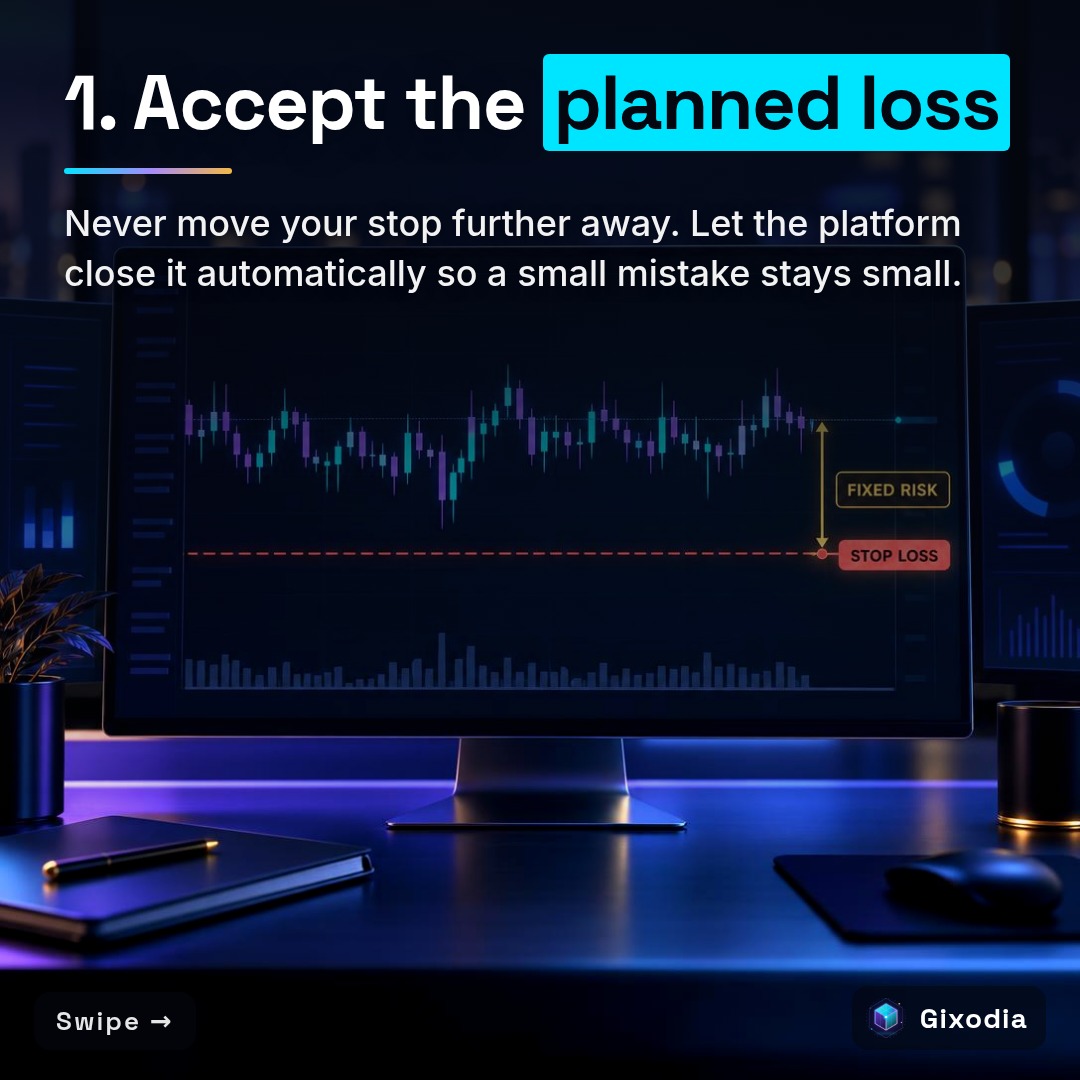
- Moving an active stop loss turns a controlled, planned expense into account-threatening risk.
- Pre-set bracket orders on your broker's server prevent impulsive manual meddling when candles move fast.
- Automated software removes execution hesitation by following exact parameters without emotional fatigue.
What is trading discipline?
Trading discipline is the behavioral habit of following a predetermined set of execution and risk management rules on every trade, regardless of how you feel or what the market does next. It means your actions stay consistent whether your last five positions were winners or losers.
Most beginners treat trading like an accuracy test where they must be right on every call. In reality, market systems rely on statistical expectancy across hundreds of executions. A trader can take losses on more than half their positions and still maintain a positive edge if their winners consistently pay more than their losers cost. Discipline keeps those mathematics intact.
When retail traders abandon their rules, it usually comes down to biological wiring rather than bad intentions. The human brain interprets financial loss through the same neurological pathways that handle physical threats. When a candle drops quickly against your position, stress chemicals take over your reasoning, pushing you to make panic decisions that ruin your edge. Understanding why most retail traders lose often starts with this exact breakdown in emotional control.
- Expectancy depends on letting mathematical probabilities work over a broad sample of trades.
- Loss aversion creates intense psychological friction that makes admitting a mistake feel intolerable.
- Discipline acts as an operational shield that protects your balance from stress-driven decisions.
Why do traders move their stop losses away?
Traders move their stop loss orders further away because human psychology experiences the pain of losing money about twice as intensely as the pleasure of gaining it. This cognitive bias pushes traders into bargaining with the market instead of accepting a routine, planned operational loss.
Imagine buying EUR/USD at 1.0820 with a planned exit at 1.0800, risking twenty pips. As the exchange rate drops toward 1.0805, panic sets in. Instead of letting the order take the planned twenty-pip loss, you open your terminal and drag the stop down to 1.0770. You tell yourself you are simply giving the trade extra room to breathe. What you actually did was multiply your risk by two and a half times while lowering your reward potential.
This habit is the fastest way to blow an account. A planned loss is an ordinary cost of business, identical to an inventory expense in an ordinary shop. When you refuse to take it, a standard market swing can wipe out weeks of careful work. Protecting your capital requires locking in your invalidation point beforehand and letting the broker server close the trade when that price gets hit. If you want to dive deeper into protecting equity, read our breakdown on Drawdown Explained: Balance, Equity and Maximum Drawdown in Forex.
- Admitting a small loss immediately keeps your balance safe for the next trade.
- Dragging an active stop turns an intentional risk into an uncalculated gamble.
- Server-side bracket orders take the choice out of your hands once a position goes live.

How does boredom create unnecessary trading losses?
Boredom causes losses because retail traders feel an urge to stay active, mistaking screen time and trade frequency for productivity. When the market provides no valid setups, an undisciplined trader invents reasons to click buy or sell, entering low-probability positions that bleed money.
If you sit in front of charts during quiet midday hours when gold is drifting sideways within a tight range, your brain starts searching for patterns that do not exist. You see a tiny two-pip green candle on a one-minute chart and convince yourself it is an institutional breakout. You open a position with no real technical backing simply because you feel you should be working.
Top traders spend most of their time waiting. If your written strategy requires a sweep of Asian session liquidity followed by a clear structural shift during the London open, and that sequence does not happen, your only job is to do nothing. Taking unvetted trades introduces random risk and runs up transaction costs through the bid-ask spread. For an explanation of these hidden friction costs, see our guide on understanding spread commission slippage.
- Sitting flat with zero open exposure is an active, protective position when setups are missing.
- Market hours outside high-volume sessions offer fewer reliable setups and wider spreads.
- Walking away from your desk prevents the urge to invent entries out of thin air.
| Trading Stage | Disciplined Execution | Emotional Reaction |
|---|---|---|
| When a trade goes into loss | Hard stop loss rests on the server and closes the trade automatically at the planned invalidation level. | Trader drags the stop loss further back to avoid admitting a loss, hoping the market turns around. |
| When no clear setup forms | Trader leaves the platform closed and waits for the specific strategy triggers to align. | Trader forces an entry out of boredom because sitting flat feels unproductive. |
| When a trade moves into profit | Trade runs to the predefined profit target or trails systematically according to written parameters. | Trader grabs a tiny gain on the first minor pullback out of fear the open profit will vanish. |
| Evaluation after the session | Performance is measured across large sample sets by how closely the trading rules were obeyed. | Trader judges every individual trade as a personal victory or failure based purely on dollar gain or loss. |
Why is premature profit taking so dangerous to your account?
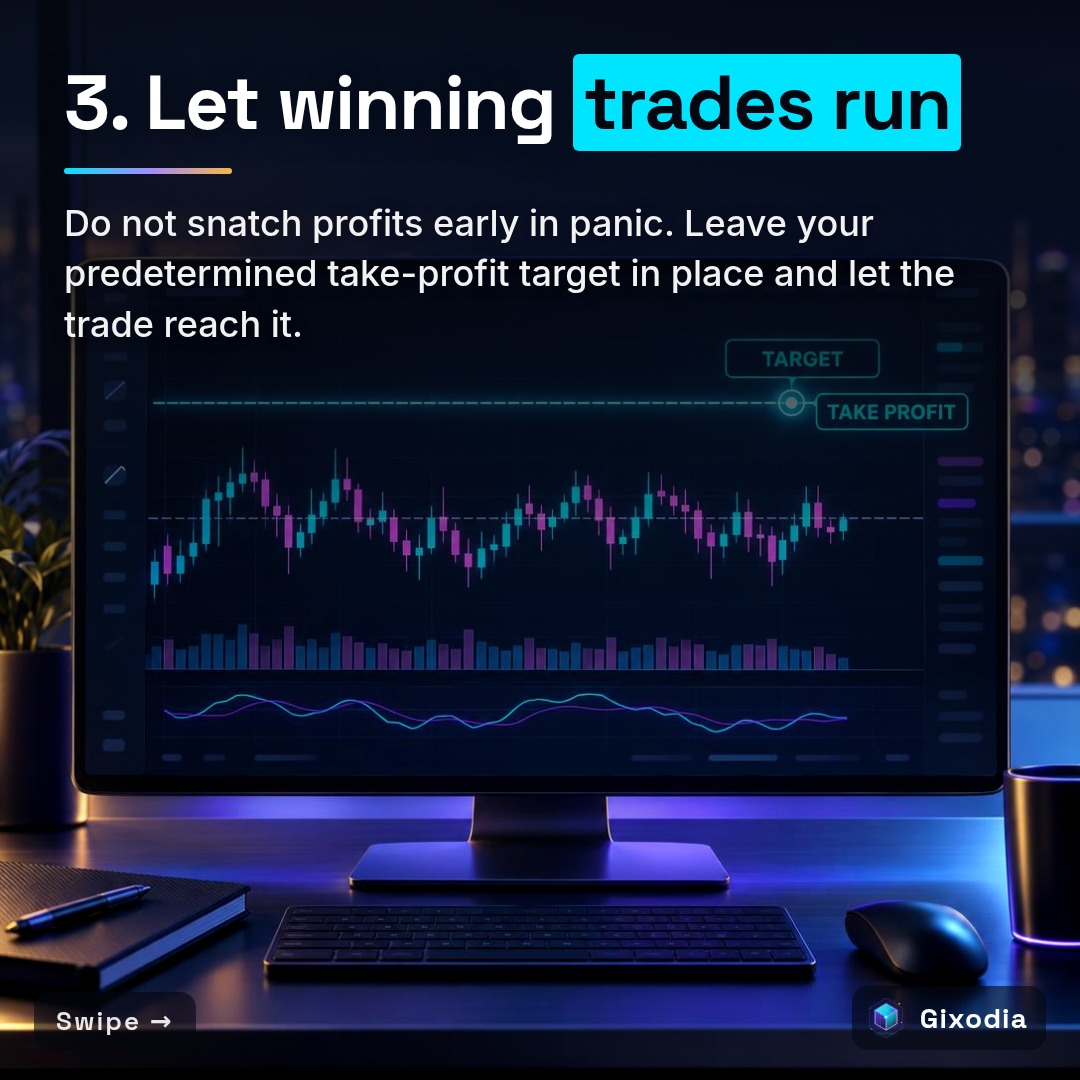
Cutting winning trades too early destroys your mathematical expectancy by shrinking your average winning payout while leaving your average loss intact. If your winning trades produce small fractions of a percent while your losses hit full stops, your strategy cannot sustain itself over time.
Consider a long position on gold at 2650 with a stop loss at 2640 and a target at 2670, representing a healthy two-to-one reward-to-risk ratio. Price rallies smoothly to 2658, giving you an open gain. Suddenly, a single red candle appears. You feel a wave of fear that the market will reverse and snatch your profit away, so you hit close manually to pocket eight points.
Ten minutes later, the market turns back upward and hits your original 2670 target without you. By grabbing an undersized gain out of anxiety, you crippled your system. Over twenty trades, taking small early profits means a standard run of normal losses will push your overall balance negative. To structure realistic exits that you can actually trust, check our guide on Where to Set Your Profit Target: Exit Strategies for Forex and Gold.
- Taking early profits makes your average win smaller than your planned risk.
- A low average win makes recovering from normal losing streaks mathematically impossible.
- Pre-set take profit targets should remain untouched unless a formal technical exit rule triggers.
How does trading automation solve discipline breakdowns?
Trading automation removes emotional decision-making by handing order execution over to software that follows programmed parameters without hesitation, fear, or fatigue. A trading bot places, manages, and exits trades strictly according to predefined rules, eliminating the psychological urge to intervene.
When you trade manually, you face dozens of psychological micro-decisions every hour. Every tick in equity tests your discipline. This constant strain leads to decision fatigue, which is why manual traders often make their worst mistakes near the end of a session. Algorithmic software avoids this mental drain by executing the exact same rules every single time.
This is where rules-based platforms prove useful. Gixodia builds algorithmic trading software for MetaTrader 5 that trades by predefined rules, the same way every time. Because it is free of hesitation, fatigue, and emotion, it does not trade in a panic or invent trades out of boredom. For traders who struggle with self-control, studying the psychology of automated trading can reveal how delegating execution protects both account balance and peace of mind.
- Automated systems do not experience loss aversion or panic when price swings.
- Execution happens instantly on the server without second-guessing.
- Trading bots maintain consistent position sizing without giving in to revenge trades.
How to do it, step by step
- Write down explicit entry rules. Before you open MetaTrader 5, list every technical condition required for an entry on paper. If a setup fails to meet even one condition, commit to keeping your hands off the mouse.
- Set bracket orders at the moment of entry. Never enter a market execution order without your stop loss and take profit attached. By placing bracket orders directly on your broker server at entry, your exits are locked in immediately.
- Establish a daily circuit breaker. Define a hard stopping rule for each session, such as stopping after two consecutive losses. Once that threshold is reached, shut down your terminal for the rest of the day.
- Step physically away from the desk. Once an order is active with stops and targets in place, leave the charting screen. Staring at every five-minute candle encourages anxiety and impulsive tinkering.
- Audit execution quality in a journal. Record each trade with a simple yes or no grade on whether you followed your rules. Grade rule deviations as operational errors regardless of whether the trade ended positive or negative.
Checklist before you take the trade
- Are all required technical entry signals confirmed on the chart before opening the order window?
- Is the exact invalidation price identified and sized to a fixed equity risk percentage?
- Are both stop loss and take profit orders submitted at the exact moment of market entry?
- Did you make a firm agreement not to drag the stop loss backward if price nears it?
- Is your daily loss circuit breaker defined so you know when to turn off the terminal?
- Are you trading during peak liquidity sessions rather than quiet off-hours?
Common mistakes and how to fix them
✗ The mistake: Widening stop losses when a trade turns negative.
✓ The fix: Submit hard bracket orders on the broker server at entry and make manual adjustments forbidden except when trailing profits behind structure.
✗ The mistake: Taking random entries during quiet sessions because sitting flat feels boring.
✓ The fix: Close the charting platform completely whenever active market sessions finish or when no strategy criteria align.
✗ The mistake: Closing profitable positions manually on the first counter-trend candle.
✓ The fix: Let price interact with your predefined take-profit order, or use a systematic partial close rule rather than reacting to momentary worry.
✗ The mistake: Judging performance purely on individual trade outcomes instead of execution accuracy.
✓ The fix: Evaluate consistency across blocks of thirty or fifty trades based on strict plan compliance rather than single-trade balances.
Frequently asked questions
What is the primary cause of emotional trading?
Emotional trading stems from loss aversion and the survival stress response. When price moves against open capital, the brain treats the financial drawdown as an immediate threat, triggering impulsive reactions like revenge trading or moving stops.
How can I stop touching active trades on MetaTrader 5?
Use server-side bracket orders that automatically attach a stop loss and take profit when opening the trade. Once the trade is active, close the terminal or switch to a higher timeframe chart to prevent micro-managing minor fluctuations.
Is emotional discipline more important than technical analysis?
Both are necessary, but discipline determines long-term survival. Even a mathematically sound trading edge fails if a trader widens stop losses, over-leverages, or cuts winning runs short out of fear.
How does automated software improve execution consistency?
Automated software runs predefined code without experiencing fatigue, anxiety, or impatience. It enters and exits positions at exact specified levels, ensuring that trades match the system rules every time.
Want your trading to follow fixed rules, the same way every time? Gixodia's trading software for MetaTrader 5 trades by predefined rules on your own broker account, in your own name. Try it free for 72 hours, a demo account is fine, then $499/year. Trading involves risk and you can lose money.
Sources
- pineconnector.com
- Trading Psychology Explained: How Your Mind Shapes Market Decisions (abovethegreenline.com)
- Investor Bulletin: Behavioral Patterns of U.S. Investors | Investor.gov (investor.gov)