 GIX
Why Systematic Algorithms Scale Down Risk and Step Aside During Rapid Market Selloffs

- Systematic algorithms use volatility targeting to calculate lot sizes inversely against current market swings.
- Human traders often average down during selloffs, while rules-based models mechanically deleverage or close open exposure.
- Dynamic exposure reduction shifts funds into cash or margin collateral before market friction widens spreads further.
- An automated risk pause protects trading capital from slippage and order book thinning during cascading panics.
What is volatility targeting in automated trading?
Volatility targeting is a systematic, rule-based algorithmic mechanism that continuously scales exposure and financial leverage inversely proportional to an asset's measured price fluctuations. When swings widen, position sizes shrink automatically to keep total account risk steady over time.
Traditional manual traders often keep their lot size the same on every trade regardless of market conditions. In contrast, institutions and algorithmic trading models manage risk by letting position size float while keeping the risk budget fixed. As documented in research by the International Monetary Fund, systematic institutions treat volatility scaling as an objective balance shield during macro disruptions.
When you understand what is algorithmic trading, you see that execution engines do not guess where a market will stop falling. Instead, they calculate current price range indicators like the Average True Range, or ATR, which measures the average distance between high and low prices over a specific period. If the ATR on EUR/USD or gold doubles in an hour, an algorithm halves its entry size on any new order to maintain steady exposure.
- Inverse scaling: as market volatility rises, trade volume automatically contracts.
- Dynamic leverage: the software cuts total exposure without needing human intervention.
- Mathematical risk budget: the account risks the exact same dollar amount whether the market is calm or volatile.
Why do discretionary traders blow up while algorithms step aside?
Discretionary traders blow up during market selloffs because emotional panic drives them to average down, remove stop losses, or catch falling prices. Systematic algorithms step aside because predefined risk ceilings mechanically stop all execution when safety limits are hit.
When a heavy selloff strikes, the human brain enters panic mode. A red trading screen triggers fear and bargaining, causing many retail traders to double their trade size to win back losses quickly. This habit of buying into sharp down moves without structural confirmation is why most retail traders lose during high-impact market events.
A systematic program experiences neither panic nor greed. It operates under a strict rule set. If price velocity spikes beyond standard deviation bands, the algorithm simply executes its exit orders, reduces size, and refuses to open fresh positions until the market settles.


How does the dynamic deleveraging mechanism work?
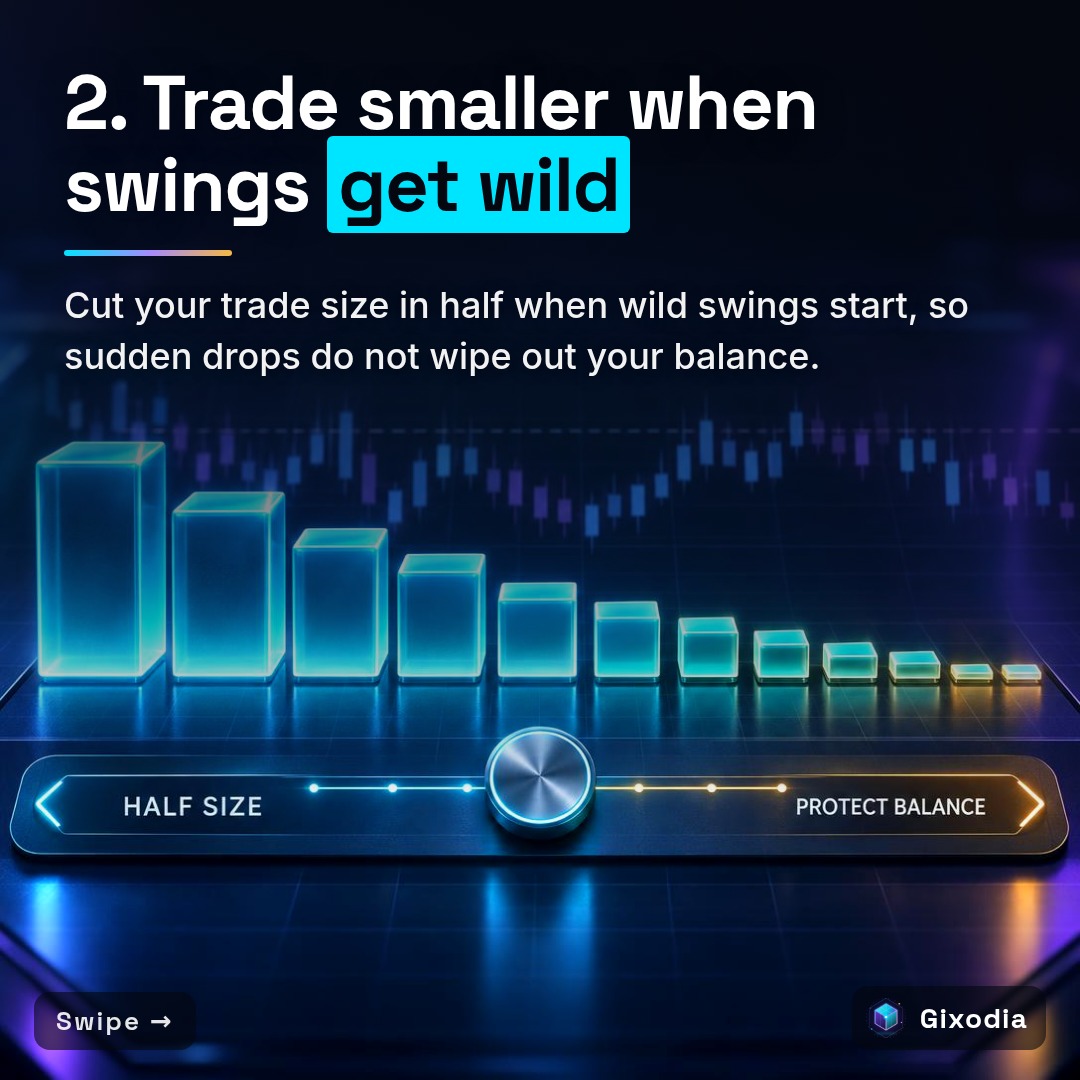
The dynamic deleveraging mechanism reduces open contracts or lot sizes whenever measured volatility rises above a target threshold. It sells off excess exposure directly into cash, buffering the account balance against accelerating price collapses.
In quiet conditions, an asset moves within a tight channel, allowing an algorithm to safely deploy standard sizing. But during rapid market shocks, price swings expand aggressively. Volatility targeting models calculate target exposure by dividing target volatility by current realized volatility. If actual market volatility surges to twice the target baseline, the calculation dictates that portfolio exposure must be halved.
For intraday traders using MetaTrader 5, this dynamic risk control is usually managed directly in the code of an Expert Advisor, an automated trading script running inside the platform. The formula calculates contract units as: Units = (Account Equity Risk Percentage) / (ATR Point Value). As candle ranges explode and ATR surges, unit size mechanically contracts before any order reaches the broker.
- Target exposure calculation: Target Volatility divided by Realized Volatility.
- Protective de-risking: open position volume is trimmed as swings cross safety limits.
- Cash allocation: freed margin stays completely inactive until market conditions stabilize.
| Trading Behavior | Discretionary Retail Trader | Systematic Volatility Algorithm |
|---|---|---|
| Reaction to sudden drop | Attempts to catch the bottom or averages down | Calculates higher volatility and cuts open exposure |
| Position sizing method | Fixed lot size or arbitrary emotional sizing | Inverse volatility scaling based on metrics like ATR |
| Handling open losses | Moves stop loss further away or bargains | Triggers predefined stops and respects hard loss limits |
| Account allocation in panic | Fully exposed or adding leverage at low prices | Deleverages into cash and pauses new entries |
Why do algorithms pause trading instead of catching falling prices?
Algorithms pause trading during rapid plunges because liquidity dries up, causing wide spreads and severe execution slippage. Stepping aside protects the account balance from high trading friction until regular market depth returns.
During sudden selloffs, institutional market makers pull their quotes off the order book. Suddenly there is almost nobody to buy from or sell to. When that happens, the spread, the gap between the buy price and the sell price, jumps dramatically. Attempting to enter trades in that environment means taking heavy slippage, where you get a worse price than the one you saw on screen.
To learn more about market mechanics during sudden volatility, review how Gixodia handles market crashes. Automated models rely on inactivity buffers and maximum spread filters. If the spread crosses a preset ceiling, the algorithm blocks trade entries automatically, knowing that trying to predict a bottom in thin liquidity is a losing proposition.
How do fixed rules eliminate emotion during volatile sessions?
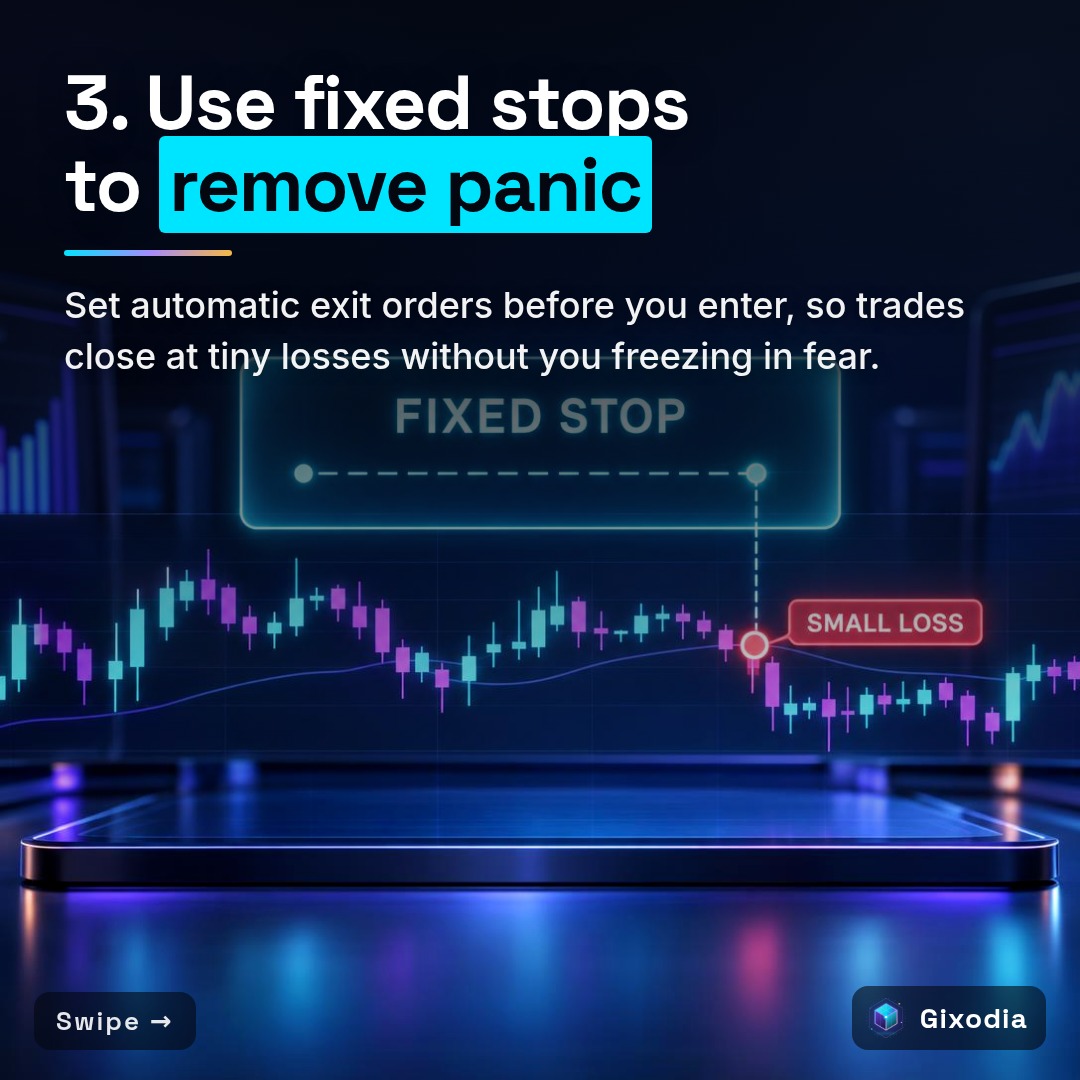
Fixed rules eliminate emotion by replacing subjective human decisions with pre-programmed mathematical thresholds. Stop losses, sizing reductions, and shutdown levels trigger automatically, eliminating hesitation, fatigue, and fear during chaotic market hours.
Studying the psychology of automated trading shows that human discipline fails under intense pressure. A trader watching an open drawdown on gold might freeze for twenty minutes, hoping for a bounce that never comes. By the time they finally close the order, the loss has grown far beyond their original plan.
Algorithmic execution removes the hesitation entirely. Gixodia's trading software, an Expert Advisor built for MetaTrader 5, trades by predefined rules, the same way every time, free of hesitation, fatigue and emotion, so it doesn't trade in a panic. As a limit you set gets close, it scales down, and it pauses at that limit. It does not try to predict the market.
How to do it, step by step
- Step 1: Baseline Volatility Setup. Add a 14-period Average True Range indicator to your chart in MetaTrader 5 to establish the baseline price range of your market during standard sessions.
- Step 2: Dynamic Sizing Formula Implementation. Configure your lot calculation formula: LotSize = (AccountEquity RiskFraction) / (ATR PointValue). As ATR rises during a selloff, the lot size contracts automatically.
- Step 3: Spread Ceiling Filter. Set a hard rule inside your trading settings that blocks any new order execution if the broker spread widens past normal parameters during volatility.
- Step 4: Automated Pre-Trade Stop Losses. Ensure every order sends an automatic hard stop loss directly to the broker at the moment of entry, preventing open-ended exposure.
- Step 5: Daily Drawdown Circuit Breaker. Set a daily loss ceiling that completely disables further trading activity for the rest of the day once hit, forcing the system to step aside.
Checklist before you take the trade
- Check 1: Is a dynamic stop loss attached to every single open position?
- Check 2: Have you disabled manual impulses to add lots to an underwater trade?
- Check 3: Is your lot sizing calculation tied inversely to current market volatility via ATR?
- Check 4: Are maximum spread filters enabled to block entries when liquidity drops?
- Check 5: Is an automated daily loss limit active to pause trading during extreme sessions?
Common mistakes and how to fix them
✗ The mistake: Mistake 1: Averaging down on plunging candles to lower entry cost.
✓ The fix: Enforce a strict one-way rule where positions cannot be added while an initial trade sits in a loss.
✗ The mistake: Mistake 2: Using static large lot sizes during major macro news events.
✓ The fix: Apply dynamic lot sizing based on real-time volatility like ATR so trade volume shrinks as swings widen.
✗ The mistake: Mistake 3: Rebalancing exposure on every tiny tick and paying excessive spread fees.
✓ The fix: Use tolerance rebalancing bands so the system only scales down when volatility moves by more than five to ten percent.
Frequently asked questions
What is volatility targeting in automated trading?
Volatility targeting is an algorithmic risk management strategy that adjusts position sizing inversely to market volatility. As price swings widen, the algorithm shrinks position sizes to keep overall account risk constant.
Why do algorithms step aside instead of buying the dip?
Algorithms step aside during market drops because sudden selloffs widen spreads and increase slippage. Without structural stabilization, buying plunging prices carries unacceptably high statistical risk.
How does ATR help calculate lot size?
ATR measures average candle range in points. Dividing your predefined cash risk by the product of ATR and point value automatically reduces your lot size when market swings expand.
Can automated algorithms trade safely through high volatility?
Yes, automated algorithms trade safely through volatility by strictly following predefined rules. They scale down position sizes, respect hard stop losses, and pause execution when spreads widen.
Want your trading to follow fixed rules, the same way every time? Gixodia's trading software for MetaTrader 5 trades by predefined rules on your own broker account, in your own name. Try it free for 72 hours, a demo account is fine, then $499/year. Trading involves risk and you can lose money.
Sources
- Target volatility strategies: how dynamic leverage controls portfolio risk | pfolio academy (pfolio.io)
- Volatility Targeting: How It Works and When It Fails (thorft.com)
- imf.org