 GIX
Three Rules for Surviving Sudden Market Volatility Triggered by Central Bank Policy Speeches

- A stop loss is an instruction to close at the next available price, not a fixed execution level when liquidity vanishes.
- Cutting position sizes prior to scheduled policy addresses protects your balance against sudden spread blowout.
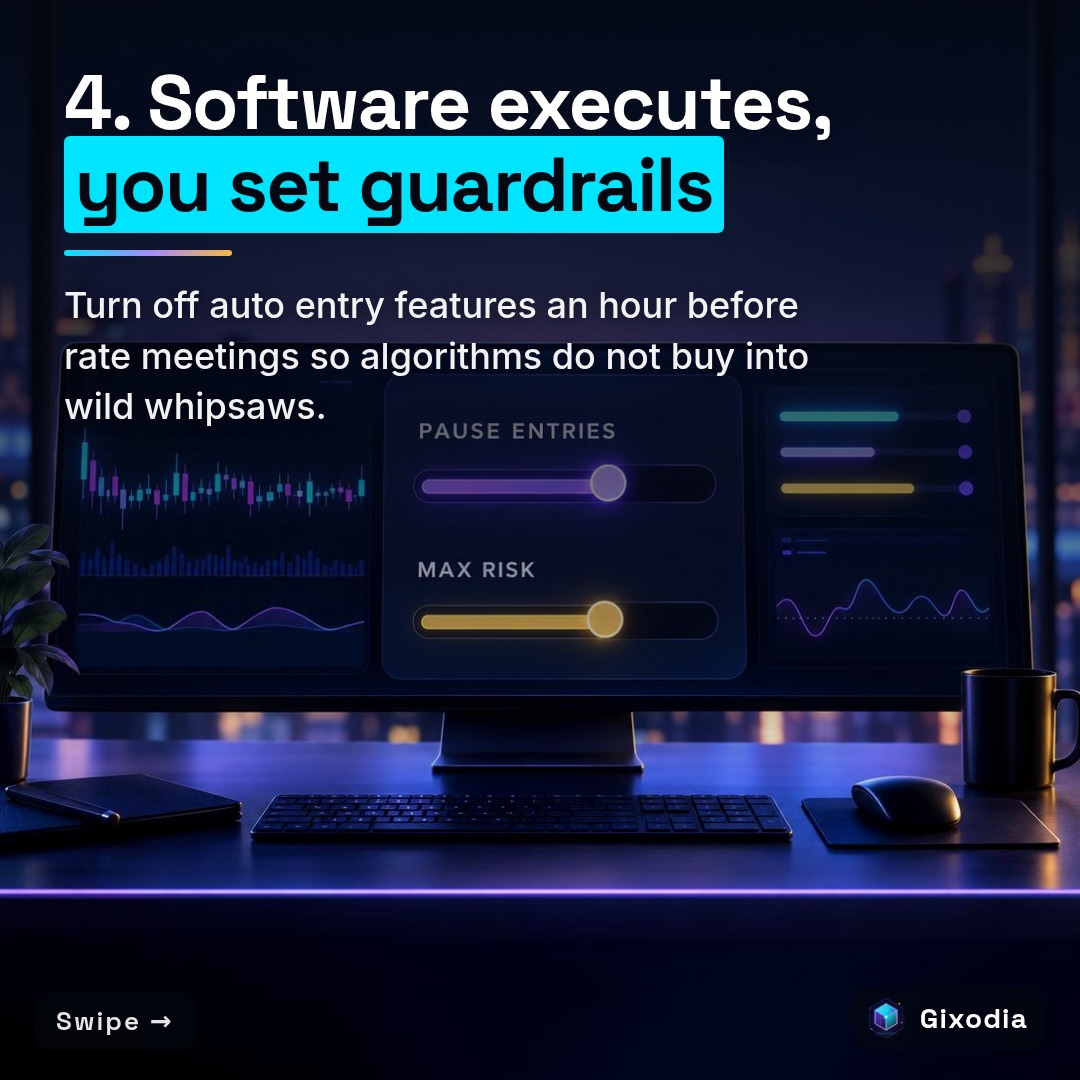
- Pausing automated entry features before press conferences prevents systems from buying into violent multi-directional whipsaws.
- Maintaining complete custody inside your personal MetaTrader 5 account ensures no external manager can mishandle your leverage.
- Waiting for the post-speech clarification window provides clearer technical structure than gambling on immediate headline spikes.
Why do central bank speeches trigger sudden market volatility?
Central bank speeches trigger sudden market volatility because currency valuations reprice instantly whenever monetary policymakers reveal unexpected shifts in interest rate paths, economic growth forecasts, or inflation outlooks.
When the Federal Reserve or European Central Bank conducts a scheduled policy event, the event rarely ends with the published interest rate figure. The real volatility often erupts 30 to 45 minutes later during the live press conference. As the central bank chair answers unexpected questions from journalists, every subtle shift in tone causes automated institutional algorithms to reprice future interest rate expectations in milliseconds.
In these fast periods, liquidity providers temporarily pull their resting limit orders from the book. Because there are fewer participants willing to take the opposite side of incoming trades, the market jumps over price levels rather than moving smoothly. Traders watching EUR/USD or gold see immediate multi-pip spikes that reverse within seconds.
This dynamic creates the environment where standard technical setups fail. To understand how price shifts affect your fills, review how central bank policy shifts cause slippage during major rate announcements.
- Scheduled statements provide headline numbers, but unscripted question sessions trigger the deepest intraday repricing.
- Large market makers widen the spread between buy and sell quotes to shield themselves from sudden price imbalances.
- Derivatives markets rapidly adjust implied rate odds, creating violent swings across related foreign exchange pairs.
What is the first rule for managing trade size during policy news?
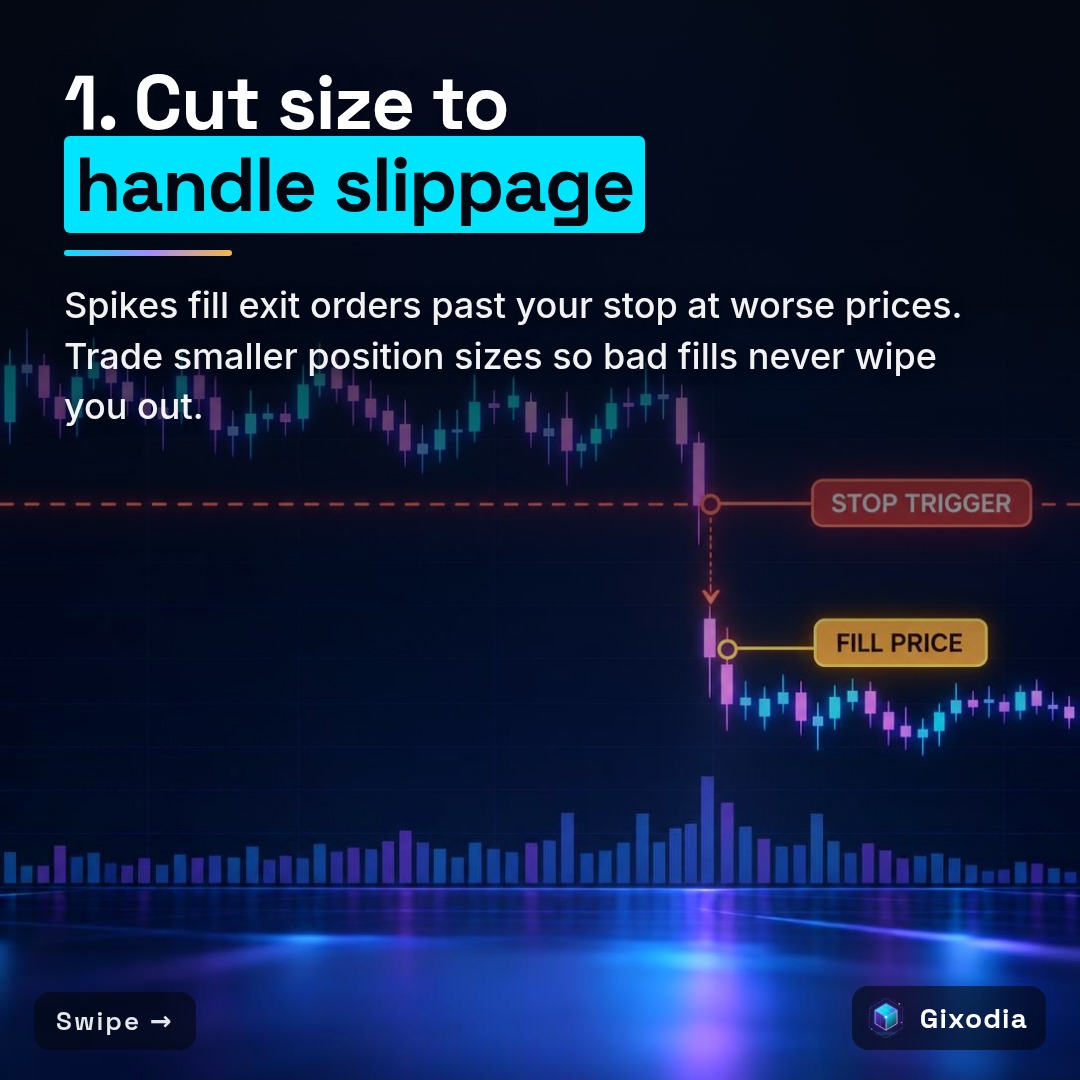
The first rule for surviving policy volatility is to drastically reduce your position size so that wider spreads and unexpected execution slippage cannot threaten your account balance.
Many retail traders assume their protective stop loss, the order placed to limit a loss on an open position, will execute exactly at the price clicked on a chart. In reality, a stop loss becomes a market order once the price touches your trigger level. If the market leaps over your stop level during an aggressive statement, you get a worse price than the one you saw on screen, which is called negative slippage.
If you trade a normal lot size during a news release, a routine price jump combined with a wide bid-ask spread can produce a loss multiple times larger than planned. By cutting your position size down to a fraction of your typical volume, you widen your survival buffer. For a deeper breakdown of these cost structures, read our guide on understanding spread commission slippage.
Brokers also frequently enforce dynamic margin controls ahead of major policy statements. They may reduce account leverage down to lower levels to prevent negative account balances. Trading smaller sizes ensures you never receive a surprise margin call when these temporary platform rules take effect.
- Calculate your monetary risk based on a worst case fill scenario rather than a clean chart level.
- Check your broker margin requirements one hour before high impact speeches begin.
- Avoid using tight stops that get cleared instantly by spread widening alone.

How does maintaining a manual kill switch protect automated systems?
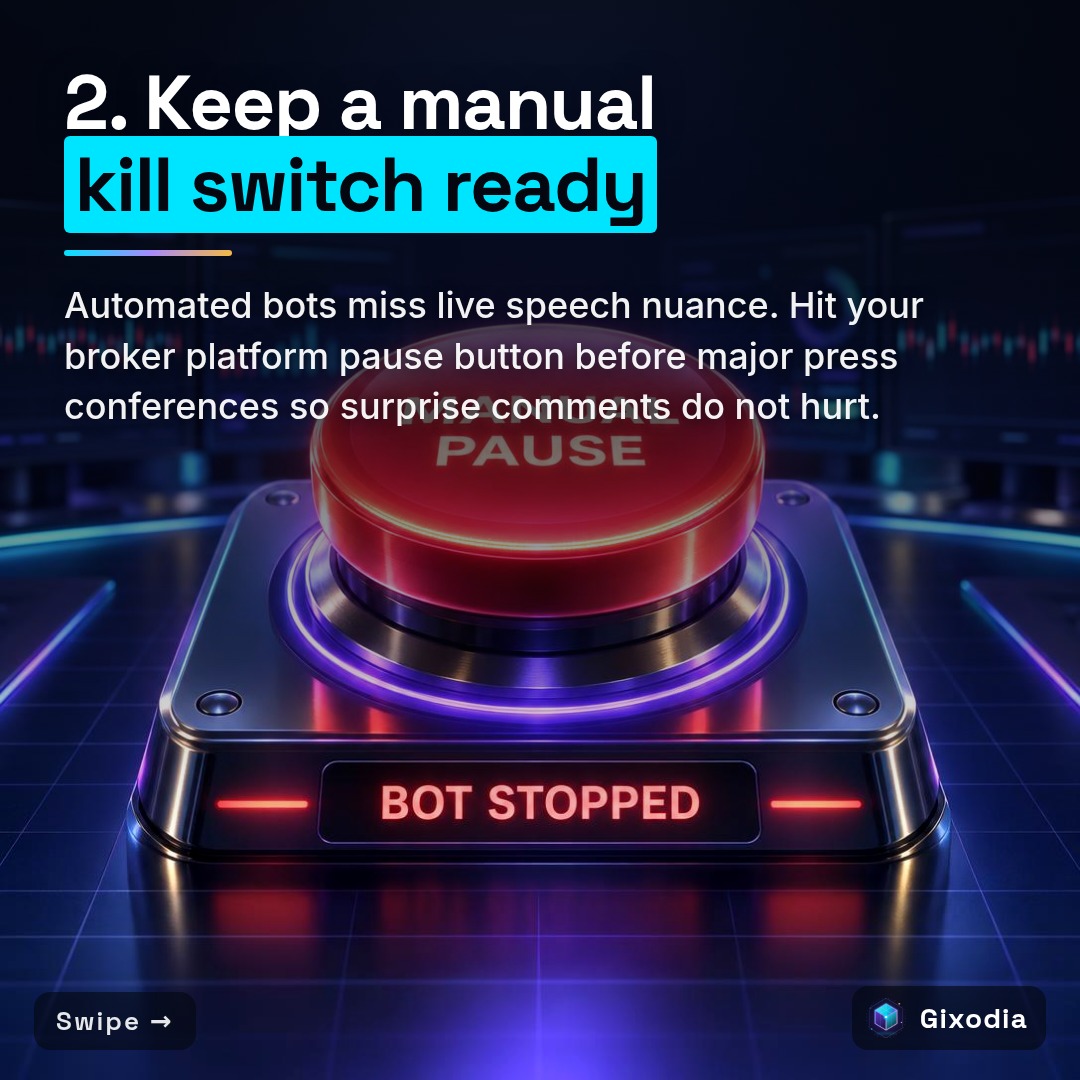
Maintaining a manual kill switch protects your automated systems by ensuring algorithms do not execute trades based on normal technical patterns while erratic, news-driven price spikes dominate the market.
Algorithmic systems and Expert Advisors on MetaTrader 5 are designed to execute predefined technical logic. They read price levels, moving averages, and bar closes with strict discipline. However, code cannot evaluate the spoken nuances of a central bank governor explaining inflation trends in a live broadcast. Algorithms cannot tell whether an aggressive upward spike is the start of a structural trend or an immediate institutional liquidity trap.
Because of this limitation, smart operators keep a manual pause procedure ready. Turning off automated entry functions thirty minutes before a press conference prevents the software from buying at the exact peak of an emotional headline. The software executes predefined rules the same way every time, but human traders must decide the operational boundaries within which those rules run.
If you run Gixodia's trading software on your personal MetaTrader 5 platform, you have complete control over when the tool is active. The software trades by predefined rules on your own account and never tries to predict unpredictable news speeches. You simply click AutoTrading off in your terminal toolbar to let the wild whip of the initial press conference pass safely.
- Disable auto-entry triggers before high tier central bank addresses appear on the economic calendar.
- Let manual pause rules stand until the speaker leaves the podium and spread widths normalize.
- Check whether pending bracket orders need to be cancelled manually before high impact remarks begin.
| Execution Factor | Normal Liquid Market | Central Bank Speech Window |
|---|---|---|
| Bid-Ask Spread | Tight and stable across major instruments | Spreads widen sharply as participants pull liquidity |
| Slippage Risk | Minimal, fills execute close to quoted prices | Severe, market orders fill many pips away |
| Price Direction | Continuous price delivery and technical trends | Rapid two-way whipsaws driven by verbal cues |
| Broker Margin Controls | Standard leverage limits remain unchanged | Dynamic leverage reductions and higher margin buffers |
Why must you keep complete custody inside your own broker account?
You must keep complete custody inside your own broker account so that only you retain access to your capital, withdrawal rights, and immediate risk settings during severe market turbulence.
During periods of financial turbulence, third party managed pools, copy trading networks, and unregulated profit-sharing entities often collapse because account managers gamble on high-leverage news outcomes. When sudden policy decisions shock the market, traders who hand their money to third parties frequently discover their capital is locked or wiped out entirely.
Legitimate automation runs strictly inside your own broker account in your own personal name. Gixodia builds algorithmic software for MetaTrader 5, but Gixodia is software, not a broker, a fund, or an advisor. Gixodia never holds or moves your money. The software can execute trades only based on your preset settings, and it can never withdraw or transfer funds. You retain total operational sovereignty.
Having direct custody means you decide the maximum drawdown, the exact position sizing, and whether trades stay open or close before a speech. If unexpected news freezes a broker connection, you are the only one holding the direct security credentials to manage the terminal. For more details on safe infrastructure, review our guide on choosing an MT5 broker for EA trading.
- Never send trading capital to pooled investment accounts or profit share arrangements.
- Ensure your MetaTrader 5 credentials and master investor passwords remain private to you.
- Verify that your broker account allows direct manual intervention even if an algorithm is running.
How should you trade the market after the speech concludes?
You should trade the post-speech market by waiting for the initial volatility to settle, confirming technical market structure on your chart, and entering on established pullbacks rather than chasing spikes.
The minutes immediately following a central bank headline release represent the most dangerous phase for retail accounts. Market participants who jump in during the first sixty seconds are essentially guessing direction while institutional algorithms sweep resting orders on both sides of the range. Once the press conference concludes and liquidity providers return, price discovery settles into clean technical trends.
Wait 15 to 30 minutes after the press conference finishes. Look at your higher timeframe charts to see what the volatility actually accomplished. Did price break through a key resistance level and hold, or did it merely sweep an old high before rejecting back into the range? If a clear trend develops, look for clean pullbacks toward support and resistance rather than buying at extended highs.
This deliberate post-announcement framework transforms headline panic into systematic execution. You avoid the widest spreads, sidestep slippage traps, and execute with calculated stop loss boundaries placed behind real structural support levels. To see how institutional sweeps operate during news, study trading the inducement and liquidity sweeps.
- Allow the first 15 to 30 minutes of price action to absorb the immediate liquidity shock.
- Identify whether market structure broke cleanly or merely swept resting stop orders.
- Place protective stops behind structural swing extremes rather than inside volatile noise.
How to do it, step by step
- Audit the economic calendar. Open the economic calendar in MetaTrader 5 or TradingView every morning and flag all high tier policy meetings, interest rate releases, and press conferences.
- Scale down your position sizes. Reduce your trade volume on relevant currency pairs well before the scheduled address so that wide spreads cannot trigger margin warnings.
- Disengage automated trade entries. Click the AutoTrading button in your MetaTrader 5 toolbar to pause automated order entries before live press conferences commence.
- Confirm stop orders on your broker terminal. Check that all open positions carry working stop loss orders that are stored on the broker server rather than relying on local machine alerts.
- Wait for speech conclusion. Remain on the sidelines while central bankers speak and wait until bid-ask spreads return to their normal baseline widths.
- Re-evaluate higher timeframe market structure. Analyze whether the post-speech momentum created a genuine breakout or a liquidity sweep before enabling new setups.
Checklist before you take the trade
- Economic calendar checked for central bank policy meetings and press conferences
- Position sizing reduced to account for wider bid-ask spreads and execution slippage
- Automated entry logic paused in MetaTrader 5 ahead of high-impact speaking events
- Protective stop loss orders confirmed active and stored on the broker server
- Direct custody confirmed with all trades running inside your own broker account
- Post-speech spread widths verified as normal before resuming active trading
Common mistakes and how to fix them
✗ The mistake: Trading purely on the initial headline rate number without waiting for the statement.
✓ The fix: Wait for the entire policy statement and press conference because forward guidance frequently contradicts the initial headline move.
✗ The mistake: Placing tight stop loss orders right next to current price ahead of a policy address.
✓ The fix: Widen your stop loss placement beyond key structural levels and scale down lot sizes to maintain your intended dollar risk.
✗ The mistake: Leaving automated systems active during unscripted policy question sessions.
✓ The fix: Use a manual kill switch to pause algorithmic entries until the live press conference finishes and liquidity stabilizes.
✗ The mistake: Handing capital to third party account managers who promise to trade news volatility.
✓ The fix: Retain sole custody inside your personal MetaTrader 5 broker account so nobody else can control your account balance.
Frequently asked questions
Why does my stop loss fill at a worse price during a central bank speech?
A stop loss acts as a trigger that converts into a market order when your price level is reached. During high impact speeches, market participants pull liquidity, causing price to skip across levels. Your broker must fill your order at the next available price, which can result in severe slippage.
Should I close all open trades before a central bank press conference?
Closing open trades or reducing position size is a prudent risk management habit. If you choose to hold positions, make sure your stop loss is wide enough to survive spread expansion and that your lot size represents a small monetary risk.
Can automated trading software read the tone of a speech?
No, trading bots execute predefined code based on price action and chart indicators. Software cannot interpret spoken inflection or unexpected answers during a live press conference, which is why manual pause controls are recommended.
How long after a central bank speech should I wait before trading?
Most traders wait 15 to 30 minutes after the press conference concludes. This pause allows bid-ask spreads to normalize and lets real market structure emerge once initial whipsaws fade.
Want your trading to follow fixed rules, the same way every time? Gixodia's trading software for MetaTrader 5 trades by predefined rules on your own broker account, in your own name. Try it free for 72 hours, a demo account is fine, then $499/year. Trading involves risk and you can lose money.
Sources
- Federal Open Market Committee (federalreserve.gov)
- equiti.com
- 6 Dynamic Leverage Controls Brokers Set Before News Events (wxtrade.com)
- Trading Interest Rate Decisions: A Practical Framework for (mrktedge.ai)