 GIX
The Danger of High Win Rates in Trading and Why Strict Exit Rules Matter More

- Win rate measures trade frequency, while risk-to-reward ratio determines trade magnitude.
- A trader who wins most setups can still lose balance if open losses outsize booked gains.
- Mathematical expectancy requires predefined stops on every single market position.
- Fixed exit rules protect capital against the urge to hold losing trades in hope of a rebound.
What is the danger of chasing a high win rate in trading?
Win rate is the proportion of closed positions that produce a profit, but focusing solely on this number creates a false sense of security. Without strict exit rules, a trader often banks tiny gains while holding large losers, allowing one bad trade to erase weeks of progress.
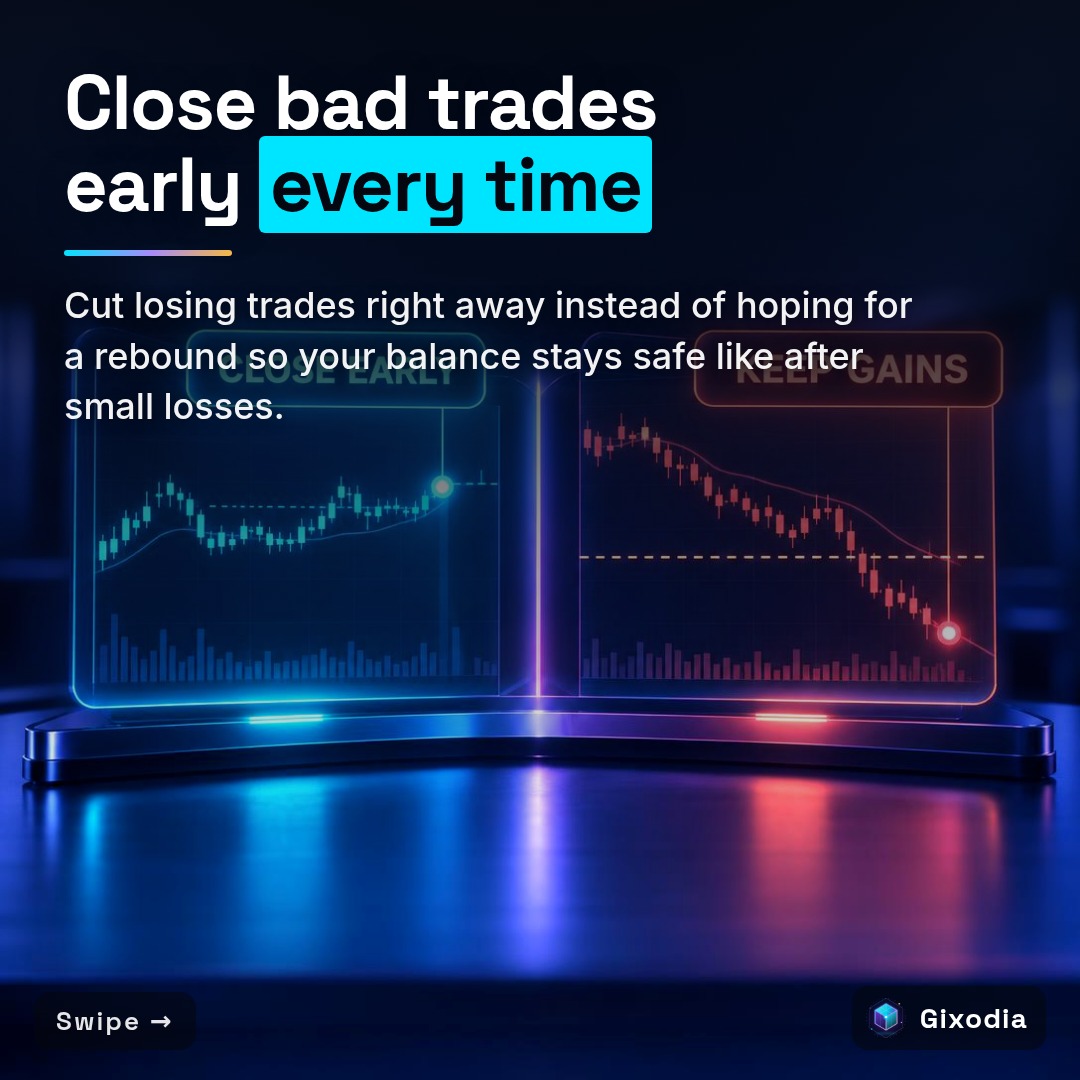
Many market participants fall into a behavioral trap known as the disposition effect. You take a fast profit the second a candle turns green because locking in a win feels good. When the chart moves against your position, however, you hold on and hope for a rebound so you do not have to accept a loss on paper.
Over ten trades, you might book several tiny gains. But on the next setup, a sudden breakout runs past your comfort zone. Because there is no hard exit plan, you watch the balance drop, hoping the price returns to your entry level. In a single afternoon, that unmanaged position wipes out every gain you made and cuts into your core account balance. This explains why most retail traders lose despite feeling right on most days.
How does mathematical expectancy determine trading profitability?
Trade expectancy is the average amount of capital you can expect to win or lose on each trade over a large statistical sample. It combines your win frequency with your average win size and average loss size into a single formula.
Looking at win frequency by itself tells you nothing about account survival. Expectancy is calculated by multiplying your win rate by your average profit, then subtracting the loss rate multiplied by your average loss. If your average loss is several times larger than your average win, even an elevated win count leaves your account balance flat or negative after accounting for trading friction.
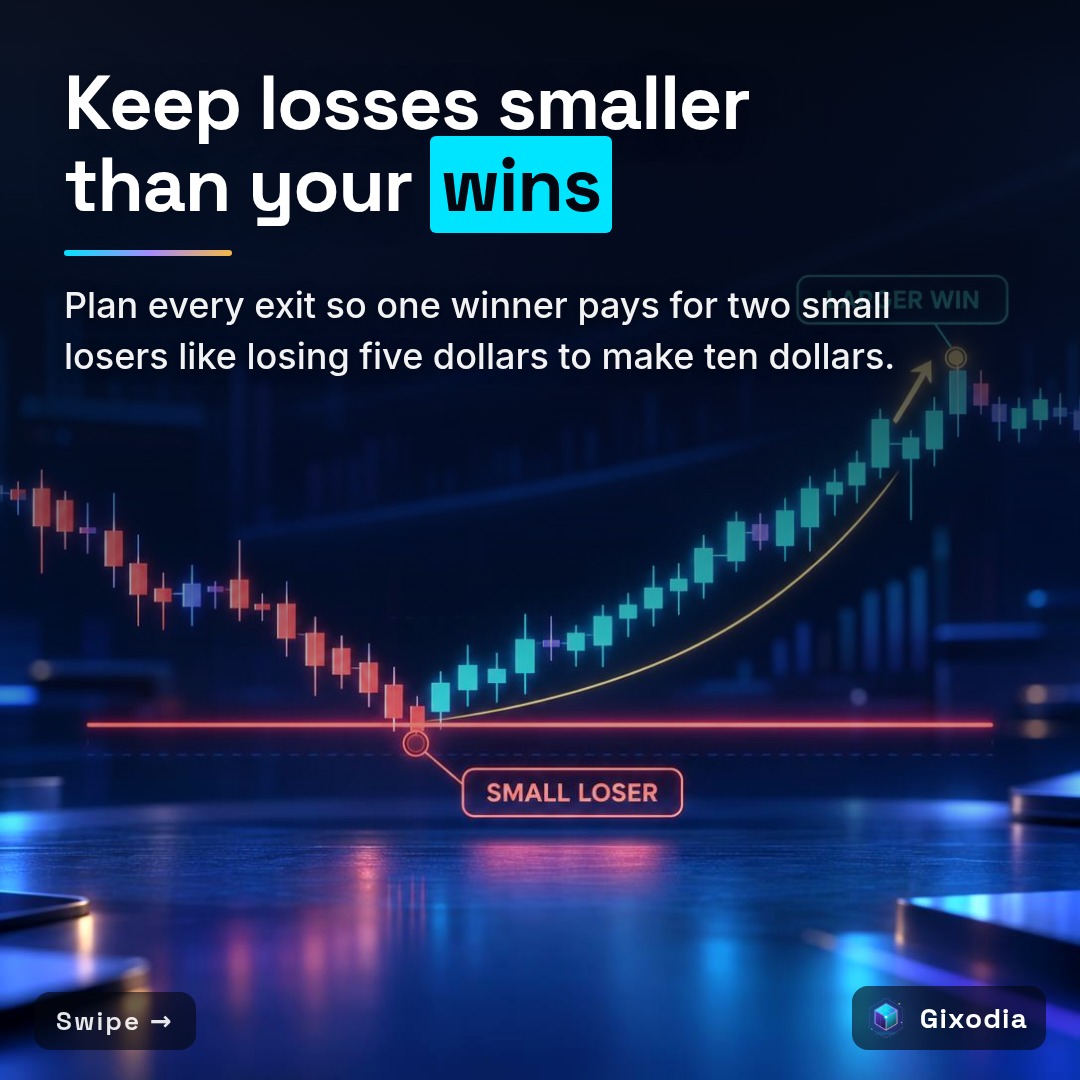
Consider an example on EUR/USD. If you risk ten pips to make twenty pips, your planned risk-to-reward ratio is 1:2. At this ratio, your required winning frequency drops significantly. You can be wrong on more trades than you win and still see your account grow over fifty trades, simply because your exits cut losses short while allowing winning runs to reach structure.

Why do strict exit rules matter more than trade entries?
Exit rules protect your trading capital by taking loss control out of your hands and setting a definite invalidation point. While entry points merely offer a statistical starting place, your exit determines the exact monetary impact every trade has on your balance.
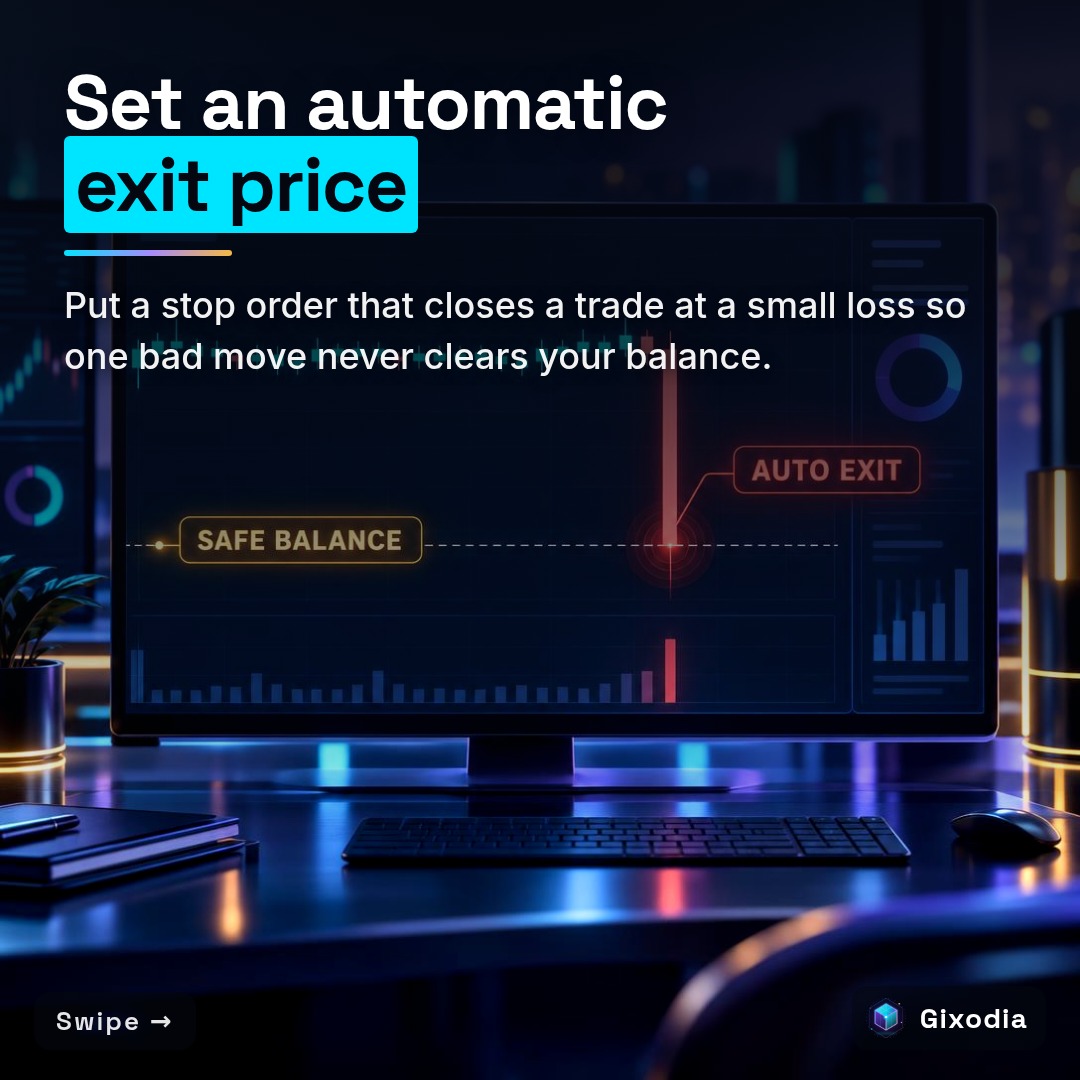
A trade entry is only an educated guess based on chart structure, support levels, or liquidity pockets. Once an order opens, market flow takes over. If you enter EUR/USD or gold without a predefined stop loss, the order that closes the trade when the market goes against you, you leave your balance exposed to sudden price shocks.
Enforcing a strict stop order on your broker server ensures that no single market move can cause catastrophic balance damage. When traders manage trades by emotion, they move stops backward or remove them entirely during drawdowns. Understanding why widening a stop loss always backfires reinforces the principle that survival comes from consistent exits, not flawless market entries.
| Risk-to-Reward Ratio (Risk : Reward) | Mathematical Expectancy Condition | Outcome When Losses Outweigh Gains |
|---|---|---|
| 1 : 1 (1.0R) | Requires more winning trades than losing trades to gain balance | Net balance loss if wins do not exceed losses |
| 1 : 1.5 (1.5R) | Achieves breakeven when losses occur moderately more often | Maintains capital balance with disciplined exits |
| 1 : 2 (2.0R) | Yields net growth even when losing more trades than winning | Produces positive expectancy over a series of setups |
| 1 : 3 (3.0R) | Builds balance with fewer winning trades than losing trades | Allows multiple small losses without damaging capital |
| 2 : 1 (0.5R negative payoff) | Requires frequent consecutive wins simply to stay flat | A single losing trade erases several winning trades |
How do friction costs degrade an apparent high win rate edge?
Trading friction consists of spreads, execution commissions, and order slippage that get subtracted from every transaction. On high-frequency scalping strategies that boast high win counts, these costs quietly eat away the edge until the strategy becomes unprofitable.
The spread, the gap between the buy price and the sell price, must be cleared before any trade shows a profit. When you target tiny profits of three to four pips on EUR/USD, a one-pip spread combined with commission takes away a massive share of your planned reward.
Slippage, which happens when you get a worse price than the one you saw on screen during fast news moves, expands those losses even further. Reviewing understanding spread commission slippage helps illustrate why a strategy targeting asymmetrical swings is far more durable than one attempting to bank tiny scalps with wide stop losses.
How does automation enforce exit discipline without emotional interference?
Algorithmic trading software enforces exit discipline by executing predefined risk parameters instantly on every order. It removes human hesitation, fear, and the temptation to hold losing trades in hope of a turnaround.
A trader watching an open chart often experiences psychological paralysis when an order goes into drawdown. Taking a planned loss feels painful, so the manual trader delays the exit, hoping the market recovers. Automated software does not experience hope or pride; it sends bracket exit orders to the server the moment a trade triggers.
Gixodia builds algorithmic software for MetaTrader 5 that trades by predefined rules, the same way every time. By relying on fixed rules rather than discretionary impulses, software eliminates the execution delays that turn small pullbacks into blown accounts. Traders who want to eliminate manual hesitation often explore bot vs manual trading to keep their risk management consistent across market sessions.
How to do it, step by step
- Locate technical invalidation. Find the price level on your chart where your trade setup is logically proven wrong, such as behind an established swing level, rather than picking an arbitrary round number.
- Measure planned reward with the forecasting tool. Open the Long Position or Short Position tool in TradingView and place it on your planned entry. Drag the stop to your invalidation line and the target to the next major market liquidity zone.
- Verify minimum payoff ratio. Check the tool readout to confirm the planned risk-to-reward ratio meets your plan threshold, such as 1:1.5 or 1:2. If the chart structure does not offer sufficient room, skip the setup.
- Calculate exact lot sizing. Adjust your position volume so your dollar risk stays at a uniform, predetermined amount based on your stop distance. Never widen your stop to accommodate a larger trade size.
- Submit bracket orders to the broker server. Enter the trade in MetaTrader 5 with the stop loss and take profit attached immediately, ensuring your exit rules exist on the server even if your screen disconnects.
Checklist before you take the trade
- The stop loss order is active on the broker server before or immediately at entry.
- The planned profit target offers comfortably more distance than the stop loss.
- Position size has been calculated from the stop distance to risk a uniform amount.
- The exit level rests at a structural invalidation zone rather than an arbitrary balance figure.
- A firm rule is in place never to push a stop loss further away during an active drawdown.
Common mistakes and how to fix them
✗ The mistake: Taking quick profits on winners while letting losers run freely.
✓ The fix: Place automated bracket orders for both stop loss and take profit at entry, letting the math work without manual meddling.
✗ The mistake: Forcing an arbitrary profit target on a chart that lacks room.
✓ The fix: Anchor profit targets strictly to genuine market structure; if the distance does not meet your minimum ratio, discard the setup.
✗ The mistake: Measuring performance purely by winning trade frequency in a trading journal.
✓ The fix: Track realized expectancy and profit factor alongside trade counts to confirm your average gain exceeds your average loss.
Frequently asked questions
Can a trader remain profitable while losing more trades than they win?
Yes, a trader can maintain profitability while losing more trades than they win if their average winning trade is substantially larger than their average loss. With an asymmetric risk-to-reward ratio such as 1:2 or 1:3, positive expectancy builds capital even with fewer winning trades.
Why do high win rate strategies blow up trading accounts?
High win rate systems often rely on wide stops or no stops at all to keep trades from closing negative. When a market trend runs without pulling back, a single runaway loss erases dozens of small profits and drains the account balance.
What is the formula for breakeven win rate?
The breakeven threshold is calculated as 1 divided by (1 + R), where R represents the reward multiple relative to a risk unit of 1. For instance, a 1:2 ratio requires far fewer winning setups to maintain account balance than a 1:1 setup.
How does MetaTrader 5 calculate expected payoff?
In the MetaTrader 5 Strategy Tester, expected payoff is calculated by dividing total net profit by the total number of trades executed, showing the statistical return per setup after execution friction.
Want your trading to follow fixed rules, the same way every time? Gixodia's trading software for MetaTrader 5 trades by predefined rules on your own broker account, in your own name. Try it free for 72 hours, a demo account is fine, then $499/year. Trading involves risk and you can lose money.
Sources
- Win rate vs risk-reward ratio: which one actually makes you consistent (tradavity.com)
- Win Rate vs Risk-Reward: Why High Win Rates Still Lose (hoc-trade.com)
- Risk/Reward Ratio in Forex: 1:1 to 1:5 RR & Break-Even Win Rate Formula (comofx.com)