 GIX
How Macro Headline Volatility Impacts Automated Trading and Why Manual Risk Controls Matter

- Headline risk produces sudden price jumps that can trigger algorithmic entries into wide spreads.
- An automated trading bot executes predefined technical rules and cannot interpret unexpected political statements.
- Using a kill switch cancels pending resting orders and halts new entries before thin order books slip your fills.
- Reactivating an automated strategy requires waiting for bid-ask spreads and volatility to return to baseline levels.
- You retain ultimate responsibility over leverage, exposure caps, and emergency deactivation.
What is macro headline volatility?
Macro headline volatility is the sudden market turbulence caused by breaking economic data, interest rate decisions, or unexpected statements from sovereign finance officials that disrupt normal pricing order.
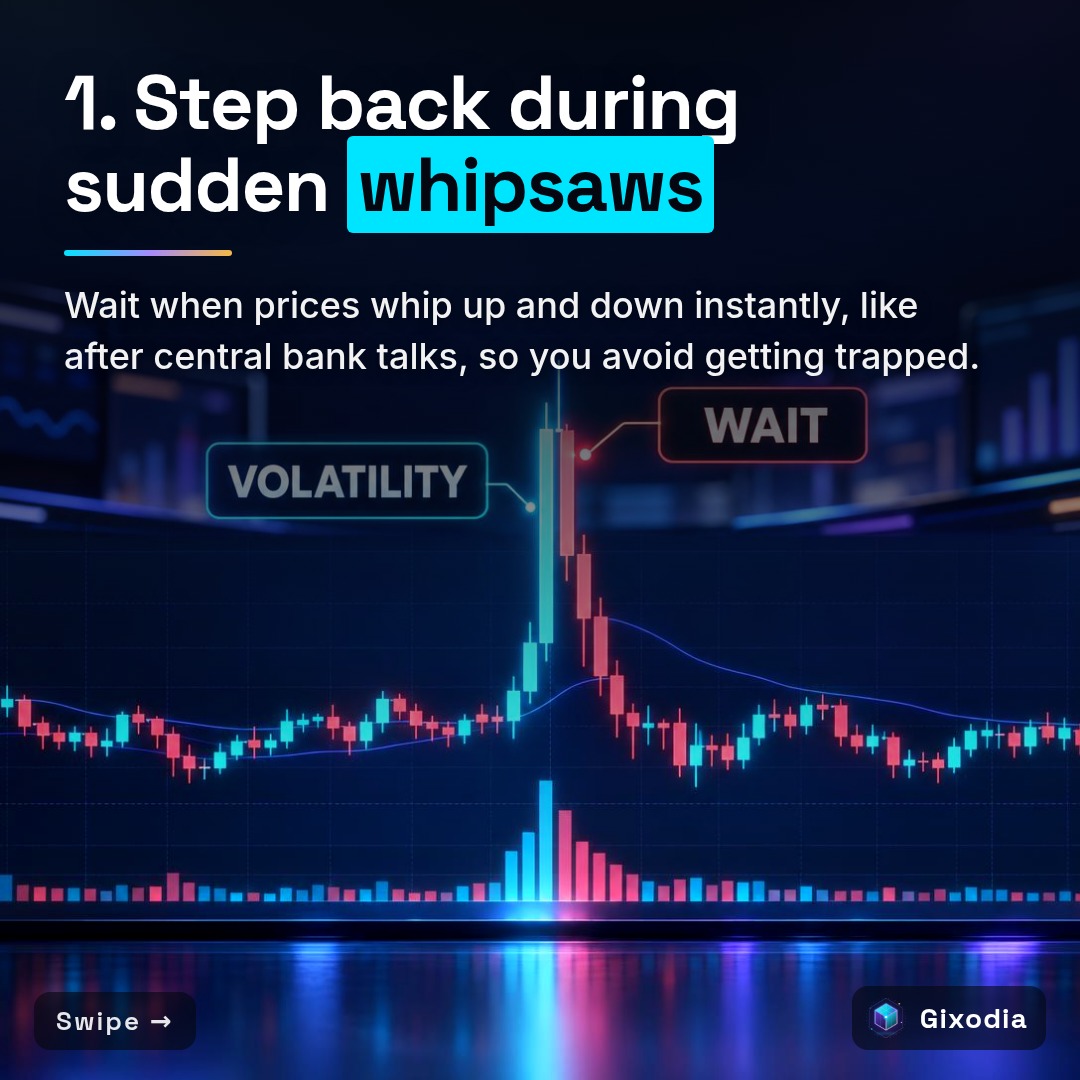
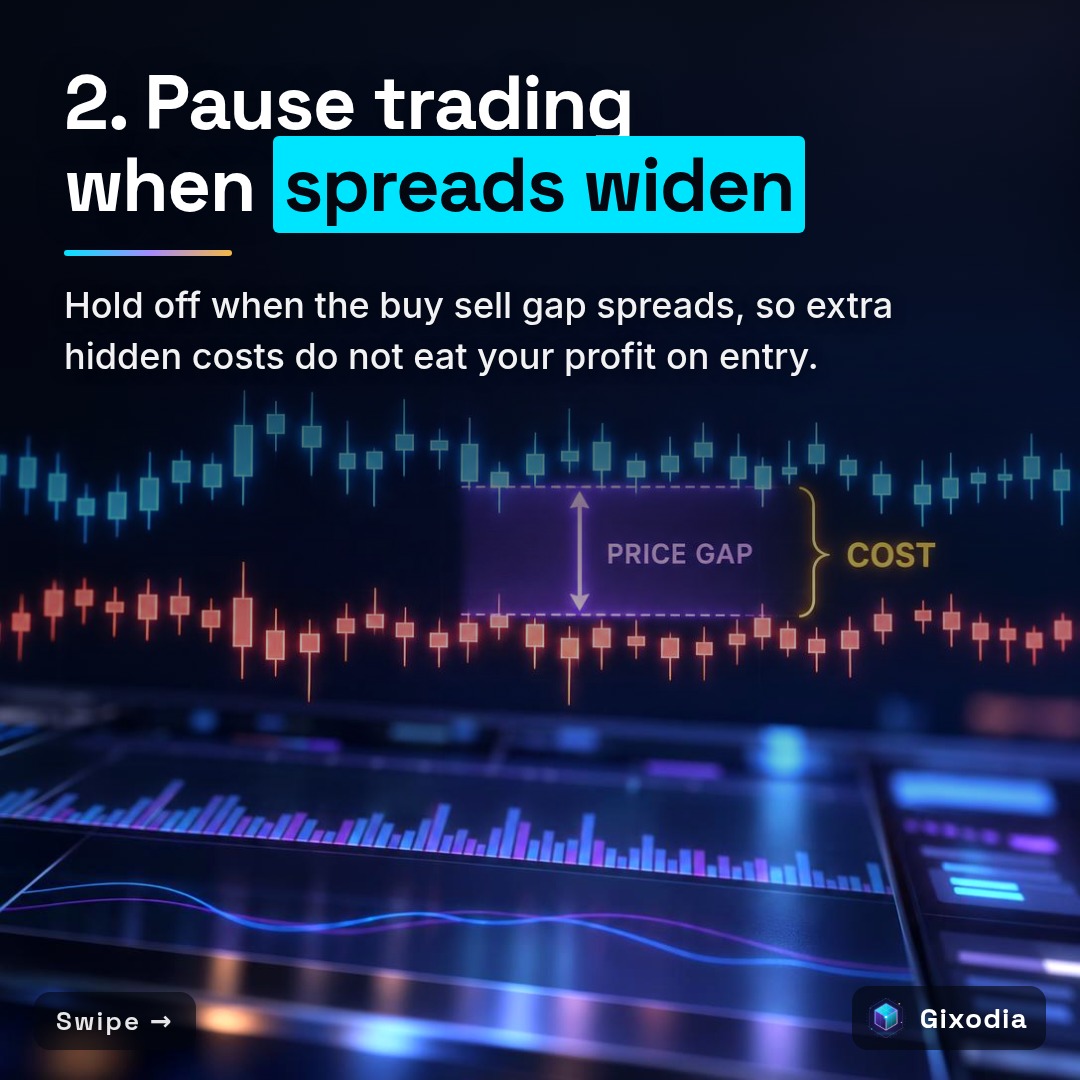
In financial markets, price moves smoothly when buyers and sellers rest orders across multiple price levels. When unscheduled news or official remarks hit the wire, those resting orders disappear in a split second. Liquidity providers step back because they do not want to take the other side of an unpredictable shock. As everyone pulls back at the same moment, the bid-ask spread, which is the price gap between what buyers offer and what sellers accept, blows out significantly [cite: 3].
This dynamic affects markets like EUR/USD and gold (XAU/USD). If a central bank official issues a surprise warning regarding currency valuation, EUR/USD can whipsaw across dozens of points in seconds. Traders who understand how forex markets work know that these sudden voids mean orders get filled far away from the intended technical level.
- Central bank rate decisions and unscheduled emergency policy statements
- Verbal warnings from sovereign finance officials on currency movement
- High-impact data surprises like employment reports or inflation numbers
How does breaking news affect automated trading systems?
Breaking news affects automated trading systems by driving price through technical levels on wide spreads, causing algorithms to enter false breakouts or suffer extreme execution slippage.
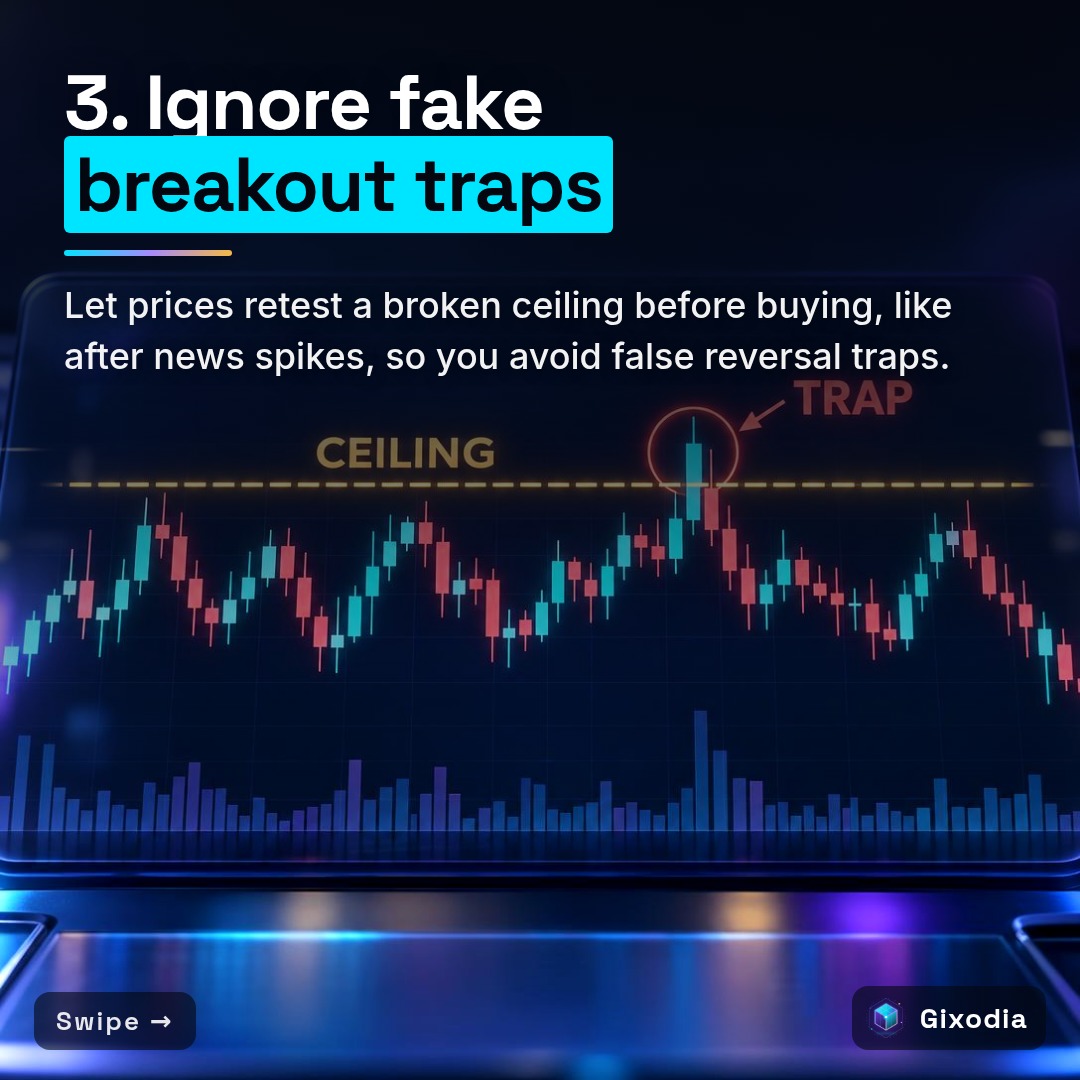
An Expert Advisor running inside MetaTrader 5 does not read newspapers or watch televised press conferences. It evaluates mathematical parameters, such as candle closes, moving averages, or high-low breakouts. When a breaking sovereign statement causes a vertical candle spike, the bot sees a valid technical breakout and sends an entry order. In reality, that spike is an erratic sweep that will reverse the moment genuine liquidity returns.
Furthermore, entering during an active news shock incurs costly execution penalties. Because liquidity vanishes, you get a much worse price than what was on your screen. You can review the mechanics behind this in our guide on understanding spread commission slippage. Without safety parameters, an automated tool can rack up heavy friction costs across several rapid entries.
- Technical entry signals fire on erratic price spikes that lack follow-through
- Resting stop orders get filled well beyond the set price level due to thin order books
- High spread levels immediately place new positions in an unnecessary hole
What is an algorithmic trading kill switch?
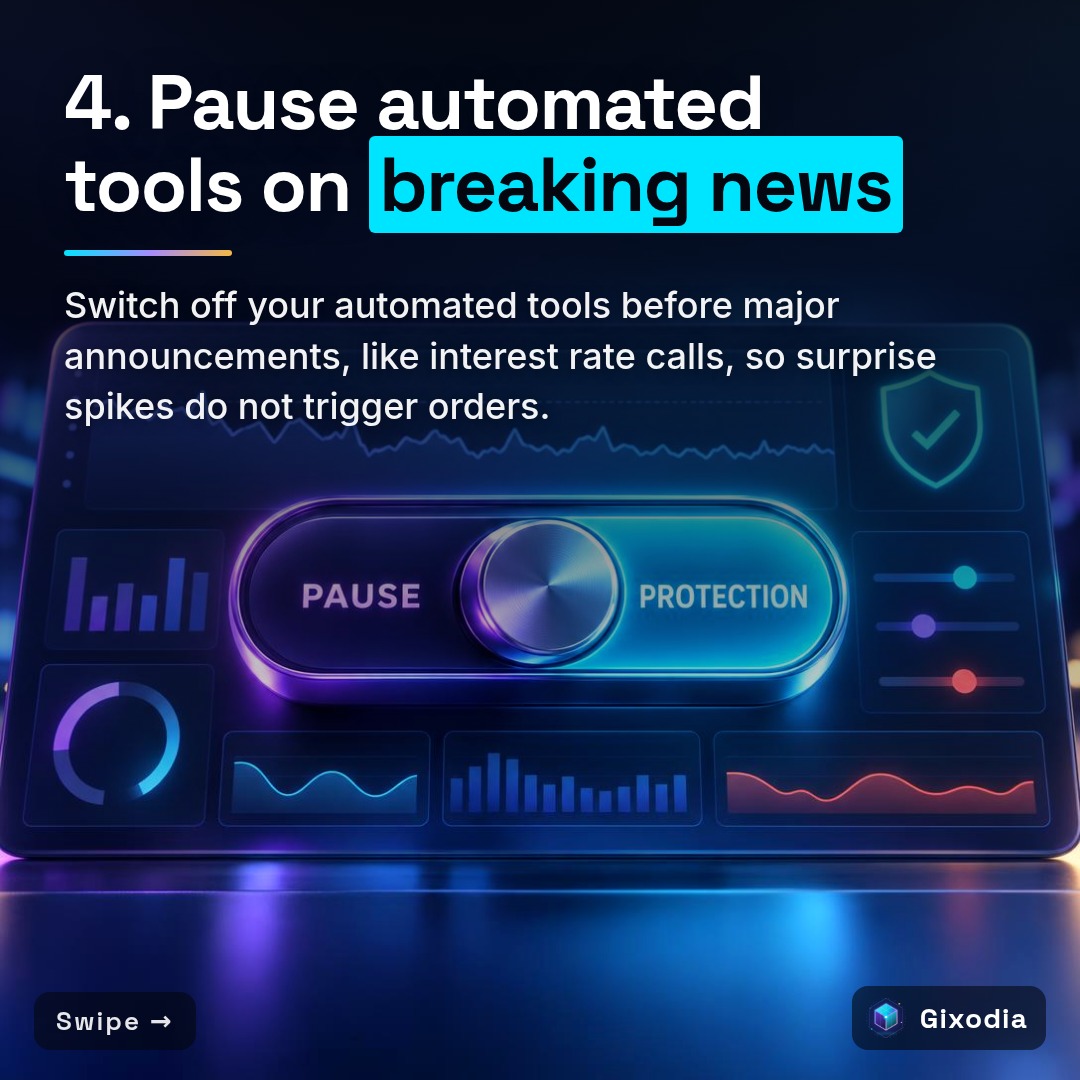
An algorithmic trading kill switch is an automated or manual emergency control that immediately cancels all pending working orders and blocks new trade executions to halt financial exposure during abnormal market conditions.
Exchange operators, broker gateways, and professional risk desks treat kill switches as mandatory safeguards [cite: 1, 5]. Rather than letting an automated strategy blindly trade into market turmoil, a kill switch acts as a firm circuit breaker. When triggered, it stops the execution loop from placing further market orders and purges resting limit and stop orders from the broker's book.
A kill switch can operate manually via a simple platform command or automatically using code parameters. For example, if a strategy detects that the spread has widened to three times its normal baseline, a reactive script can block new trades instantly [cite: 5]. This structure keeps an automated system from turning a routine news shock into an uncontrolled drawdown event.
| Trading Condition | Market Dynamics | Automated System Behavior | Required Risk Action |
|---|---|---|---|
| Standard Sessions | Balanced order book, tight spreads, predictable technical structure | Executes technical entries smoothly within normal slippage tolerances | Monitor system health and maintain standard lot sizes |
| Scheduled Major News | Liquidity pulls back minutes before release, creating planned spread spikes | Can trigger false breakouts if resting limit or stop orders remain live | Deactivate order entry 5 to 15 minutes before the release window |
| Unscheduled Sovereign Headlines | Immediate two-way whipsaws, sudden spread blowouts, absent liquidity | Risks buying tops or selling bottoms during violent order sweeps | Trigger a manual kill switch immediately and cancel all working orders |
Why do manual risk controls remain essential alongside bots?
Manual risk controls remain essential because human traders can anticipate the operational context of geopolitical and sovereign events that purely mathematical algorithms cannot comprehend.
Automated software brings distinct advantages to everyday execution. As explored in our breakdown of bot vs manual trading, software operates without hesitation, fatigue, or panic. It applies rules the same way every time. Yet software cannot predict that a government press briefing scheduled for noon might alter currency interest rate expectations for the rest of the quarter.
This is where human oversight fits into the process. The trader acts as the risk manager who controls total account leverage, monitors schedule calendars, and engages safety pauses. Gixodia builds algorithmic software for MetaTrader 5 that trades by predefined rules, but setting boundary conditions and knowing when to hit pause during extreme sovereign uncertainty remains the trader's fundamental responsibility.
- Humans understand real-world context while software reads historical and live prices
- Manual intervention stops compounding mistakes during exceptional macroeconomic shocks
- Pausing execution avoids unmanageable execution friction during liquidity vacuums
How should you manage open trades during high-impact headlines?
You should manage open trades by either closing positions ahead of the release or ensuring existing hard stop losses sit sufficiently far from erratic noise while avoiding new market orders.
One of the costliest errors traders make during news releases is attempting to panic-close a position with a market order right as the headline drops [cite: 5]. A market order tells your broker to fill you at whatever price is available right now. When the order book is empty, that market order can sweep dozens of price points lower, locking in devastating slippage.
The safe way to handle risk is proactive. If you know a major sovereign statement or interest rate call is due, step back early. Close the trade five to fifteen minutes before the event begins, or leave a hard stop loss in place that was sized correctly during normal market conditions. Understanding the principles in why automated trading rules pause trading during major news can save your account from unnecessary balance erosion.
When is it safe to reactivate automated execution?
It is safe to reactivate automated execution only after the post-news whipsaws conclude, the bid-ask spread compresses back to its normal average, and price volatility settles into standard ranges.
A news release does not conclude the second the economic print crosses the tape. The initial spike is usually followed by secondary and tertiary waves as institutional desks recalibrate their models [cite: 3]. Turning your automated tool back on sixty seconds after a release exposes your balance to these violent secondary whipsaws.
Wait fifteen to thirty minutes after scheduled releases before turning execution back on [cite: 5]. Pull up your chart and check the live spread on EUR/USD or gold. If the spread is still jumping beyond historical baseline averages, keep the system paused. Patience preserves your balance so technical rules can run when the market behaves rationally again.
How to do it, step by step
- Audit your economic calendar. Every morning, inspect high-impact releases scheduled for EUR/USD and gold, noting the exact times of rate statements, inflation releases, and planned central bank speeches.
- Establish your deactivation window. Plan to disable automated order placement five to fifteen minutes before scheduled events to ensure resting orders do not sit exposed during the pre-news liquidity withdrawal.
- Cancel all working resting orders. In MetaTrader 5, delete all pending limit and stop entry orders before the news release so sharp price spikes cannot accidentally drag you into poor positions.
- Trigger manual pause for unscheduled events. When emergency sovereign statements or unexpected geopolitical headlines break, tap Algo Trading in MetaTrader 5 to stop your software from executing new signals into thin liquidity.
- Confirm spread normalization. Before reactivating execution, open the Market Watch window on MetaTrader 5 and verify that the live spread has settled back to its usual range.
- Reactivate automated execution. Turn the software back on only after price action forms standard candle ranges and the post-news whipsaws have fully calmed down.
Checklist before you take the trade
- Economic calendar checked for sovereign press conferences and interest rate calls
- Deactivation buffer scheduled 5 to 15 minutes before high-impact news windows
- All pending resting limit and stop orders cleared from the platform terminal
- Account exposure limits and maximum daily loss caps firmly established
- Manual kill switch procedure verified and accessible inside MetaTrader 5
- Spread levels confirmed to be back to normal baseline before resuming automated trading
Common mistakes and how to fix them
✗ The mistake: Sending market close orders directly into the peak of a news spike
✓ The fix: Close open positions several minutes prior to the event, or rely on predefined hard stop orders rather than triggering blind market sweeps into an empty order book.
✗ The mistake: Halting the automated trading bot but leaving resting limit orders active
✓ The fix: Always execute a bulk cancellation of all working pending orders whenever you pause an automated trading strategy.
✗ The mistake: Turning execution back on immediately after the headline print crosses
✓ The fix: Wait 15 to 30 minutes until both realized volatility and the broker spread settle to normal historical baselines.
Frequently asked questions
Why do spreads widen when central banks speak?
Spreads widen because commercial market makers withdraw their capital to avoid holding risk during violent price spikes. With fewer participants quoting prices, the gap between what buyers pay and sellers receive expands until certainty returns.
Can an automated trading bot detect breaking political news on its own?
Standard trading software cannot parse breaking human speech or political intent. A bot acts strictly on mathematical chart criteria like candle closes or moving averages, which is why manual oversight during news events is critical.
What happens if a stop loss gets hit during a macro liquidity vacuum?
A stop loss converts into a market order once touched. If liquidity is completely absent, your order gets filled at the next available market price, which can result in slippage past your original level.
Does pausing an automated tool ruin its long-term performance?
Pausing an automated tool during extreme, unmodeled volatility protects trading capital from random slippage and widened spreads. Staying out during abnormal liquidity shocks helps preserve your edge under normal market conditions.
Want your trading to follow fixed rules, the same way every time? Gixodia's trading software for MetaTrader 5 trades by predefined rules on your own broker account, in your own name. Try it free for 72 hours, a demo account is fine, then $499/year. Trading involves risk and you can lose money.
Sources
- Algorithm Monitoring and Kill Switches | 3forge (3forge.com)
- babypips.com
- Algorithmic Trading Risk Controls: A Practical Guide (altriskacademy.com)