 GIX
Why Market Gaps Cause Slippage Past Your Stop Loss During Fast News

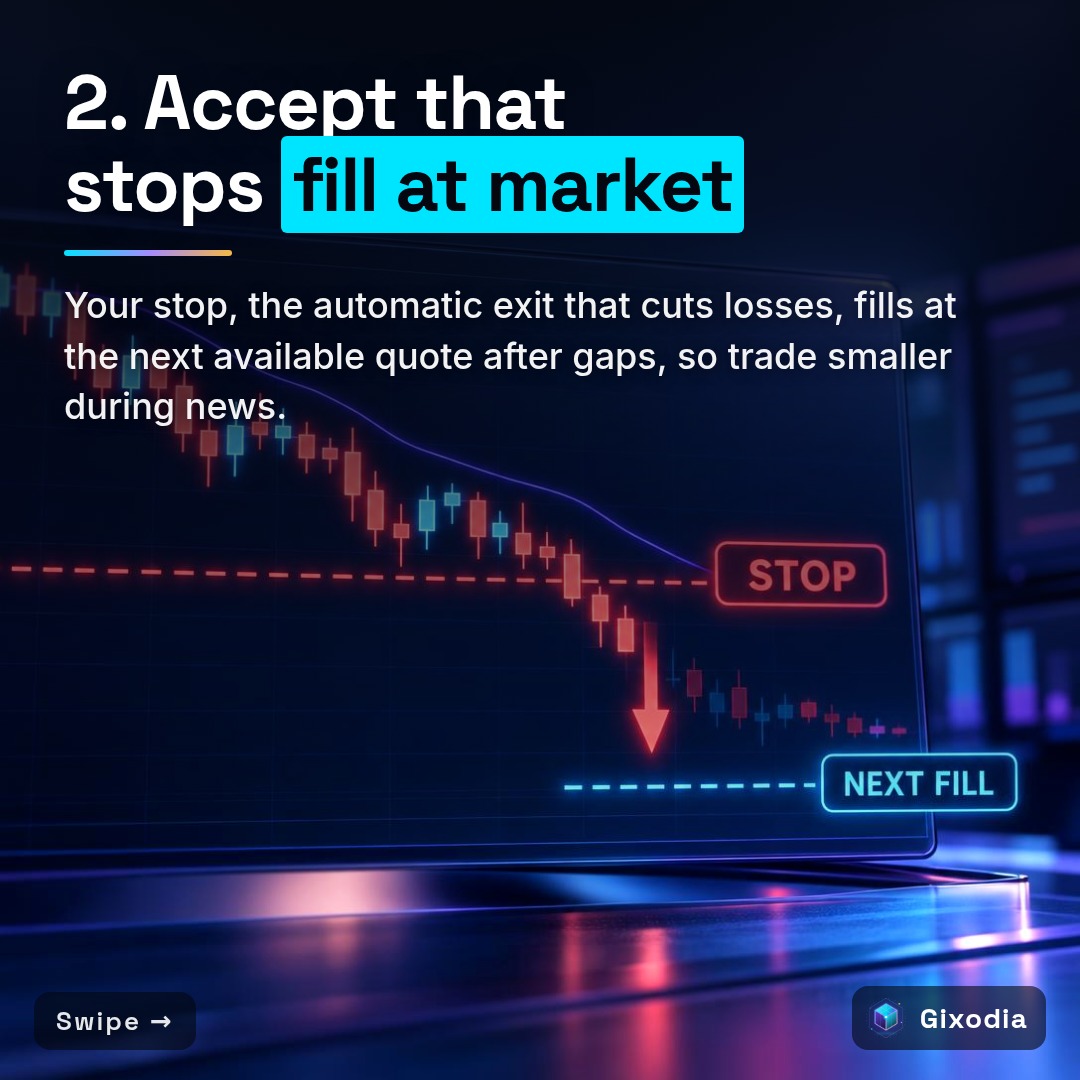
- A standard stop loss converts into a market order upon activation, which means it fills at whatever price is available next.
- Market gaps happen when participants pull quotes during breaking news, leaving empty price space where no transactions take place.
- Stop limit orders prevent fills at terrible prices, but they risk stranding an open position if price blows straight through the limit price.
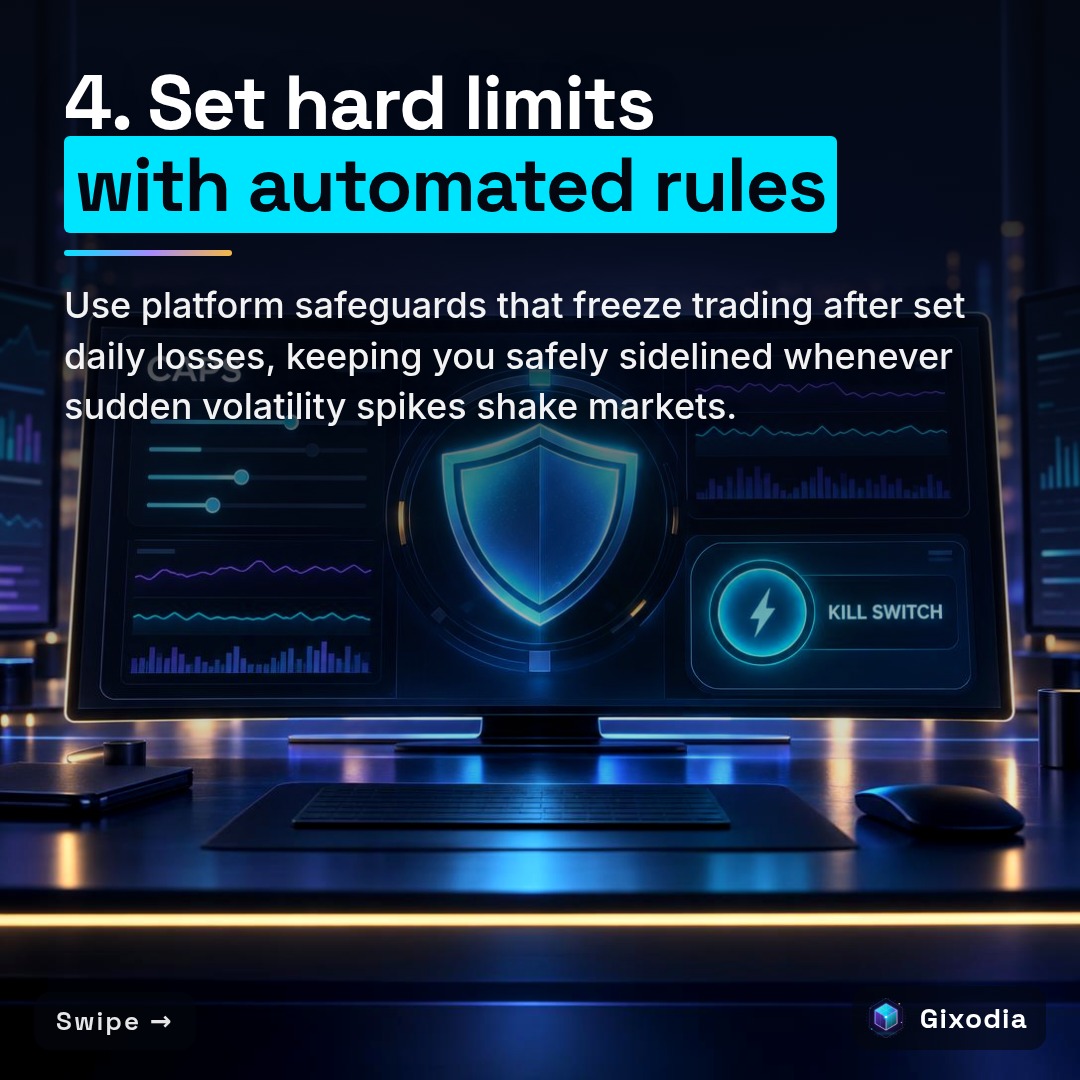
- Setting automated platform rules keeps losses contained by pausing order execution before panic overrides trading plans.
- Reducing trade size ahead of known economic announcements cushions your balance against severe price jumps.
What is stop loss slippage during fast news?
Stop loss slippage is the price difference between your designated stop loss price and the actual execution price filled by your broker when the order triggers. In fast-moving markets or economic releases, trades fill at the next available market quote rather than your exact preselected chart tick.
Many traders believe that placing a stop loss, an order that closes an open trade when the market moves against you, creates an impenetrable barrier on the chart. In reality, a conventional stop order does not lock in an exact price print. Regulators like FINRA explain that a stop order acts strictly as a trigger. Once the market trades at or through your trigger price, the platform routes a market order that fills at the next available quote.
When major economic reports or unexpected geopolitical headlines break, participants pull their quotes from the book. If you enter a long position on EUR/USD at 1.0850 with a stop loss set at 1.0820, you expect to risk 30 pips. If an unexpected interest rate hike drops the market instantly from 1.0825 to 1.0790 without a single transaction printing between those points, your stop loss activates at 1.0820 but fills at 1.0790. That sudden jump past your planned exit level is negative slippage. You can review our detailed breakdown on understanding spread commission slippage to see how transaction costs interact with fills.
Why do market gaps skip past order levels?
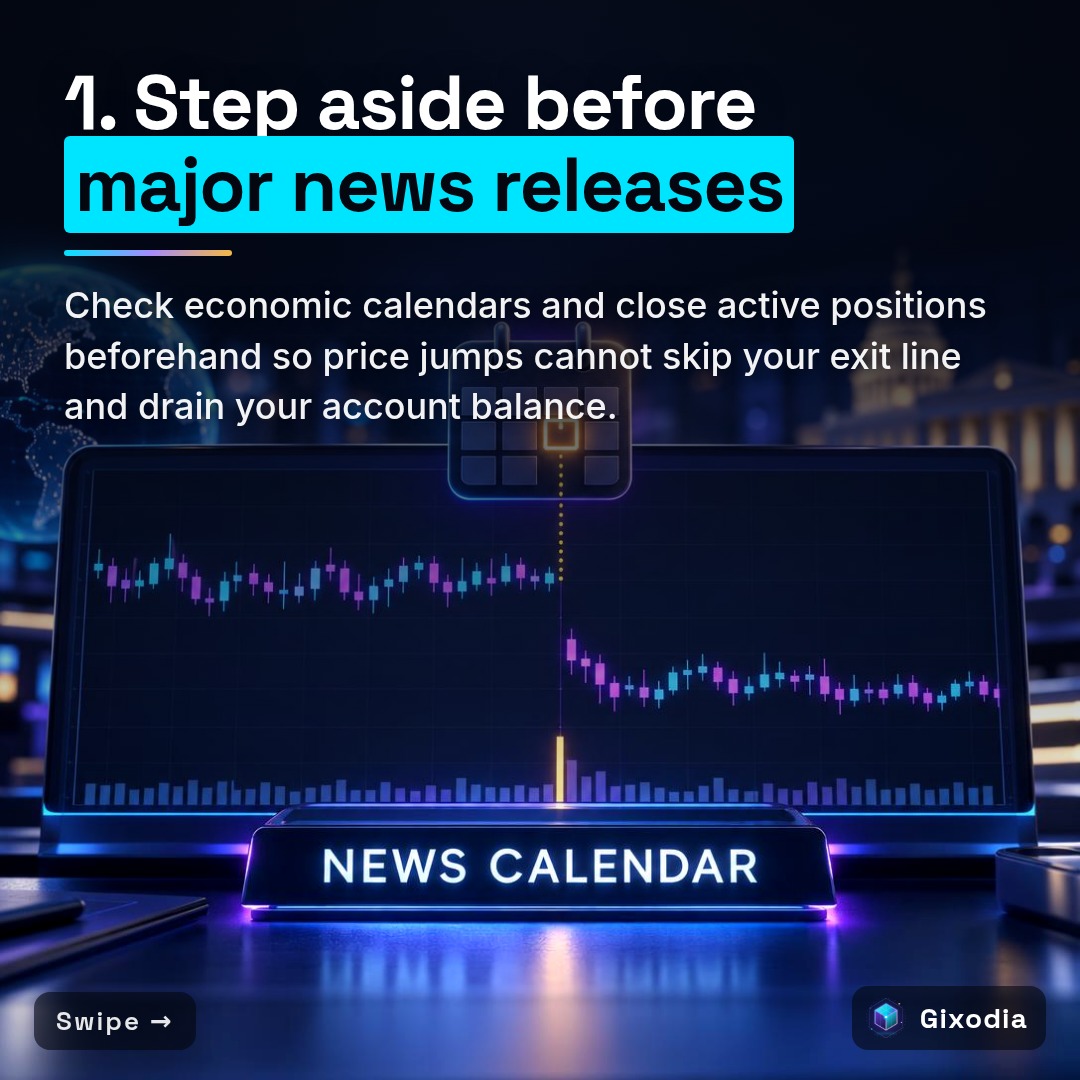
Market gaps occur because trading volume disappears instantly, creating blank zones on the price ladder where no transactions take place. When breaking news hits, institutions cancel resting quotes, leaving the market to reopen ticks lower or higher at the first willing matching price.
Price movement requires willing buyers and sellers at every step of the ladder. During quiet market periods, deep pools of buy and sell orders sit waiting on the order book. When unexpected news lands on the wire, institutional desks and algorithmic market makers withdraw their resting liquidity instantly to avoid catching a falling knife. Suddenly, there is almost nobody to buy from or sell to across dozens of consecutive pips.
If the last trade on gold (XAU/USD) printed at 2650.00 and sudden headlines spark aggressive selling, all existing bids below that price may vanish until 2642.00. The chart prints a visible void. Your stop order at 2648.00 has no one willing to buy your position at that price level. The broker matches your sell order with the first available bid resting in the market, which is down at 2642.00. This structural absence of counterparties is explored in depth in our guide on why spreads widen during data releases.
Can a stop-limit order solve the slippage problem?
A stop-limit order prevents poor fill prices by specifying the lowest price you accept, but it creates the severe danger of an unfilled position. If the market gaps completely past your limit boundary, your order remains open and unhedged as losses expand.
A stop-limit order combines a stop trigger with a boundary limit price. When the asset reaches your stop price, the system submits a limit order instead of a market order. If you hold a long position on EUR/USD and set a stop trigger at 1.0800 with a limit price at 1.0790, your broker will never sell your position below 1.0790. This entirely eliminates unwanted negative slippage.
The major drawback is execution certainty. If catastrophic news causes the market to jump from 1.0810 directly to 1.0750, your stop trigger activates, but your limit order to sell at 1.0790 remains resting on the broker book unfilled. Because the current market price is far below your limit, nobody buys it. You are left holding an active position while the market continues to drop, resulting in uncapped drawdown. For emergency risk defense, traders often accept slippage over the danger of holding an open, falling trade.
| Order Feature | Standard Stop Loss (Stop-Market) | Stop-Limit Order (MT5 Stop Limit) |
|---|---|---|
| Trigger Behavior | Converts to a market order immediately when the price touches the stop trigger level. | Converts to a limit order entered on the book when the trigger price is breached. |
| Fill Assurance | Executes the exit trade, but does not lock in the fill price. | Protects your worst acceptable fill price, but does not assure that the trade will close. |
| Fast Gap Outcome | Experiences slippage and fills at the next available quote, often far past your intended exit. | Skips execution entirely if the market jumps past your limit price, leaving your trade wide open. |
| Primary Risk | Larger loss than planned due to severe execution slippage. | Uncapped floating drawdown because the stranded position stays active during a collapse. |
How do predefined platform rules protect trading balances?
Predefined platform rules protect trading accounts by automating risk ceilings, position sizing, and execution shutdown parameters directly inside your software terminal. These automated limits enforce discipline by stepping aside or pausing trading activity before volatility spikes cause irreversible drawdown.
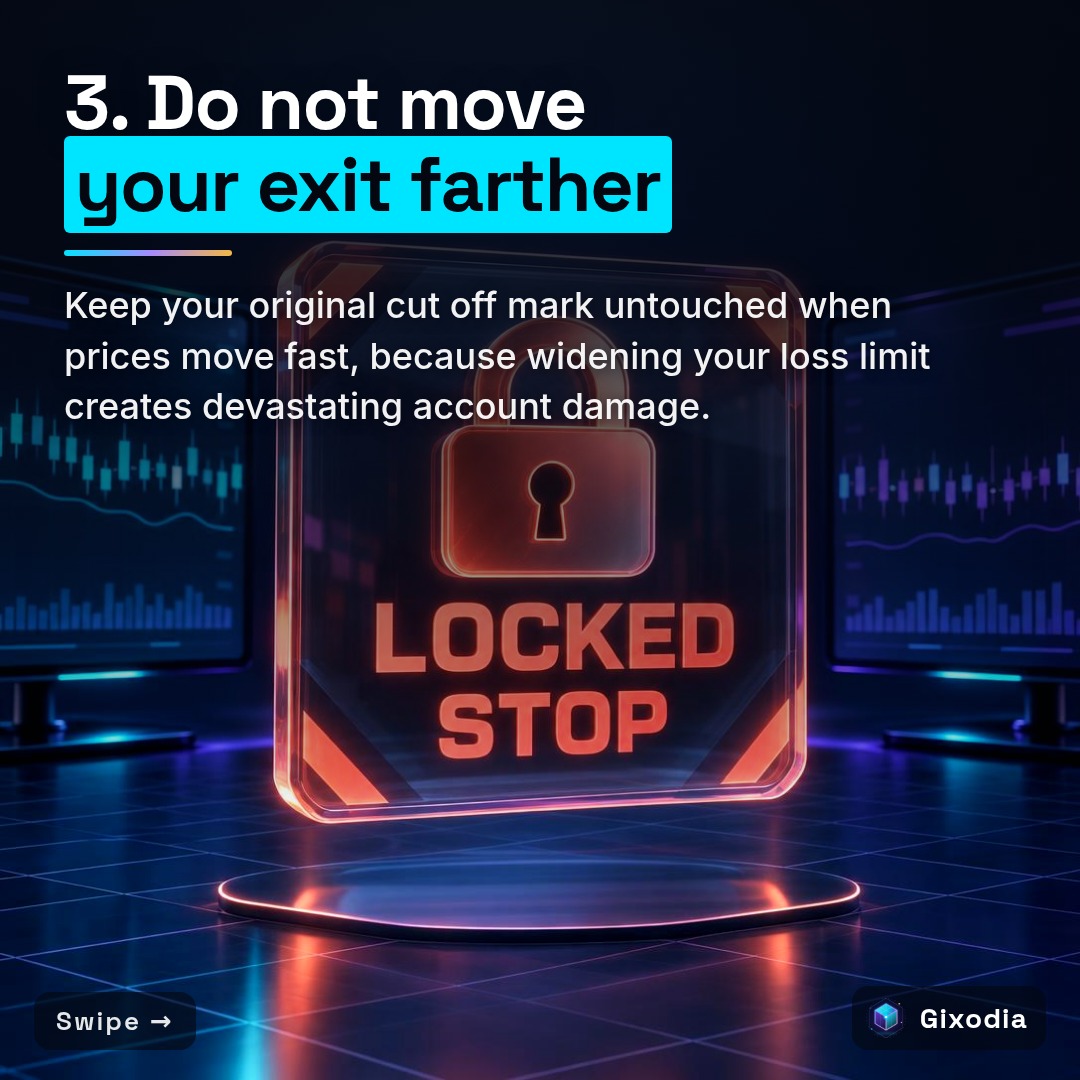
Discipline often falls apart during market chaos. When a sudden news candle drops through a support zone, manual traders frequently commit mistakes like moving protective stops farther away in hopes of a fast bounce. By establishing systematic parameters inside MetaTrader 5, your platform acts as an impartial risk manager. You can set rules that cap trade exposure and lock the daily loss limit regardless of chart turbulence.
Automated software operates strictly on code rather than hope. For instance, Gixodia's trading software is built to trade by predefined rules, the same way every time, free of hesitation, fatigue and emotion, so it doesn't trade in a panic. As a limit you set gets close, it scales down, and it pauses at that limit. It does not try to predict the market. A live account needs at least $1,000 to trade live. You can try the software with a 72-hour free trial on the annual license, then $499/year unless you cancel, or choose the lifetime license, $5,780 one time, no trial.
How should position sizing adjust before high-impact economic news?
Position sizing must scale down before high-impact news releases so that a worst-case gap cannot damage more than a small fraction of your balance. Cutting lot size ensures that even substantial slippage remains well within your acceptable risk tolerance.
Risk management depends fundamentally on trade size rather than your stop loss placement alone. If you risk a standard fraction of your balance with a tight 10-pip stop on EUR/USD right before a major central bank announcement, a 30-pip gap translates to triple your planned loss. The tight stop gave a false sense of security while exposing your capital to multiple times your intended risk.
Traders who navigate news events successfully either flatten their exposure before the release or cut their trade volume by half or more. You can read our guide on pip and lot size explained to understand how contract size dictates risk exposure. When your position size is conservative, an unexpected jump across empty price prints produces a minor annoyance instead of an account emergency.
What steps can you take inside MetaTrader 5 to manage execution risk?
Inside MetaTrader 5, you can manage execution risk by setting maximum deviation limits on trade requests, using pending stop-limit order types, and activating automated kill switches. These internal controls prevent trades from filling when the spread widens excessively.
MetaTrader 5 provides built-in tools designed to shield traders from erratic price jumps. One effective setting is the deviation parameter available in the order ticket. Setting a deviation limit instructs the platform server to cancel a market entry or exit order if the available price slips beyond a specified number of points from your requested quote.
In addition, algorithmic traders using an Expert Advisor can program daily maximum drawdown limits directly into the execution logic. Learning how forex markets work shows that liquidity providers step back during news releases. When your platform detects that current market conditions exceed predefined safety thresholds, automated rules can cease opening fresh positions, preserving your balance until normal price continuity returns.
How to do it, step by step
- Audit the economic calendar daily. Open an economic calendar each morning to map the exact times for high-impact announcements like central bank decisions or employment prints.
- Trim or flatten open exposure. Close open positions or reduce lot sizes well before the scheduled release to avoid holding heavy risk across volatile prints.
- Check maximum deviation settings in MT5. Set your order deviation parameters in the MetaTrader 5 order ticket to restrict fills if the price slips beyond your predefined tolerance.
- Lock hard daily loss ceilings. Establish a hard daily loss ceiling in your platform settings so all trading activity pauses if balance swings reach your pre-established limit.
- Keep order levels untouched during spikes. Leave existing protective price levels in place as volatility expands instead of widening stop distances during sudden swings.
Checklist before you take the trade
- Check the economic release calendar before opening fresh positions.
- Verify your position size will not endanger your balance if price jumps.
- Ensure your daily platform stop ceiling is locked in place.
- Refrain from moving or widening your protective loss level during sudden drops.
- Step aside and flatten active trades before high impact announcements hit.
- Confirm automated execution rules scale down activity when approaching loss thresholds.
Common mistakes and how to fix them
✗ The mistake: Setting stop price and limit price identically on a stop-limit order.
✓ The fix: Build a realistic buffer between the trigger and limit levels based on prevailing market spread and recent candle volatility.
✗ The mistake: Relying on stop-limit orders as catastrophic disaster protection.
✓ The fix: Use standard stop orders or step aside entirely before news releases so an unfilled limit order cannot leave your trade stranded.
✗ The mistake: Widening stop levels during rapid market selloffs.
✓ The fix: Enforce automated platform limits that pause execution instead of manually moving stops farther away.
✗ The mistake: Ignoring spread widening during market rollover and major news data.
✓ The fix: Account for maximum spread expansion by avoiding fresh market orders during off-hours and low-liquidity calendar windows.
Frequently asked questions
Why did my stop loss fill at a worse price than I set?
A stop loss converts into a market order the moment your trigger price is reached. If the market gaps or jumps past your level during fast news without any transactions occurring at your exact price, your broker fills the order at the next available quote.
Can slippage be completely prevented on retail trading accounts?
Slippage cannot be completely prevented whenever you hold trades through fast news releases or weekend gaps. You can manage it by closing trades prior to scheduled events, setting platform deviation caps, or using smaller lot sizes.
What happens to a stop-limit order if the market gaps past the limit price?
If the market gaps past your limit price, the order activates as a limit order but remains unfilled on the order book. Your trade remains open, exposing your account to continued losses as the market moves farther away.
How does automated software protect against news volatility?
Automated software relies on predefined platform rules to scale down position size or pause trading activity when approaching preset loss thresholds. It removes human hesitation and prevents emotional decisions during rapid market selloffs.
Want your trading to follow fixed rules, the same way every time? Gixodia's trading software for MetaTrader 5 trades by predefined rules on your own broker account, in your own name. Try it free for 72 hours, a demo account is fine, then $499/year. Trading involves risk and you can lose money.
Sources
- Stop Loss: What It Is and Where to Place It | Velotrade (velotrade.com)
- Forex Slippage Explained: How to Measure, Detect and Reduce It (bjftradinggroup.com)
- Order Types (finra.org)